श्रीमद्भगवद्गीता अध्याय 15
पुरुषोत्तमयोग · पुरुषोत्तम
jeevandrishti.com/hi/books/bhagavad-gita/chapter-15 से प्रिंट किया गया, जहाँ हर छंद का हिंदी और अंग्रेज़ी अर्थ है।
कर्म · ज्ञान · भक्ति
अध्याय 15, पुरुषोत्तमयोग के बारे में
पंद्रहवाँ अध्याय, पुरुषोत्तमयोग, संसार को एक अश्वत्थ (पीपल) वृक्ष के रूप में दिखाता है, जिसकी जड़ें ऊपर और शाखाएँ नीचे हैं, वेद जिसके पत्ते हैं और विषय जिसकी कोंपलें हैं। इसे वैराग्य रूपी शस्त्र से काटना है, और फिर उस धाम की ओर जाना है जहाँ से कोई नहीं लौटता, जिसे न सूर्य प्रकाशित करता है, न चंद्रमा, न अग्नि (श्लोक 1–6)।
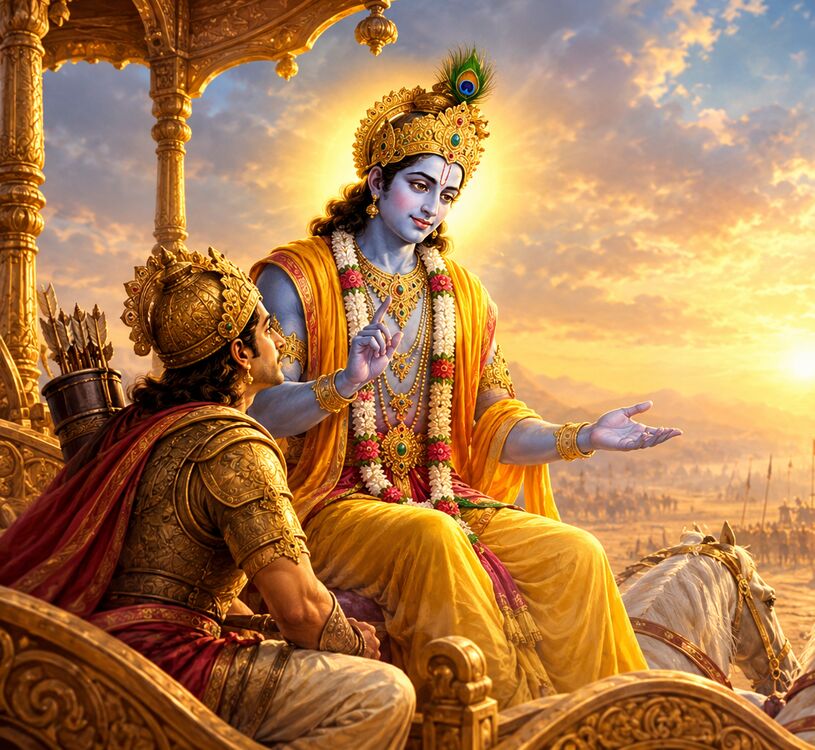
हर प्राणी में जीवात्मा श्रीकृष्ण का सनातन अंश है, जो इन्द्रियों को एक शरीर से दूसरे शरीर में वैसे ले जाता है जैसे वायु गंध को (7–11)। सूर्य, चंद्रमा और अग्नि का तेज, पृथ्वी में धारण करने की शक्ति और भोजन पचाने वाली अग्नि वे ही हैं; वे सबके हृदय में स्थित हैं (12–15)। क्षर और अक्षर से परे वे पुरुषोत्तम हैं; उन्हें ऐसे जानने वाला सब कुछ जानता है (16–20)। बहुत से लोग भोजन से पहले इस अध्याय का पाठ करते हैं।
सभी 20 श्लोक अर्थ सहित शांत मन से पढ़ने में लगभग दस मिनट लगते हैं।
ऊपर जड़ों वाला वृक्ष 15.1–15.6
श्रीभगवानुवाच श्रीकृष्ण ने कहा
ऊर्ध्वमूलमधःशाखमश्वत्थं प्राहुरव्ययम्।
छन्दांसि यस्य पर्णानि यस्तं वेद स वेदवित्॥
Urdhva-mulam adhah-shakham ashvattham prahur avyayam
Chhandansi yasya parnani yas tam veda sa veda-vit
ऊपर जड़ों और नीचे शाखाओं वाले जिस संसार रूपी पीपल के वृक्ष को अविनाशी कहते हैं, और वेद जिसके पत्ते हैं, उसे जो जानता है वह वेद का जानने वाला है।
They speak of an eternal ashvattha tree with its roots above and branches below, whose leaves are the Vedic hymns. One who knows it knows the Vedas.
अधश्चोर्ध्वं प्रसृतास्तस्य शाखा गुणप्रवृद्धा विषयप्रवालाः।
अधश्च मूलान्यनुसन्ततानि कर्मानुबन्धीनि मनुष्यलोके॥
Adhash chordhvam prasritas tasya shakha guna-pravriddha vishaya-pravalah
Adhash cha mulany anusantatani karmanubandhini manushya-loke
उसकी शाखाएँ नीचे और ऊपर फैली हैं, जो गुणों से बढ़ी हैं और विषय जिनकी कोंपलें हैं; और नीचे मनुष्य लोक में कर्मों से बाँधने वाली उसकी जड़ें फैली हुई हैं।
Its branches spread below and above, nourished by the gunas, with sense objects as their shoots; and below, in the world of humans, its roots stretch out, binding through action.
न रूपमस्येह तथोपलभ्यते नान्तो न चादिर्न च संप्रतिष्ठा।
अश्वत्थमेनं सुविरूढमूलमसङ्गशस्त्रेण दृढेन छित्त्वा॥
Na rupam asyeha tathopalabhyate nanto na chadir na cha sampratishtha
Ashvattham enam su-virudha-mulam asanga-shastrena dridhena chhittva
इस संसार में इसका रूप वैसा नहीं दिखता, न इसका अंत, न आदि, न आधार। इस दृढ़ जड़ों वाले पीपल को वैराग्य रूपी मज़बूत शस्त्र से काटकर,
Its form is not seen here as it is, nor its end, nor its beginning, nor its foundation. Cutting down this firmly rooted ashvattha with the strong axe of detachment,
ततः पदं तत्परिमार्गितव्यं यस्मिन्गता न निवर्तन्ति भूयः।
तमेव चाद्यं पुरुषं प्रपद्ये यतः प्रवृत्तिः प्रसृता पुराणी॥
Tatah padam tat parimargitavyam yasmin gata na nivartanti bhuyah
Tam eva chadyam purusham prapadye yatah pravrittih prasrita purani
फिर उस पद को खोजना चाहिए, जहाँ जाकर लोग लौटकर नहीं आते, यह सोचकर कि मैं उस आदि पुरुष की शरण में हूँ, जिससे यह पुरानी संसार की प्रवृत्ति फैली है।
one should then seek that goal, having reached which one does not return, saying: I take refuge in that original Person from whom this ancient flow of the world came forth.
निर्मानमोहा जितसङ्गदोषा अध्यात्मनित्या विनिवृत्तकामाः।
द्वन्द्वैर्विमुक्ताः सुखदुःखसंज्ञैर्गच्छन्त्यमूढाः पदमव्ययं तत्॥
Nirmana-moha jita-sanga-dosha adhyatma-nitya vinivritta-kamah
Dvandvair vimuktah sukha-duhkha-sanjnair gachchhanty amudhah padam avyayam tat
जिनका मान और मोह नष्ट हो गया है, जिन्होंने आसक्ति के दोष को जीत लिया है, जो सदा आत्मा में स्थित हैं, जिनकी कामनाएँ दूर हो गई हैं, और जो सुख-दुःख नाम के द्वंद्वों से मुक्त हैं, वे ज्ञानी उस अविनाशी पद को प्राप्त होते हैं।
Free of pride and confusion, having overcome the fault of attachment, always given to the self, with desires turned away, free of the opposites called pleasure and pain, the undeluded reach that unchanging goal.
न तद्भासयते सूर्यो न शशाङ्को न पावकः।
यद्गत्वा न निवर्तन्ते तद्धाम परमं मम॥
Na tad bhasayate suryo na shashanko na pavakah
Yad gatva na nivartante tad dhama paramam mama
उसे न सूर्य प्रकाशित कर सकता है, न चंद्रमा, न अग्नि; जहाँ जाकर लोग लौटकर नहीं आते, वही मेरा परम धाम है।
Neither the sun, nor the moon, nor fire lights it up. Having gone there, people do not return; that is my supreme abode.
जीवात्मा, मेरा अंश 15.7–15.11
ममैवांशो जीवलोके जीवभूतः सनातनः।
मनःषष्ठानीन्द्रियाणि प्रकृतिस्थानि कर्षति॥
Mamaivansho jiva-loke jiva-bhutah sanatanah
Manah-shashthanindriyani prakriti-sthani karshati
इस संसार में जीव बना हुआ जीवात्मा मेरा ही सनातन अंश है, और वह प्रकृति में स्थित मन सहित छह इन्द्रियों को अपनी ओर खींचता है।
An eternal part of me, becoming the living soul in the world of the living, draws to itself the five senses and the mind as the sixth, which rest in nature.
शरीरं यदवाप्नोति यच्चाप्युत्क्रामतीश्वरः।
गृहीत्वैतानि संयाति वायुर्गन्धानिवाशयात्॥
Shariram yad avapnoti yach chapy utkramatishvarah
Grihitvaitani sanyati vayur gandhan ivashayat
जैसे वायु गंध के स्थान से गंध को ले जाती है, वैसे ही देह का स्वामी जीवात्मा जिस शरीर को छोड़ता है और जिसे पाता है, उसमें इन्हें साथ लेकर जाता है।
When the soul, the lord of the body, takes on a body and when it leaves one, it carries these with it, as the wind carries scents from their source.
श्रोत्रं चक्षुः स्पर्शनं च रसनं घ्राणमेव च।
अधिष्ठाय मनश्चायं विषयानुपसेवते॥
Shrotram chakshuh sparshanam cha rasanam ghranam eva cha
Adhishthaya manash chayam vishayan upasevate
यह कान, आँख, त्वचा, जीभ, नाक और मन का आश्रय लेकर विषयों का सेवन करता है।
Presiding over hearing, sight, touch, taste and smell, and the mind, it enjoys the objects of the senses.
उत्क्रामन्तं स्थितं वापि भुञ्जानं वा गुणान्वितम्।
विमूढा नानुपश्यन्ति पश्यन्ति ज्ञानचक्षुषः॥
Utkramantam sthitam vapi bhunjanam va gunanvitam
Vimudha nanupashyanti pashyanti jnana-chakshushah
शरीर छोड़ते हुए, शरीर में रहते हुए या गुणों के साथ विषयों को भोगते हुए भी मूढ़ लोग इसे नहीं देखते; ज्ञान की आँख वाले देखते हैं।
The deluded do not see it, whether it is leaving the body, staying in it, or enjoying the world through the gunas; those with the eye of knowledge see it.
यतन्तो योगिनश्चैनं पश्यन्त्यात्मन्यवस्थितम्।
यतन्तोऽप्यकृतात्मानो नैनं पश्यन्त्यचेतसः॥
Yatanto yoginash chainam pashyanty atmany avasthitam
Yatanto ’py akritatmano nainam pashyanty achetasah
प्रयत्न करने वाले योगी इसे अपने भीतर स्थित देखते हैं; पर जिनका मन शुद्ध नहीं और जो विवेकहीन हैं, वे प्रयत्न करके भी इसे नहीं देखते।
Yogis who strive see it dwelling in themselves; but those who are not pure in mind and lack discernment do not see it, even when they try.
सबमें मेरा तेज 15.12–15.15
यदादित्यगतं तेजो जगद्भासयतेऽखिलम्।
यच्चन्द्रमसि यच्चाग्नौ तत्तेजो विद्धि मामकम्॥
Yad aditya-gatam tejo jagad bhasayate ’khilam
Yach chandramasi yach chagnau tat tejo viddhi mamakam
जो तेज सूर्य में स्थित होकर सारे संसार को प्रकाशित करता है, और जो तेज चंद्रमा और अग्नि में है, उस तेज को मेरा ही जानो।
The light in the sun that lights up the whole world, the light in the moon and the light in fire, know that light to be mine.
गामाविश्य च भूतानि धारयाम्यहमोजसा।
पुष्णामि चौषधीः सर्वाः सोमो भूत्वा रसात्मकः॥
Gam avishya cha bhutani dharayamy aham ojasa
Pushnami chaushadhih sarvah somo bhutva rasatmakah
मैं पृथ्वी में प्रवेश करके अपनी शक्ति से सब प्राणियों को धारण करता हूँ, और रस से भरा चंद्रमा (सोम) बनकर सब वनस्पतियों का पोषण करता हूँ।
Entering the earth, I hold up all beings with my strength; and becoming the juice-filled moon (soma), I nourish all plants.
अहं वैश्वानरो भूत्वा प्राणिनां देहमाश्रितः।
प्राणापानसमायुक्तः पचाम्यन्नं चतुर्विधम्॥
Aham vaishvanaro bhutva praninam deham ashritah
Pranapana-samayuktah pachamy annam chatur-vidham
मैं प्राणियों के शरीर में वैश्वानर अग्नि बनकर, प्राण और अपान से युक्त होकर चार प्रकार के अन्न को पचाता हूँ।
Becoming the digestive fire in the bodies of living beings, joined with the incoming and outgoing breath, I digest the four kinds of food.
सर्वस्य चाहं हृदि सन्निविष्टो मत्तः स्मृतिर्ज्ञानमपोहनं च।
वेदैश्च सर्वैरहमेव वेद्यो वेदान्तकृद्वेदविदेव चाहम्॥
Sarvasya chaham hridi sannivishto mattah smritir jnanam apohanam cha
Vedaish cha sarvair aham eva vedyo vedanta-krid veda-vid eva chaham
मैं सबके हृदय में स्थित हूँ; मुझसे ही स्मृति, ज्ञान और उनका लोप होता है। सब वेदों से जानने योग्य मैं ही हूँ, वेदान्त का रचयिता और वेदों को जानने वाला भी मैं ही हूँ।
I am seated in the hearts of all. From me come memory, knowledge and their loss. I am what is to be known through all the Vedas; I am the author of Vedanta and the knower of the Vedas.
पुरुषोत्तम 15.16–15.20
द्वाविमौ पुरुषौ लोके क्षरश्चाक्षर एव च।
क्षरः सर्वाणि भूतानि कूटस्थोऽक्षर उच्यते॥
Dvav imau purushau loke ksharash chakshara eva cha
Ksharah sarvani bhutani kuta-stho ’kshara uchyate
इस संसार में दो पुरुष हैं, क्षर (नाशवान) और अक्षर (अविनाशी)। सब प्राणी क्षर हैं, और कूटस्थ (अचल) अक्षर कहलाता है।
There are two persons in this world, the perishable and the imperishable. All beings are perishable; the unchanging one is called imperishable.
उत्तमः पुरुषस्त्वन्यः परमात्मेत्युदाहृतः।
यो लोकत्रयमाविश्य बिभर्त्यव्यय ईश्वरः॥
Uttamah purushas tv anyah paramatmety udahritah
Yo loka-trayam avishya bibharty avyaya ishvarah
पर उत्तम पुरुष इनसे भिन्न है, जिसे परमात्मा कहा गया है, जो अविनाशी ईश्वर तीनों लोकों में प्रवेश करके उनका धारण-पोषण करता है।
But there is another, the highest Person, called the Supreme Self, the unchanging Lord, who enters the three worlds and sustains them.
यस्मात्क्षरमतीतोऽहमक्षरादपि चोत्तमः।
अतोऽस्मि लोके वेदे च प्रथितः पुरुषोत्तमः॥
Yasmat ksharam atito ’ham aksharad api chottamah
Ato ’smi loke vede cha prathitah purushottamah
क्योंकि मैं क्षर से परे हूँ और अक्षर से भी उत्तम हूँ, इसलिए संसार में और वेदों में पुरुषोत्तम के नाम से प्रसिद्ध हूँ।
Because I am beyond the perishable and higher even than the imperishable, I am known in the world and in the Vedas as the Supreme Person (Purushottama).
यो मामेवमसम्मूढो जानाति पुरुषोत्तमम्।
स सर्वविद्भजति मां सर्वभावेन भारत॥
Yo mam evam asammudho janati purushottamam
Sa sarva-vid bhajati mam sarva-bhavena bharata
हे भारत, जो मोहरहित होकर मुझे इस प्रकार पुरुषोत्तम जानता है, वह सब कुछ जानने वाला है और पूरे भाव से मुझे भजता है।
One who, free of confusion, knows me in this way as the Supreme Person knows all, and worships me with their whole being, Bharata.
इति गुह्यतमं शास्त्रमिदमुक्तं मयाऽनघ।
एतद्बुद्ध्वा बुद्धिमान्स्यात्कृतकृत्यश्च भारत॥
Iti guhyatamam shastram idam uktam mayanagha
Etad buddhva buddhiman syat krita-krityash cha bharata
हे निष्पाप भारत, इस प्रकार मैंने तुम्हें यह अत्यंत गोपनीय शास्त्र बताया। इसे जानकर मनुष्य ज्ञानी और कृतार्थ हो जाता है।
So I have told you this most secret teaching, sinless one. Understanding it, a person becomes wise and has done all that needs to be done, Bharata.
ॐ तत्सदिति श्रीमद्भगवद्गीतासूपनिषत्सु ब्रह्मविद्यायां योगशास्त्रे श्रीकृष्णार्जुनसंवादे
पुरुषोत्तमयोगो नाम पञ्चदशोऽध्यायः ॥१५॥
यहाँ दिए अर्थ सरल शब्दों में हैं और हर श्लोक के प्रचलित अर्थ पर आधारित हैं; ये न शब्दशः अनुवाद हैं, न भाष्य। रोमन अक्षर आसानी से पढ़ने के लिए सरल रखे गए हैं। यह पृष्ठ पाठ और मनन के लिए है; यह चिकित्सा या किसी अन्य पेशेवर सहायता का विकल्प नहीं है।
लोग अक्सर पूछते हैं
भगवद्गीता का पंद्रहवाँ अध्याय किस बारे में है?
उलटे अश्वत्थ वृक्ष के रूप में संसार के बारे में, जिसे वैराग्य से काटना है; श्रीकृष्ण के सनातन अंश जीवात्मा के बारे में; सबमें उनके तेज के बारे में; और पुरुषोत्तम श्रीकृष्ण के बारे में।
श्लोक 15.1 में अश्वत्थ वृक्ष क्या है?
संसार का एक चित्र: ऊपर जड़ों और नीचे शाखाओं वाला वृक्ष, जिसके पत्ते वेद हैं। इसे जानने वाला वेद का जानने वाला है।
पुरुषोत्तम का क्या अर्थ है?
परम पुरुष। श्रीकृष्ण कहते हैं कि वे क्षर (सब प्राणियों) से परे और अक्षर से भी उत्तम हैं, इसलिए पुरुषोत्तम कहलाते हैं (15.16–15.18)।
लोग भोजन से पहले पंद्रहवाँ अध्याय क्यों पढ़ते हैं?
यह बहुत से घरों की परंपरा है। श्लोक 15.14 में श्रीकृष्ण कहते हैं कि वे सब शरीरों में वैश्वानर अग्नि बनकर चार प्रकार के अन्न को पचाते हैं।
श्लोक 15.7 क्या कहता है?
“ममैवांशो जीवलोके”: हर जीव में जीवात्मा श्रीकृष्ण का ही सनातन अंश है।
Facebook पर हमसे जुड़ें
नई पुस्तकें और अध्याय, त्योहारों के दिन और आसान भाषा में ज्योतिष, सीधे आपकी फ़ीड में। मुफ़्त, और जब चाहें छोड़ सकते हैं।