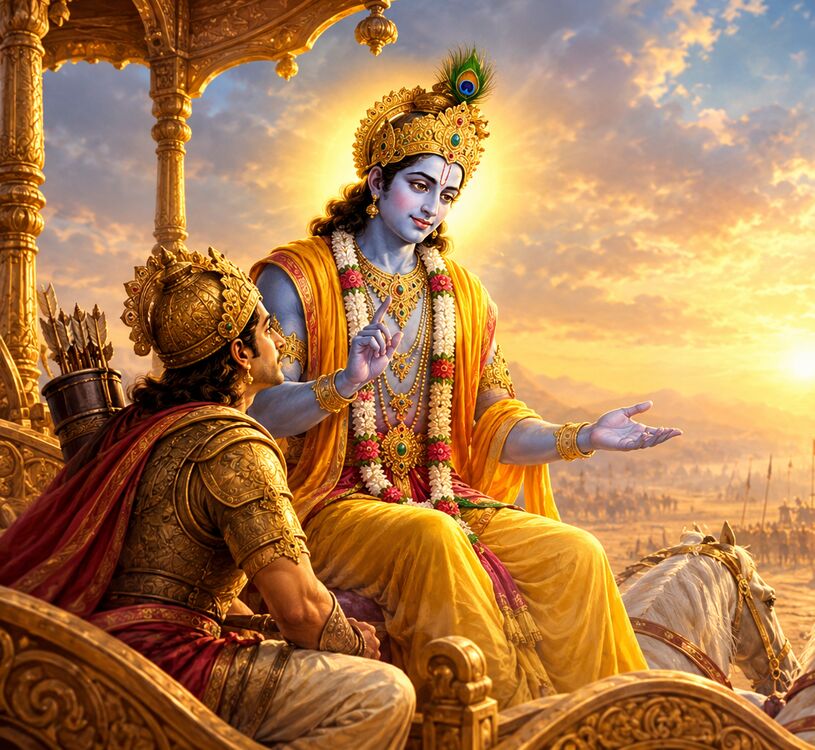


Bhagavad Gita Chapter 17
Shraddhatraya Vibhaga Yoga · The three kinds of faith (श्रद्धात्रयविभागयोग)
Printed from jeevandrishti.com/books/bhagavad-gita/chapter-17, where the meaning of every verse is in English and Hindi.
Duty · Knowledge · Devotion
About Chapter 17, Shraddhatraya Vibhaga Yoga
Chapter 17, Shraddhatraya Vibhaga Yoga (the three kinds of faith), answers Arjuna’s question about those who worship with faith but outside the rules of scripture. Everyone’s faith follows their nature, and a person is made of faith: as their faith is, so they are (shlokas 1–6).
Krishna then shows how the three gunas appear in everyday life: in the food people like (7–10), in offering (11–13), in austerity of body, speech and mind (14–19), and in giving (20–22). The chapter ends with “Om Tat Sat”, the threefold name of Brahman spoken at the start of offerings, austerities and gifts, and with the reminder that whatever is done without faith is of no good, here or hereafter (23–28).
A calm reading of all 28 shlokas with their meanings takes about fifteen minutes.
Three kinds of faith 17.1–17.6
अर्जुन उवाच Arjuna said
ये शास्त्रविधिमुत्सृज्य यजन्ते श्रद्धयाऽन्विताः।
तेषां निष्ठा तु का कृष्ण सत्त्वमाहो रजस्तमः॥
Ye shastra-vidhim utsrijya yajante shraddhayanvitah
Tesham nishtha tu ka krishna sattvam aho rajas tamah
हे कृष्ण, जो लोग शास्त्र की विधि को छोड़कर श्रद्धा से पूजा करते हैं, उनकी स्थिति कैसी है: सात्त्विक, राजसी या तामसी?
Krishna, what is the standing of those who set aside the rules of scripture but worship with faith? Is it sattva, rajas or tamas?
श्रीभगवानुवाच Shri Krishna said
त्रिविधा भवति श्रद्धा देहिनां सा स्वभावजा।
सात्त्विकी राजसी चैव तामसी चेति तां शृणु॥
Tri-vidha bhavati shraddha dehinam sa svabhava-ja
Sattviki rajasi chaiva tamasi cheti tam shrinu
देहधारियों की श्रद्धा उनके स्वभाव से उत्पन्न तीन प्रकार की होती है: सात्त्विकी, राजसी और तामसी। उसके बारे में सुनो।
The faith of embodied beings is of three kinds, born of their nature: of sattva, of rajas and of tamas. Hear about it.
सत्त्वानुरूपा सर्वस्य श्रद्धा भवति भारत।
श्रद्धामयोऽयं पुरुषो यो यच्छ्रद्धः स एव सः॥
Sattvanurupa sarvasya shraddha bhavati bharata
Shraddha-mayo ’yam purusho yo yach-chhraddhah sa eva sah
हे भारत, सबकी श्रद्धा उनके अंतःकरण के अनुरूप होती है। मनुष्य श्रद्धामय है; जिसकी जैसी श्रद्धा होती है, वह वैसा ही है।
Everyone’s faith follows their nature, Bharata. A person is made of faith: as their faith is, so they are.
यजन्ते सात्त्विका देवान्यक्षरक्षांसि राजसाः।
प्रेतान्भूतगणांश्चान्ये यजन्ते तामसा जनाः॥
Yajante sattvika devan yaksha-rakshansi rajasah
Pretan bhuta-ganansh chanye yajante tamasa janah
सात्त्विक लोग देवताओं की पूजा करते हैं, राजसी लोग यक्षों और राक्षसों की, और तामसी लोग प्रेतों और भूतगणों की पूजा करते हैं।
Those of sattva worship the gods; those of rajas worship yakshas and rakshasas; and others, of tamas, worship ghosts and spirits.
अशास्त्रविहितं घोरं तप्यन्ते ये तपो जनाः।
दम्भाहङ्कारसंयुक्ताः कामरागबलान्विताः॥
Ashastra-vihitam ghoram tapyante ye tapo janah
Dambhahankara-sanyuktah kama-raga-balanvitah
जो लोग शास्त्र में न बताए गए घोर तप करते हैं, दंभ और अहंकार से भरे हैं, और कामना, आसक्ति और बल के घमंड से प्रेरित हैं,
Those who practise severe austerities not taught by scripture, full of hypocrisy and ego, driven by desire, attachment and force,
कर्षयन्तः शरीरस्थं भूतग्राममचेतसः।
मां चैवान्तःशरीरस्थं तान्विद्ध्यासुरनिश्चयान्॥
Karshayantah sharira-stham bhuta-gramam achetasah
Mam chaivantah sharira-stham tan viddhy asura-nishchayan
और विवेकहीन होकर शरीर में स्थित तत्वों को और शरीर के भीतर रहने वाले मुझे भी कष्ट देते हैं, उन्हें आसुरी निश्चय वाला जानो।
senselessly tormenting the elements of the body, and me too who dwell within the body, know them to be of demonic resolve.
Three kinds of food 17.7–17.10
आहारस्त्वपि सर्वस्य त्रिविधो भवति प्रियः।
यज्ञस्तपस्तथा दानं तेषां भेदमिमं शृणु॥
Aharas tv api sarvasya tri-vidho bhavati priyah
Yajnas tapas tatha danam tesham bhedam imam shrinu
सबको प्रिय लगने वाला भोजन भी तीन प्रकार का होता है, और वैसे ही यज्ञ, तप और दान भी। उनके इस भेद को सुनो।
Even the food that each person likes is of three kinds, and so are offering, austerity and giving. Hear how they differ.
आयुःसत्त्वबलारोग्यसुखप्रीतिविवर्धनाः।
रस्याः स्निग्धाः स्थिरा हृद्या आहाराः सात्त्विकप्रियाः॥
Ayuh-sattva-balarogya-sukha-priti-vivardhanah
Rasyah snigdhah sthira hridya aharah sattvika-priyah
आयु, सत्त्व, बल, स्वास्थ्य, सुख और प्रसन्नता बढ़ाने वाले, रसीले, चिकने, टिकाऊ और मन को भाने वाले भोजन सात्त्विक लोगों को प्रिय होते हैं।
Foods that increase life, clarity, strength, health, happiness and good cheer, that are tasty, mild, nourishing and pleasing, are liked by those of sattva.
कट्वम्ललवणात्युष्णतीक्ष्णरूक्षविदाहिनः।
आहारा राजसस्येष्टा दुःखशोकामयप्रदाः॥
Katv-amla-lavanaty-ushna- tikshna-ruksha-vidahinah
Ahara rajasasyeshta duhkha-shokamaya-pradah
कड़वे, खट्टे, नमकीन, बहुत गरम, तीखे, रूखे और जलन पैदा करने वाले, तथा दुःख, शोक और रोग देने वाले भोजन राजसी लोगों को प्रिय होते हैं।
Foods that are bitter, sour, salty, very hot, pungent, dry and burning, and that bring pain, grief and illness, are liked by those of rajas.
यातयामं गतरसं पूति पर्युषितं च यत्।
उच्छिष्टमपि चामेध्यं भोजनं तामसप्रियम्॥
Yata-yamam gata-rasam puti paryushitam cha yat
Uchchhishtam api chamedhyam bhojanam tamasa-priyam
जो भोजन बासी, स्वादहीन, दुर्गंध वाला, रात का रखा हुआ, जूठा और अपवित्र हो, वह तामसी लोगों को प्रिय होता है।
Food that is stale, tasteless, putrid, left overnight, leftover and impure is liked by those of tamas.
Three kinds of offering 17.11–17.13
अफलाकाङ्क्षिभिर्यज्ञो विधिदृष्टो य इज्यते।
यष्टव्यमेवेति मनः समाधाय स सात्त्विकः॥
Aphalakankshibhir yajno vidhi-drishto ya ijyate
Yashtavyam eveti manah samadhaya sa sattvikah
जो यज्ञ फल की इच्छा न रखने वालों द्वारा, शास्त्र की विधि से, यह मन में ठानकर किया जाता है कि यह करना ही चाहिए, वह सात्त्विक है।
An offering made according to the rules by those who seek no reward, with the mind settled on the thought that it simply ought to be done, is of sattva.
अभिसंधाय तु फलं दम्भार्थमपि चैव यत्।
इज्यते भरतश्रेष्ठ तं यज्ञं विद्धि राजसम्॥
Abhisandhaya tu phalam dambhartham api chaiva yat
Ijyate bharata-shreshtha tam yajnam viddhi rajasam
हे भरतश्रेष्ठ, जो यज्ञ फल को ध्यान में रखकर या केवल दिखावे के लिए किया जाता है, उसे राजसी जानो।
But an offering made with an eye on the reward, or for show, best of the Bharatas, know that to be of rajas.
विधिहीनमसृष्टान्नं मन्त्रहीनमदक्षिणम्।
श्रद्धाविरहितं यज्ञं तामसं परिचक्षते॥
Vidhi-hinam asrishtannam mantra-hinam adakshinam
Shraddha-virahitam yajnam tamasam parichakshate
जो यज्ञ विधि के बिना, अन्न दान के बिना, मंत्रों के बिना, दक्षिणा के बिना और श्रद्धा के बिना किया जाता है, उसे तामसी कहते हैं।
An offering made without the rules, without giving food, without the sacred chants, without the gift to the priests and without faith, is called of tamas.
Three kinds of austerity 17.14–17.19
देवद्विजगुरुप्राज्ञपूजनं शौचमार्जवम्।
ब्रह्मचर्यमहिंसा च शारीरं तप उच्यते॥
Deva-dwija-guru-prajna- pujanam shaucham arjavam
Brahmacharyam ahinsa cha shariram tapa uchyate
देवताओं, द्विजों, गुरुओं और ज्ञानियों का आदर, पवित्रता, सरलता, ब्रह्मचर्य और अहिंसा, यह शरीर का तप कहलाता है।
Honouring the gods, the twice-born, teachers and the wise; purity, honesty, self-restraint and non-violence: these are called the austerity of the body.
अनुद्वेगकरं वाक्यं सत्यं प्रियहितं च यत्।
स्वाध्यायाभ्यसनं चैव वाङ्मयं तप उच्यते॥
Anudvega-karam vakyam satyam priya-hitam cha yat
Svadhyayabhyasanam chaiva van-mayam tapa uchyate
जो वाणी किसी को व्याकुल न करे, सत्य हो, प्रिय और हितकारी हो, और स्वाध्याय का अभ्यास, यह वाणी का तप कहलाता है।
Words that do not upset others, that are true, pleasant and helpful, and the regular study of scripture: these are called the austerity of speech.
मनःप्रसादः सौम्यत्वं मौनमात्मविनिग्रहः।
भावसंशुद्धिरित्येतत्तपो मानसमुच्यते॥
Manah-prasadah saumyatvam maunam atma-vinigrahah
Bhava-sanshuddhir ity etat tapo manasam uchyate
मन की प्रसन्नता, सौम्यता, मौन, आत्मसंयम और भावों की शुद्धि, यह मन का तप कहलाता है।
Calm of mind, gentleness, silence, self-control and purity of feeling: these are called the austerity of the mind.
श्रद्धया परया तप्तं तपस्तत्त्रिविधं नरैः।
अफलाकाङ्क्षिभिर्युक्तैः सात्त्विकं परिचक्षते॥
Shraddhaya paraya taptam tapas tat tri-vidham naraih
Aphalakankshibhir yuktaih sattvikam parichakshate
फल की इच्छा न रखने वाले, योग में स्थित लोगों द्वारा परम श्रद्धा से किया गया यह तीन प्रकार का तप सात्त्विक कहलाता है।
This threefold austerity, practised with the highest faith by people who seek no reward and are steady, is called of sattva.
सत्कारमानपूजार्थं तपो दम्भेन चैव यत्।
क्रियते तदिह प्रोक्तं राजसं चलमध्रुवम्॥
Satkara-mana-pujartham tapo dambhena chaiva yat
Kriyate tad iha proktam rajasam chalam adhruvam
जो तप सत्कार, मान और पूजा पाने के लिए दंभ से किया जाता है, वह यहाँ राजसी कहा गया है; वह चंचल और अस्थिर होता है।
Austerity practised with hypocrisy, to gain respect, honour and worship, is said here to be of rajas; it is unsteady and does not last.
मूढग्राहेणात्मनो यत्पीडया क्रियते तपः।
परस्योत्सादनार्थं वा तत्तामसमुदाहृतम्॥
Mudha-grahenatmano yat pidaya kriyate tapah
Parasyotsadanartham va tat tamasam udahritam
जो तप मूढ़ हठ से, अपने को कष्ट देकर, या दूसरे को हानि पहुँचाने के लिए किया जाता है, वह तामसी कहलाता है।
Austerity practised out of foolish obstinacy, with self-torture, or to harm another, is called of tamas.
Three kinds of giving 17.20–17.22
दातव्यमिति यद्दानं दीयतेऽनुपकारिणे।
देशे काले च पात्रे च तद्दानं सात्त्विकं स्मृतम्॥
Datavyam iti yad danam diyate ’nupakarine
Deshe kale cha patre cha tad danam sattvikam smritam
जो दान यह समझकर दिया जाता है कि देना कर्तव्य है, ऐसे व्यक्ति को जो बदले में कुछ नहीं कर सकता, सही स्थान, सही समय और योग्य पात्र को, वह सात्त्विक माना गया है।
A gift given because it is right to give, to one who can do nothing in return, at the right place and time and to a worthy person, is held to be of sattva.
यत्तु प्रत्युपकारार्थं फलमुद्दिश्य वा पुनः।
दीयते च परिक्लिष्टं तद्दानं राजसं स्मृतम्॥
Yat tu pratyupakarartham phalam uddishya va punah
Diyate cha pariklishtam tad danam rajasam smritam
पर जो दान बदले में कुछ पाने के लिए, या फल को ध्यान में रखकर, या मन मारकर दिया जाता है, वह राजसी माना गया है।
But a gift given to get something back, or with an eye on a reward, or given grudgingly, is held to be of rajas.
अदेशकाले यद्दानमपात्रेभ्यश्च दीयते।
असत्कृतमवज्ञातं तत्तामसमुदाहृतम्॥
Adesha-kale yad danam apatrebhyash cha diyate
Asat-kritam avajnatam tat tamasam udahritam
जो दान गलत स्थान और समय पर, अयोग्य लोगों को, बिना आदर के और तिरस्कार के साथ दिया जाता है, वह तामसी कहलाता है।
A gift given at the wrong place and time to unworthy people, without respect and with contempt, is called of tamas.
Om Tat Sat 17.23–17.28
तत्सदिति निर्देशो ब्रह्मणस्त्रिविधः स्मृतः।
ब्राह्मणास्तेन वेदाश्च यज्ञाश्च विहिताः पुरा॥
Om tat sad iti nirdesho brahmanas tri-vidhah smritah
Brahmanas tena vedash cha yajnash cha vihitah pura
“ॐ तत् सत्” ये ब्रह्म के तीन नाम कहे गए हैं। इन्हीं से आरंभ में ब्राह्मण, वेद और यज्ञ रचे गए।
“Om Tat Sat” is said to be the threefold name of Brahman. By it the brahmins, the Vedas and the offerings were made in the beginning.
तस्मादोमित्युदाहृत्य यज्ञदानतपःक्रियाः।
प्रवर्तन्ते विधानोक्ताः सततं ब्रह्मवादिनाम्॥
Tasmad om ity udahritya yajna-dana-tapah-kriyah
Pravartante vidhanoktah satatam brahma-vadinam
इसलिए वेद को मानने वाले लोग शास्त्र की विधि से किए जाने वाले यज्ञ, दान और तप की क्रियाएँ सदा “ॐ” का उच्चारण करके आरंभ करते हैं।
So those who follow Brahman always begin their offerings, gifts and austerities, done according to the rules, by uttering “Om”.
तदित्यनभिसन्धाय फलं यज्ञतपःक्रियाः।
दानक्रियाश्च विविधाः क्रियन्ते मोक्षकाङ्क्षिभिः॥
Tad ity anabhisandhaya phalam yajna-tapah-kriyah
Dana-kriyash cha vividhah kriyante moksha-kankshibhih
मोक्ष चाहने वाले लोग “तत्” कहकर, फल की इच्छा के बिना, अनेक प्रकार के यज्ञ, तप और दान की क्रियाएँ करते हैं।
With the word “Tat”, those who seek freedom perform their various offerings, austerities and gifts without seeking any reward.
सद्भावे साधुभावे च सदित्येतत्प्रयुज्यते।
प्रशस्ते कर्मणि तथा सच्छब्दः पार्थ युज्यते॥
Sad-bhave sadhu-bhave cha sad ity etat prayujyate
Prashaste karmani tatha sach-chhabdah partha yujyate
हे पार्थ, “सत्” शब्द सत्य भाव और श्रेष्ठ भाव के लिए प्रयोग किया जाता है, और प्रशंसनीय कर्म के लिए भी।
The word “Sat” is used for what is real and what is good, and also, son of Pritha, for any praiseworthy act.
यज्ञे तपसि दाने च स्थितिः सदिति चोच्यते।
कर्म चैव तदर्थीयं सदित्येवाभिधीयते॥
Yajne tapasi dane cha sthitih sad iti chochyate
Karma chaiva tad-arthiyam sad ity evabhidhiyate
यज्ञ, तप और दान में दृढ़ स्थिति को भी “सत्” कहा जाता है, और उनके लिए किया गया कर्म भी “सत्” ही कहलाता है।
Steadfastness in offering, austerity and giving is also called “Sat”, and so is any action done for that purpose.
अश्रद्धया हुतं दत्तं तपस्तप्तं कृतं च यत्।
असदित्युच्यते पार्थ न च तत्प्रेत्य नो इह॥
Ashraddhaya hutam dattam tapas taptam kritam cha yat
Asad ity uchyate partha na cha tat pretya no iha
हे पार्थ, बिना श्रद्धा के किया गया हवन, दिया गया दान, किया गया तप और कोई भी कर्म “असत्” कहलाता है; वह न मरने के बाद काम आता है, न यहाँ।
Whatever is offered, given or practised as austerity without faith, son of Pritha, is called “asat”; it does no good either after death or here.
ॐ तत्सदिति श्रीमद्भगवद्गीतासूपनिषत्सु ब्रह्मविद्यायां योगशास्त्रे श्रीकृष्णार्जुनसंवादे
श्रद्धात्रयविभागयोगो नाम सप्तदशोऽध्यायः ॥१७॥
The meanings here are written in plain words and follow the common reading of each shloka; they are not a word-for-word translation or a commentary. The Roman lettering is simplified for easy reading. This page is for reading and reflection; it is not a substitute for medical or other professional help.
Questions people ask
What is Chapter 17 of the Bhagavad Gita about?
The three kinds of faith, and how the three gunas show in the food people like, in offering, in austerity and in giving; and the meaning of “Om Tat Sat”.
What does shloka 17.3 say?
“Shraddhamayo ’yam purusho”: a person is made of faith; as their faith is, so they are.
What is the austerity of speech (17.15)?
Words that do not upset others and are true, pleasant and helpful, together with regular study of scripture.
What kind of giving is called sattvic?
A gift given because it is right to give, to one who can do nothing in return, at the right place and time and to a worthy person (17.20).
What does “Om Tat Sat” mean?
It is the threefold name of Brahman. “Om” begins offerings, gifts and austerities; “Tat” marks them as done without seeking reward; “Sat” stands for what is real, good and praiseworthy (17.23–17.27).
Join us on Facebook
New books and chapters, festival days and easy-to-read astrology, in your feed. Free, and you can leave any time.