Bhagavad Gita Chapter 1
Arjuna Vishada Yoga · Arjuna’s grief (अर्जुनविषादयोग)
Printed from jeevandrishti.com/books/bhagavad-gita/chapter-1, where the meaning of every verse is in English and Hindi.
Duty · Knowledge · Devotion
About Chapter 1, Arjuna Vishada Yoga
Chapter 1, Arjuna Vishada Yoga (the yoga of Arjuna’s grief), sets the scene for the whole Gita. The blind king Dhritarashtra asks Sanjaya what is happening on the field of Kurukshetra, and Sanjaya, given the sight to see the battle from afar, tells him.
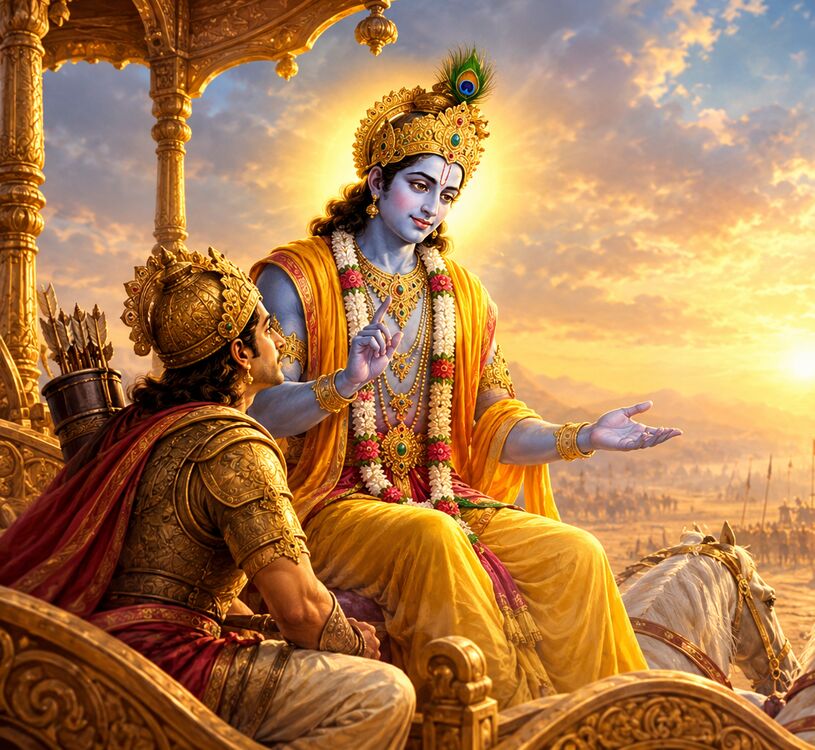
Duryodhana names the great warriors of both armies to his teacher Drona (shlokas 1–11). Bhishma blows his conch, and both sides answer, Krishna with the Panchajanya and Arjuna with the Devadatta (12–19). Arjuna asks Krishna to drive his chariot between the armies (20–27), and seeing teachers, elders and relatives on both sides, he is overcome with grief, puts down his bow and refuses to fight (28–47).
There is no teaching yet in this chapter; it is the question the rest of the Gita answers. A calm reading of all 47 shlokas with their meanings takes about twenty minutes.
The two armies 1.1–1.11
धृतराष्ट्र उवाच Dhritarashtra said
धर्मक्षेत्रे कुरुक्षेत्रे समवेता युयुत्सवः।
मामकाः पाण्डवाश्चैव किमकुर्वत सञ्जय॥
Dharma-kshetre kuru-kshetre samaveta yuyutsavah
Mamakah pandavashchaiva kimakurvata sanjaya
हे संजय, धर्मभूमि कुरुक्षेत्र में युद्ध की इच्छा से इकट्ठे हुए मेरे पुत्रों और पाण्डु के पुत्रों ने क्या किया?
Sanjaya, what did my sons and the sons of Pandu do, gathered and eager to fight on the holy field of Kurukshetra?
सञ्जय उवाच Sanjaya said
दृष्ट्वा तु पाण्डवानीकं व्यूढं दुर्योधनस्तदा।
आचार्यमुपसङ्गम्य राजा वचनमब्रवीत्॥
Drishtva tu pandavanikam vyudham duryodhanastada
Acharyamupasangamya raja vachanamabravit
पाण्डवों की सेना को व्यूह में खड़ा देखकर राजा दुर्योधन आचार्य द्रोण के पास गया और यह बोला:
Seeing the Pandava army drawn up for battle, King Duryodhana went to his teacher, Drona, and said:
पश्यैतां पाण्डुपुत्राणामाचार्य महतीं चमूम्।
व्यूढां द्रुपदपुत्रेण तव शिष्येण धीमता॥
Pashyaitam pandu-putranam acharya mahatim chamum
Vyudham drupada-putrena tava shishyena dhimata
हे आचार्य, पाण्डु पुत्रों की इस विशाल सेना को देखिए, जिसे आपके बुद्धिमान शिष्य, द्रुपद के पुत्र ने व्यूह में सजाया है।
Teacher, look at this great army of the sons of Pandu, arranged by your own clever student, the son of Drupada.
अत्र शूरा महेष्वासा भीमार्जुनसमा युधि।
युयुधानो विराटश्च द्रुपदश्च महारथः॥
Atra shura maheshvasa bhimarjuna-sama yudhi
Yuyudhano viratashcha drupadashcha maha-rathah
इसमें भीम और अर्जुन के समान युद्ध करने वाले शूरवीर और बड़े धनुर्धर हैं: युयुधान, विराट और महारथी द्रुपद।
Here are heroes and great archers, equal in battle to Bhima and Arjuna: Yuyudhana, Virata, and Drupada, a great chariot-warrior.
धृष्टकेतुश्चेकितानः काशिराजश्च वीर्यवान्।
पुरुजित्कुन्तिभोजश्च शैब्यश्च नरपुङ्गवः॥
Dhrishtaketushchekitanah kashirajashcha viryavan
Purujit kuntibhojashcha shaibyashcha nara-pungavah
धृष्टकेतु, चेकितान और पराक्रमी काशीराज; पुरुजित, कुन्तिभोज और मनुष्यों में श्रेष्ठ शैब्य।
Dhrishtaketu, Chekitana and the brave king of Kashi; Purujit, Kuntibhoja and Shaibya, the best of men.
युधामन्युश्च विक्रान्त उत्तमौजाश्च वीर्यवान्।
सौभद्रो द्रौपदेयाश्च सर्व एव महारथाः॥
Yudhamanyushcha vikranta uttamaujashcha viryavan
Saubhadro draupadeyashcha sarva eva maha-rathah
पराक्रमी युधामन्यु और बलवान उत्तमौजा, सुभद्रा का पुत्र (अभिमन्यु) और द्रौपदी के पुत्र: ये सभी महारथी हैं।
The bold Yudhamanyu and the brave Uttamaujas, the son of Subhadra and the sons of Draupadi: all of them great chariot-warriors.
अस्माकं तु विशिष्टा ये तान्निबोध द्विजोत्तम।
नायका मम सैन्यस्य संज्ञार्थं तान्ब्रवीमि ते॥
Asmakam tu vishishta ye tannibodha dwijottama
Nayaka mama sainyasya sanjnartham tanbravimi te
हे द्विजश्रेष्ठ, अब हमारी ओर के जो प्रमुख योद्धा हैं, मेरी सेना के नायक, उन्हें भी जान लीजिए; आपकी जानकारी के लिए मैं उनके नाम बताता हूँ।
And best of the twice-born, hear about the leading men on our side, the commanders of my army; I name them for you.
भवान्भीष्मश्च कर्णश्च कृपश्च समितिञ्जयः।
अश्वत्थामा विकर्णश्च सौमदत्तिस्तथैव च॥
Bhavanbhishmashcha karnashcha kripashcha samitinjayah
Ashvatthama vikarnashcha saumadattis tathaiva cha
आप स्वयं, भीष्म, कर्ण और युद्ध में सदा विजयी कृपाचार्य; अश्वत्थामा, विकर्ण और सोमदत्त का पुत्र भी।
Yourself and Bhishma, Karna and Kripa, ever victorious in battle; Ashvatthama, Vikarna, and the son of Somadatta too.
अन्ये च बहवः शूरा मदर्थे त्यक्तजीविताः।
नानाशस्त्रप्रहरणाः सर्वे युद्धविशारदाः॥
Anye cha bahavah shura madarthe tyaktajivitah
Nana-shastra-praharanah sarve yuddha-visharadah
और भी बहुत से शूरवीर हैं जो मेरे लिए प्राण देने को तैयार हैं, अनेक प्रकार के शस्त्रों से सज्जित और सभी युद्ध में निपुण।
And many other heroes ready to give their lives for me, armed with many kinds of weapons, all skilled in war.
अपर्याप्तं तदस्माकं बलं भीष्माभिरक्षितम्।
पर्याप्तं त्विदमेतेषां बलं भीमाभिरक्षितम्॥
Aparyaptam tadasmakam balam bhishmabhirakshitam
Paryaptam tvidametesham balam bhimabhirakshitam
भीष्म द्वारा रक्षित हमारी सेना अपार है, जबकि भीम द्वारा रक्षित उनकी सेना सीमित है।
Our strength, guarded by Bhishma, is beyond measure, while their strength, guarded by Bhima, is limited.
अयनेषु च सर्वेषु यथाभागमवस्थिताः।
भीष्ममेवाभिरक्षन्तु भवन्तः सर्व एव हि॥
Ayaneshu cha sarveshu yatha-bhagamavasthitah
Bhishmamevabhirakshantu bhavantah sarva eva hi
इसलिए आप सब अपने-अपने मोर्चों पर अपनी जगह डटे रहकर हर प्रकार से भीष्म की ही रक्षा करें।
So all of you, standing in your places at every point of entry, must protect Bhishma above all.
The sound of the conches 1.12–1.19
तस्य संजनयन्हर्षं कुरुवृद्धः पितामहः।
सिंहनादं विनद्योच्चैः शङ्खं दध्मौ प्रतापवान्॥
Tasya sanjanayan harsham kuru-vriddhah pitamahah
Simha-nadam vinadyochchaih shankham dadhmau pratapavan
तब दुर्योधन का उत्साह बढ़ाने के लिए कुरुवंश के सबसे बड़े, प्रतापी पितामह भीष्म ने सिंह की तरह गरजकर ज़ोर से शंख बजाया।
Then, to cheer Duryodhana, the mighty grandsire Bhishma, eldest of the Kurus, roared like a lion and blew his conch.
ततः शङ्खाश्च भेर्यश्च पणवानकगोमुखाः।
सहसैवाभ्यहन्यन्त स शब्दस्तुमुलोऽभवत्॥
Tatah shankhashcha bheryashcha panavanaka-gomukhah
Sahasaivabhyahanyanta sa shabdastumulo ’bhavat
फिर शंख, नगाड़े, ढोल, मृदंग और नरसिंघे एक साथ बज उठे, और उनका शब्द बड़ा भयंकर था।
Then conches, kettledrums, tabors, drums and horns all sounded at once, and the noise was tremendous.
ततः श्वेतैर्हयैर्युक्ते महति स्यन्दने स्थितौ।
माधवः पाण्डवश्चैव दिव्यौ शङ्खौ प्रदध्मतुः॥
Tatah shvetairhayairyukte mahati syandane sthitau
Madhavah pandavashchaiva divyau shankhau pradadhmatuh
तब सफ़ेद घोड़ों वाले बड़े रथ पर बैठे माधव (श्रीकृष्ण) और पाण्डुपुत्र अर्जुन ने अपने दिव्य शंख बजाए।
Then Madhava (Krishna) and the son of Pandu (Arjuna), standing in their great chariot yoked to white horses, blew their divine conches.
पाञ्चजन्यं हृषीकेशो देवदत्तं धनंजयः।
पौण्ड्रं दध्मौ महाशङ्खं भीमकर्मा वृकोदरः॥
Panchajanyam hrishikesho devadattam dhananjayah
Paundram dadhmau maha-shankham bhima-karma vrikodarah
हृषीकेश ने पाञ्चजन्य, धनंजय ने देवदत्त, और भयानक कर्म करने वाले भीम ने पौण्ड्र नाम का महाशंख बजाया।
Hrishikesha blew the Panchajanya, Dhananjaya the Devadatta, and Bhima, of mighty deeds, blew the great conch Paundra.
अनन्तविजयं राजा कुन्तीपुत्रो युधिष्ठिरः।
नकुलः सहदेवश्च सुघोषमणिपुष्पकौ॥
Anantavijayam raja kunti-putro yudhishthirah
Nakulah sahadevashcha sughosha-manipushpakau
कुन्तीपुत्र राजा युधिष्ठिर ने अनन्तविजय, और नकुल तथा सहदेव ने सुघोष और मणिपुष्पक नाम के शंख बजाए।
King Yudhishthira, son of Kunti, blew the Anantavijaya; Nakula and Sahadeva blew the Sughosha and the Manipushpaka.
काश्यश्च परमेष्वासः शिखण्डी च महारथः।
धृष्टद्युम्नो विराटश्च सात्यकिश्चापराजितः॥
Kashyashcha parameshvasah shikhandi cha maha-rathah
Dhrishtadyumno viratashcha satyakish chaparajitah
श्रेष्ठ धनुर्धर काशीराज, महारथी शिखण्डी, धृष्टद्युम्न, विराट और अजेय सात्यकि;
The king of Kashi, a great archer, Shikhandi, the great chariot-warrior, Dhrishtadyumna, Virata, and the unconquered Satyaki;
द्रुपदो द्रौपदेयाश्च सर्वशः पृथिवीपते।
सौभद्रश्च महाबाहुः शङ्खान्दध्मुः पृथक्पृथक्॥
Drupado draupadeyashcha sarvashah prithivi-pate
Saubhadrashcha maha-bahuh shankhandadhmuh prithak prithak
हे राजन, द्रुपद, द्रौपदी के पुत्र और महाबाहु सुभद्रापुत्र, इन सबने अलग-अलग अपने शंख बजाए।
Drupada, the sons of Draupadi, and the mighty-armed son of Subhadra, O lord of the earth, each blew his own conch.
स घोषो धार्तराष्ट्राणां हृदयानि व्यदारयत्।
नभश्च पृथिवीं चैव तुमुलो व्यनुनादयन्॥
Sa ghosho dhartarashtranam hridayani vyadarayat
Nabhashcha prithivim chaiva tumulo vyanunadayan
आकाश और पृथ्वी को गुँजाते हुए उस भयंकर शब्द ने धृतराष्ट्र के पुत्रों के हृदय विदीर्ण कर दिए।
That tremendous sound, echoing through the sky and the earth, tore the hearts of Dhritarashtra’s sons.
Arjuna’s chariot between the armies 1.20–1.27
अथ व्यवस्थितान् दृष्ट्वा धार्तराष्ट्रान्कपिध्वजः।
प्रवृत्ते शस्त्रसंपाते धनुरुद्यम्य पाण्डवः॥
Atha vyavasthitan drishtva dhartarashtran kapi-dhwajah
Pravritte shastra-sampate dhanurudyamya pandavah
तब कपिध्वज (जिनकी ध्वजा पर हनुमानजी हैं) अर्जुन ने धृतराष्ट्र के पुत्रों को डटे हुए देखकर, शस्त्र चलने की तैयारी के समय, अपना धनुष उठाया।
Then, seeing Dhritarashtra’s sons drawn up in their places, as the weapons were about to clash, Arjuna, whose banner bore Hanuman, raised his bow.
हृषीकेशं तदा वाक्यमिदमाह महीपते।
अर्जुन उवाच
सेनयोरुभयोर्मध्ये रथं स्थापय मेऽच्युत॥
Hrishikesham tada vakyam idam aha mahi-pate
Arjuna uvacha
Senayor ubhayor madhye ratham sthapaya me ’chyuta
और हे राजन, उन्होंने हृषीकेश से यह कहा। अर्जुन बोले: हे अच्युत, मेरे रथ को दोनों सेनाओं के बीच खड़ा कीजिए,
And, O King, he spoke these words to Hrishikesha. Arjuna said: Achyuta, place my chariot between the two armies,
यावदेतान्निरीक्षेऽहं योद्धुकामानवस्थितान्।
कैर्मया सह योद्धव्यमस्मिन्रणसमुद्यमे॥
Yavadetan nirikshe ’ham yoddhu-kaman avasthitan
Kairmaya saha yoddhavyam asmin rana-samudyame
ताकि मैं युद्ध की इच्छा से खड़े इन योद्धाओं को देख सकूँ कि इस युद्ध में मुझे किन-किन से लड़ना है,
so that I can look at those who stand here wanting to fight, and see whom I must fight in this battle,
योत्स्यमानानवेक्षेऽहं य एतेऽत्र समागताः।
धार्तराष्ट्रस्य दुर्बुद्धेर्युद्धे प्रियचिकीर्षवः॥
Yotsyamanan avekshe ’ham ya ete ’tra samagatah
Dhartarashtrasya durbuddher yuddhe priya-chikirshavah
और उन्हें देख सकूँ जो दुर्बुद्धि दुर्योधन का युद्ध में भला चाहते हुए यहाँ लड़ने आए हैं।
and see those who have gathered here to fight, wishing to please the ill-minded son of Dhritarashtra in this war.
सञ्जय उवाच Sanjaya said
एवमुक्तो हृषीकेशो गुडाकेशेन भारत।
सेनयोरुभयोर्मध्ये स्थापयित्वा रथोत्तमम्॥
Evam ukto hrishikesho gudakeshena bharata
Senayor ubhayor madhye sthapayitva rathottamam
हे भारत, गुडाकेश (अर्जुन) के ऐसा कहने पर हृषीकेश ने उस उत्तम रथ को दोनों सेनाओं के बीच खड़ा किया,
Asked in this way by Gudakesha (Arjuna), O Bharata, Hrishikesha placed that finest of chariots between the two armies,
भीष्मद्रोणप्रमुखतः सर्वेषां च महीक्षिताम्।
उवाच पार्थ पश्यैतान्समवेतान्कुरूनिति॥
Bhishma-drona-pramukhatah sarvesham cha mahi-kshitam
Uvacha partha pashyaitan samavetan kurun iti
भीष्म, द्रोण और सब राजाओं के सामने, और कहा: हे पार्थ, यहाँ इकट्ठे हुए इन कौरवों को देखो।
in front of Bhishma, Drona and all the rulers of the earth, and said: Partha, look at all these Kurus gathered here.
तत्रापश्यत्स्थितान्पार्थः पितॄनथ पितामहान्।
आचार्यान्मातुलान्भ्रातॄन्पुत्रान्पौत्रान्सखींस्तथा॥
Tatrapashyat sthitan parthah pitrin atha pitamahan
Acharyan matulan bhratrin putran pautran sakhims tatha
वहाँ अर्जुन ने दोनों सेनाओं में खड़े पिता के समान बड़ों, पितामहों, गुरुओं, मामाओं, भाइयों, पुत्रों, पौत्रों और मित्रों को देखा,
There Arjuna saw, standing in both armies, fathers and grandfathers, teachers, uncles, brothers, sons, grandsons and friends,
श्वशुरान्सुहृदश्चैव सेनयोरुभयोरपि।
तान्समीक्ष्य स कौन्तेयः सर्वान्बन्धूनवस्थितान्॥
Shvashuran suhridash chaiva senayor ubhayor api
Tan samikshya sa kaunteyah sarvan bandhun avasthitan
और ससुरों तथा हितैषियों को भी। उन सब बंधुओं को खड़ा देखकर कुन्तीपुत्र अर्जुन,
fathers-in-law and well-wishers too. Seeing all these relatives standing there, the son of Kunti,
Arjuna’s grief 1.28–1.47
कृपया परयाऽऽविष्टो विषीदन्निदमब्रवीत्।
अर्जुन उवाच
दृष्ट्वेमं स्वजनं कृष्ण युयुत्सुं समुपस्थितम्॥
Kripaya parayavishto vishidann idam abravit
Arjuna uvacha
Drishtvemam sva-janam krishna yuyutsum samupasthitam
गहरी करुणा से भरकर, दुःखी होकर बोले। अर्जुन ने कहा: हे कृष्ण, युद्ध की इच्छा से खड़े अपने ही लोगों को देखकर,
filled with deep pity, spoke in sorrow. Arjuna said: Krishna, seeing my own people here, eager to fight,
सीदन्ति मम गात्राणि मुखं च परिशुष्यति।
वेपथुश्च शरीरे मे रोमहर्षश्च जायते॥
Sidanti mama gatrani mukham cha parishushyati
Vepathush cha sharire me roma-harshash cha jayate
मेरे अंग शिथिल हो रहे हैं और मुँह सूख रहा है; मेरा शरीर काँप रहा है और रोंगटे खड़े हो रहे हैं।
my limbs give way and my mouth is dry; my body trembles and my hair stands on end.
गाण्डीवं स्रंसते हस्तात्त्वक्चैव परिदह्यते।
न च शक्नोम्यवस्थातुं भ्रमतीव च मे मनः॥
Gandivam sramsate hastat tvak chaiva paridahyate
Na cha shaknomy avasthatum bhramativa cha me manah
मेरा गाण्डीव धनुष हाथ से छूट रहा है और त्वचा जल रही है। मैं खड़ा नहीं रह पा रहा, और मेरा मन मानो चक्कर खा रहा है।
Gandiva, my bow, is slipping from my hand and my skin is burning. I cannot stand steady, and my mind is whirling.
निमित्तानि च पश्यामि विपरीतानि केशव।
न च श्रेयोऽनुपश्यामि हत्वा स्वजनमाहवे॥
Nimittani cha pashyami viparitani keshava
Na cha shreyo ’nupashyami hatva sva-janam ahave
हे केशव, मुझे उलटे लक्षण दिखाई दे रहे हैं, और युद्ध में अपने ही लोगों को मारने में मुझे कोई भलाई नहीं दिखती।
Keshava, I see bad omens, and I see no good in killing my own people in battle.
न काङ्क्षे विजयं कृष्ण न च राज्यं सुखानि च।
किं नो राज्येन गोविन्द किं भोगैर्जीवितेन वा॥
Na kankshe vijayam krishna na cha rajyam sukhani cha
Kim no rajyena govinda kim bhogair jivitena va
हे कृष्ण, मुझे न विजय चाहिए, न राज्य, न सुख। हे गोविंद, हमें ऐसे राज्य, भोगों या जीवन से भी क्या लाभ?
Krishna, I do not want victory, or a kingdom, or pleasures. Govinda, what use to us is a kingdom, or enjoyment, or even life?
येषामर्थे काङ्क्षितं नो राज्यं भोगाः सुखानि च।
त इमेऽवस्थिता युद्धे प्राणांस्त्यक्त्वा धनानि च॥
Yesham arthe kankshitam no rajyam bhogah sukhani cha
Ta ime ’vasthita yuddhe pranams tyaktva dhanani cha
जिनके लिए हम राज्य, भोग और सुख चाहते थे, वही लोग प्राण और धन की आशा छोड़कर युद्ध में खड़े हैं:
Those for whose sake we wanted a kingdom, enjoyment and pleasure stand here in battle, ready to give up their lives and wealth:
आचार्याः पितरः पुत्रास्तथैव च पितामहाः।
मातुलाः श्वशुराः पौत्राः श्यालाः सम्बन्धिनस्तथा॥
Acharyah pitarah putras tathaiva cha pitamahah
Matulah shvashurah pautrah shyalah sambandhinas tatha
गुरु, पिता के समान बड़े, पुत्र और पितामह, मामा, ससुर, पौत्र, साले और अन्य संबंधी।
teachers, fathers, sons and grandfathers, uncles, fathers-in-law, grandsons, brothers-in-law and other relatives.
एतान्न हन्तुमिच्छामि घ्नतोऽपि मधुसूदन।
अपि त्रैलोक्यराज्यस्य हेतोः किं नु महीकृते॥
Etan na hantum ichchhami ghnato ’pi madhusudana
Api trailokya-rajyasya hetoh kim nu mahi-krite
हे मधुसूदन, ये मुझे मार भी दें, तब भी मैं इन्हें मारना नहीं चाहता; तीनों लोकों के राज्य के लिए भी नहीं, फिर पृथ्वी के लिए तो कहना ही क्या।
Madhusudana, I do not wish to kill them, even if they kill me; not even for rule over the three worlds, let alone for the earth.
निहत्य धार्तराष्ट्रान्नः का प्रीतिः स्याज्जनार्दन।
पापमेवाश्रयेदस्मान्हत्वैतानाततायिनः॥
Nihatya dhartarashtran nah ka pritih syaj janardana
Papam evashrayed asman hatvaitan atatayinah
हे जनार्दन, धृतराष्ट्र के पुत्रों को मारकर हमें क्या प्रसन्नता मिलेगी? इन आततायियों को मारकर भी हमें पाप ही लगेगा।
Janardana, what joy could we have by killing the sons of Dhritarashtra? Only wrong would come to us by killing these aggressors.
तस्मान्नार्हा वयं हन्तुं धार्तराष्ट्रान्स्वबान्धवान्।
स्वजनं हि कथं हत्वा सुखिनः स्याम माधव॥
Tasman narha vayam hantum dhartarashtran sa-bandhavan
Sva-janam hi katham hatva sukhinah syama madhava
इसलिए अपने ही बंधु धृतराष्ट्र के पुत्रों को मारना हमारे लिए उचित नहीं। हे माधव, अपने ही लोगों को मारकर हम कैसे सुखी होंगे?
So it is not right for us to kill the sons of Dhritarashtra, our own relatives. Madhava, how could we be happy after killing our own people?
यद्यप्येते न पश्यन्ति लोभोपहतचेतसः।
कुलक्षयकृतं दोषं मित्रद्रोहे च पातकम्॥
Yady apy ete na pashyanti lobhopahata-chetasah
Kula-kshaya-kritam dosham mitra-drohe cha patakam
यद्यपि लोभ से भ्रष्ट हुए मन वाले ये लोग कुल के नाश से होने वाले दोष और मित्रों से द्रोह के पाप को नहीं देखते,
Even if they, their minds overcome by greed, see no fault in destroying a family and no wrong in betraying friends,
कथं न ज्ञेयमस्माभिः पापादस्मान्निवर्तितुम्।
कुलक्षयकृतं दोषं प्रपश्यद्भिर्जनार्दन॥
Katham na jneyam asmabhih papad asman nivartitum
Kula-kshaya-kritam dosham prapashyadbhir janardana
तो हे जनार्दन, कुल के नाश से होने वाले दोष को साफ़ देखने वाले हम लोग इस पाप से हटने की बात क्यों न सोचें?
why should we, who clearly see the harm in destroying a family, Janardana, not know to turn away from this wrong?
कुलक्षये प्रणश्यन्ति कुलधर्माः सनातनाः।
धर्मे नष्टे कुलं कृत्स्नमधर्मोऽभिभवत्युत॥
Kula-kshaye pranashyanti kula-dharmah sanatanah
Dharme nashte kulam kritsnam adharmo ’bhibhavaty uta
कुल के नाश से उसकी सनातन कुल-परंपराएँ नष्ट हो जाती हैं, और धर्म के नष्ट होने पर पूरे कुल में अधर्म फैल जाता है।
When a family is destroyed, its age-old traditions are lost; and when these are lost, disorder takes over the whole family.
अधर्माभिभवात्कृष्ण प्रदुष्यन्ति कुलस्त्रियः।
स्त्रीषु दुष्टासु वार्ष्णेय जायते वर्णसङ्करः॥
Adharmabhibhavat krishna pradushyanti kula-striyah
Strishu dushtasu varshneya jayate varna-sankarah
हे कृष्ण, अधर्म के बढ़ने से कुल की स्त्रियाँ भटक जाती हैं, और हे वार्ष्णेय, इससे समाज की व्यवस्था में मिश्रण (वर्णसंकर) होता है।
Krishna, when disorder takes over, the women of the family are led astray, and from that, Varshneya, comes confusion in the social order.
सङ्करो नरकायैव कुलघ्नानां कुलस्य च।
पतन्ति पितरो ह्येषां लुप्तपिण्डोदकक्रियाः॥
Sankaro narakayaiva kula-ghnanam kulasya cha
Patanti pitaro hy esham lupta-pindodaka-kriyah
यह मिश्रण कुल का नाश करने वालों को और कुल को भी नरक की ओर ले जाता है; पिण्ड और जल के अर्पण बंद हो जाने से उनके पितर भी गिर जाते हैं।
This confusion leads both the family and those who destroyed it to ruin; their ancestors fall too, deprived of the offerings of food and water.
दोषैरेतैः कुलघ्नानां वर्णसङ्करकारकैः।
उत्साद्यन्ते जातिधर्माः कुलधर्माश्च शाश्वताः॥
Doshair etaih kula-ghnanam varna-sankara-karakaih
Utsadyante jati-dharmah kula-dharmash cha shashvatah
कुल का नाश करने वालों के इन दोषों से, जो अव्यवस्था पैदा करते हैं, जाति-धर्म और सनातन कुल-धर्म नष्ट हो जाते हैं।
By these wrongs of those who destroy families and cause disorder, the lasting traditions of community and family are swept away.
उत्सन्नकुलधर्माणां मनुष्याणां जनार्दन।
नरकेऽनियतं वासो भवतीत्यनुशुश्रुम॥
Utsanna-kula-dharmanam manushyanam janardana
Narake ’niyatam vaso bhavatityanushushruma
हे जनार्दन, हमने सुना है कि जिनके कुल-धर्म नष्ट हो जाते हैं, वे मनुष्य बहुत समय तक नरक में रहते हैं।
Janardana, we have heard that those whose family traditions are destroyed live in hell for an unending time.
अहो बत महत्पापं कर्तुं व्यवसिता वयम्।
यद्राज्यसुखलोभेन हन्तुं स्वजनमुद्यताः॥
Aho bata mahat papam kartum vyavasita vayam
Yad rajya-sukha-lobhena hantum sva-janam udyatah
हाय, कितने दुःख की बात है कि हम राज्य और सुख के लोभ में अपने ही लोगों को मारने को तैयार होकर बड़ा पाप करने चले हैं!
Alas, what a great wrong we are set on doing, ready to kill our own people out of greed for the pleasures of a kingdom!
यदि मामप्रतीकारमशस्त्रं शस्त्रपाणयः।
धार्तराष्ट्रा रणे हन्युस्तन्मे क्षेमतरं भवेत्॥
Yadi mam apratikaram ashastram shastra-panayah
Dhartarashtra rane hanyus tan me kshemataram bhavet
यदि धृतराष्ट्र के शस्त्रधारी पुत्र युद्ध में मुझ निहत्थे और सामना न करने वाले को मार दें, तो वह मेरे लिए अधिक कल्याणकारी होगा।
It would be better for me if the sons of Dhritarashtra, weapons in hand, killed me in battle, unarmed and not resisting.
सञ्जय उवाच Sanjaya said
एवमुक्त्वाऽर्जुनः संख्ये रथोपस्थ उपाविशत्।
विसृज्य सशरं चापं शोकसंविग्नमानसः॥
Evam uktvarjunah sankhye rathopastha upavishat
Visrijya sa-sharam chapam shoka-samvigna-manasah
युद्धभूमि में ऐसा कहकर, शोक से व्याकुल मन वाले अर्जुन बाणों सहित धनुष को छोड़कर रथ के पिछले भाग में बैठ गए।
Having said this on the battlefield, Arjuna put down his bow and arrows and sank down on the seat of the chariot, his mind overwhelmed with grief.
ॐ तत्सदिति श्रीमद्भगवद्गीतासूपनिषत्सु ब्रह्मविद्यायां योगशास्त्रे श्रीकृष्णार्जुनसंवादे
अर्जुनविषादयोगो नाम प्रथमोऽध्यायः ॥१॥
The meanings here are written in plain words and follow the common reading of each shloka; they are not a word-for-word translation or a commentary. The Roman lettering is simplified for easy reading. This page is for reading and reflection; it is not a substitute for medical or other professional help.
Questions people ask
What is Chapter 1 of the Bhagavad Gita about?
The armies at Kurukshetra and Arjuna’s grief. Seeing his own teachers and relatives ready to fight, Arjuna loses heart and refuses to fight. The rest of the Gita is Krishna’s answer.
Who speaks in Chapter 1?
King Dhritarashtra asks the opening question. Sanjaya tells what happens, Duryodhana speaks to Drona, and Arjuna speaks to Krishna from shloka 21 onwards.
What does “Arjuna Vishada Yoga” mean?
Vishada means grief or despair. The chapter is named after Arjuna’s despair; even this is called a yoga, because it is what turns him towards Krishna’s teaching.
What is the first shloka of the Bhagavad Gita?
“Dharmakshetre kurukshetre”: Dhritarashtra asks Sanjaya what his sons and the sons of Pandu did, gathered to fight on the holy field of Kurukshetra.
What are the names of the conches in Chapter 1?
Krishna blows the Panchajanya, Arjuna the Devadatta, Bhima the Paundra, Yudhishthira the Anantavijaya, and Nakula and Sahadeva the Sughosha and Manipushpaka (1.15–1.16).
Join us on Facebook
New books and chapters, festival days and easy-to-read astrology, in your feed. Free, and you can leave any time.