Bhagavad Gita Chapter 2
Sankhya Yoga · The path of knowledge (सांख्ययोग)
Printed from jeevandrishti.com/books/bhagavad-gita/chapter-2, where the meaning of every verse is in English and Hindi.
Duty · Knowledge · Devotion
About Chapter 2, Sankhya Yoga
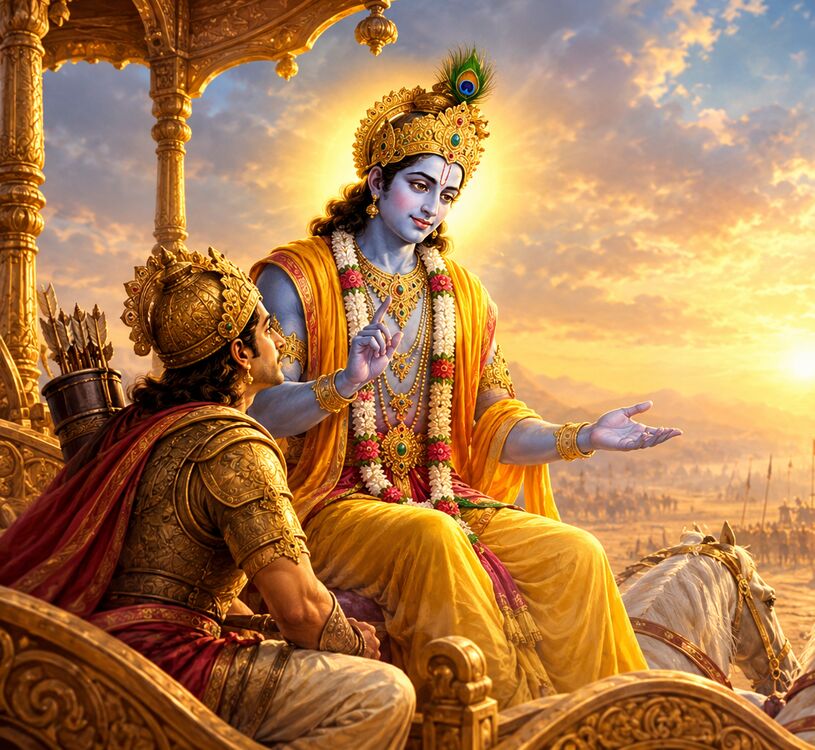
Chapter 2, Sankhya Yoga, is often called a summary of the whole Gita. It opens with Arjuna in tears between the two armies, refusing to fight and asking Krishna to teach him. Krishna’s teaching begins here.
First Krishna speaks of the soul (atma), which is never born and never dies, so grief for the body is misplaced (shlokas 11–30). Then of Arjuna’s own duty as a warrior (31–38). Then of buddhi yoga: doing one’s work with an even mind, without craving its fruits (39–53), which includes the well-known shloka 2.47. The chapter ends with Arjuna asking how a person of steady wisdom (sthitaprajna) lives, and Krishna’s answer (54–72).
A calm reading of all 72 shlokas with their meanings takes about half an hour. You can also read one section at a time from the contents.
Arjuna’s grief and his request 2.1–2.10
सञ्जय उवाच Sanjaya said
तं तथा कृपयाऽविष्टमश्रुपूर्णाकुलेक्षणम्।
विषीदन्तमिदं वाक्यमुवाच मधुसूदनः॥
Tam tatha kripayavishtamashru purnakulekshanam
Vishidantamidam vakyam uvacha madhusudanah
करुणा से घिरे, आँसुओं से भरी व्याकुल आँखों वाले और शोक में डूबे अर्जुन से मधुसूदन (श्रीकृष्ण) ने ये वचन कहे।
Seeing Arjuna overcome with pity, his eyes troubled and full of tears, sinking in sorrow, Madhusudana (Krishna) spoke these words.
श्रीभगवानुवाच Shri Krishna said
कुतस्त्वा कश्मलमिदं विषमे समुपस्थितम्।
अनार्यजुष्टमस्वर्ग्यमकीर्तिकरमर्जुन॥
Kutastva kashmalamidam vishame samupasthitam
Anarya-jushtamaswargyam akirti-karam arjuna
हे अर्जुन, इस संकट की घड़ी में यह मोह तुम्हें कहाँ से आ गया? यह श्रेष्ठ पुरुषों के योग्य नहीं है; इससे न स्वर्ग मिलता है, न कीर्ति।
Where has this weakness come from, Arjuna, at such a critical hour? It does not suit a noble person; it leads neither to heaven nor to a good name.
क्लैब्यं मा स्म गमः पार्थ नैतत्त्वय्युपपद्यते।
क्षुद्रं हृदयदौर्बल्यं त्यक्त्वोत्तिष्ठ परन्तप॥
Klaibyam ma sma gamah partha naitat tvayyupapadyate
Kshudram hridaya-daurbalyam tyaktvottishtha parantapa
हे पार्थ, कायरता को मत अपनाओ, यह तुम्हें शोभा नहीं देती। हृदय की इस तुच्छ दुर्बलता को छोड़कर खड़े हो जाओ, हे परंतप।
Do not give in to faint-heartedness, son of Pritha; it is not worthy of you. Shake off this small weakness of the heart and stand up, scorcher of foes.
अर्जुन उवाच Arjuna said
कथं भीष्ममहं संख्ये द्रोणं च मधुसूदन।
इषुभिः प्रतियोत्स्यामि पूजार्हावरिसूदन॥
Katham bhishmam aham sankhye dronam cha madhusudana
Ishubhih pratiyotsyami pujarhavari-sudana
हे मधुसूदन, मैं युद्ध में भीष्म और द्रोण पर बाणों से कैसे प्रहार करूँ? हे अरिसूदन, वे तो मेरे आदरणीय हैं।
How can I strike Bhishma and Drona with arrows in battle, Madhusudana? They deserve my reverence, O slayer of enemies.
गुरूनहत्वा हि महानुभावान्
श्रेयो भोक्तुं भैक्ष्यमपीह लोके।
हत्वार्थकामांस्तु गुरूनिहैव
भुञ्जीय भोगान् रुधिरप्रदिग्धान्॥
Gurunahatva hi mahanubhavan
Shreyo bhoktum bhaikshyamapiha loke
Hatvartha-kamamstu gurunihaiva
Bhunjiya bhogan rudhira-pradigdhan
इन महान गुरुजनों को मारने से तो इस संसार में भिक्षा माँगकर जीना भी अच्छा है। इन्हें मारकर जो भी सुख मिलेंगे, वे रक्त से सने होंगे।
It would be better to live in this world even by begging than to kill these great teachers. If I kill them, every pleasure I enjoy here will be stained with blood.
न चैतद्विद्मः कतरन्नो गरीयो
यद्वा जयेम यदि वा नो जयेयुः।
यानेव हत्वा न जिजीविषाम
स्तेऽवस्थिताः प्रमुखे धार्तराष्ट्राः॥
Na chaitadvidmah kataranno gariyo
Yadva jayema yadi va no jayeyuh
Yaneva hatva na jijivishamas
Te ’vasthitah pramukhe dhartarashtrah
हम यह भी नहीं जानते कि हमारे लिए क्या अच्छा है: हम जीतें या वे हमें जीतें। जिन्हें मारकर हम जीना भी न चाहें, वही धृतराष्ट्र के पुत्र हमारे सामने खड़े हैं।
We do not even know which is better for us: that we win, or that they win. The sons of Dhritarashtra stand before us, and if we killed them we would not wish to live.
कार्पण्यदोषोपहतस्वभावः
पृच्छामि त्वां धर्मसंमूढचेताः।
यच्छ्रेयः स्यान्निश्चितं ब्रूहि तन्मे
शिष्यस्तेऽहं शाधि मां त्वां प्रपन्नम्॥
Karpanya-doshopahata-svabhavah
Prichchhami tvam dharma-sammudha-chetah
Yach-chhreyah syannishchitam bruhi tanme
Shishyaste ’ham shadhi mam tvam prapannam
दीनता के दोष ने मेरे स्वभाव को दबा दिया है और धर्म के विषय में मेरा मन भ्रमित है। मैं आपसे पूछता हूँ: जो निश्चित रूप से मेरे लिए कल्याणकारी हो, वह बताइए। मैं आपका शिष्य हूँ, आपकी शरण में हूँ, मुझे शिक्षा दीजिए।
My nature is overcome by weakness and pity, and my mind is confused about what is right. I ask you: tell me clearly what is best for me. I am your disciple and I come to you for refuge. Teach me.
न हि प्रपश्यामि ममापनुद्या
द्यच्छोकमुच्छोषणमिन्द्रियाणाम्।
अवाप्य भूमावसपत्नमृद्धम्
राज्यं सुराणामपि चाधिपत्यम्॥
Na hi prapashyami mamapanudyad
Yach-chhokam uchchhoshanam-indriyanam
Avapya bhumav-asapatnamriddham
Rajyam suranamapi chadhipatyam
पृथ्वी का निष्कंटक, समृद्ध राज्य या देवताओं का आधिपत्य पाकर भी मुझे ऐसा कुछ नहीं दिखता जो इन्द्रियों को सुखा देने वाले मेरे इस शोक को दूर कर सके।
I see nothing that could take away this grief that dries up my senses, not even an unrivalled, prosperous kingdom on earth, or rule over the gods.
सञ्जय उवाच Sanjaya said
एवमुक्त्वा हृषीकेशं गुडाकेशः परन्तप।
न योत्स्य इति गोविन्दमुक्त्वा तूष्णीं बभूव ह॥
Evam-uktva hrishikesham gudakeshah parantapa
Na yotsya iti govindam uktva tushnim babhuva ha
हृषीकेश (श्रीकृष्ण) से ऐसा कहकर गुडाकेश (अर्जुन) ने गोविंद से कहा, “मैं युद्ध नहीं करूँगा,” और चुप हो गए।
Having said this to Hrishikesha (Krishna), Gudakesha (Arjuna) told Govinda, “I will not fight,” and fell silent.
तमुवाच हृषीकेशः प्रहसन्निव भारत।
सेनयोरुभयोर्मध्ये विषीदन्तमिदं वचः॥
Tam-uvacha hrishikeshah prahasanniva bharata
Senayorubhayor-madhye vishidantam-idam vachah
तब दोनों सेनाओं के बीच शोक में डूबे अर्जुन से हृषीकेश ने मानो मुस्कराते हुए ये वचन कहे।
Then, between the two armies, Hrishikesha, as if smiling, spoke these words to the grieving Arjuna.
The soul that does not die 2.11–2.30
श्रीभगवानुवाच Shri Krishna said
अशोच्यानन्वशोचस्त्वं प्रज्ञावादांश्च भाषसे।
गतासूनगतासूंश्च नानुशोचन्ति पण्डिताः॥
Ashochyan-anvashochas-tvam prajna-vadansh cha bhashase
Gatasun-agatasunsh-cha nanushochanti panditah
तुम उनके लिए शोक करते हो जो शोक के योग्य नहीं, और फिर भी ज्ञानियों जैसी बातें करते हो। ज्ञानी न मरे हुओं के लिए शोक करते हैं, न जीवितों के लिए।
You grieve for those who need no grief, and yet you speak words that sound wise. The wise grieve neither for those who have died nor for those who live.
न त्वेवाहं जातु नासं न त्वं नेमे जनाधिपाः।
न चैव न भविष्यामः सर्वे वयमतः परम्॥
Na tvevaham jatu nasam na tvam neme janadhipah
Na chaiva na bhavishyamah sarve vayamatah param
ऐसा कोई समय नहीं था जब मैं नहीं था, या तुम नहीं थे, या ये राजा नहीं थे; और ऐसा भी नहीं होगा कि आगे हम सब नहीं रहेंगे।
There was never a time when I did not exist, nor you, nor these kings; and none of us will ever cease to be in the time to come.
देहिनोऽस्मिन्यथा देहे कौमारं यौवनं जरा।
तथा देहान्तरप्राप्तिर्धीरस्तत्र न मुह्यति॥
Dehino ’smin yatha dehe kaumaram yauvanam jara
Tatha dehantara-praptir dhiras tatra na muhyati
जैसे देहधारी आत्मा इस शरीर में बचपन, जवानी और बुढ़ापे से गुज़रता है, वैसे ही वह दूसरा शरीर पाता है। धीर पुरुष इससे मोहित नहीं होता।
Just as the soul in this body passes through childhood, youth and old age, so it passes on to another body. A steady person is not confused by this.
मात्रास्पर्शास्तु कौन्तेय शीतोष्णसुखदुःखदाः।
आगमापायिनोऽनित्यास्तांस्तितिक्षस्व भारत॥
Matra-sparshas tu kaunteya shitoshna-sukha-duhkha-dah
Agamapayino ’nityas tans-titikshasva bharata
हे कौन्तेय, इन्द्रियों और विषयों के मिलने से सर्दी-गर्मी और सुख-दुःख होते हैं। ये आते-जाते रहते हैं और टिकते नहीं; हे भारत, इन्हें धैर्य से सहो।
When the senses meet their objects, son of Kunti, they bring cold and heat, pleasure and pain. These come and go and do not last. Bear them patiently, Bharata.
यं हि न व्यथयन्त्येते पुरुषं पुरुषर्षभ।
समदुःखसुखं धीरं सोऽमृतत्वाय कल्पते॥
Yam hi na vyathayantyete purusham purusharshabha
Sama-duhkha-sukham dhiram so ’mritatvaya kalpate
हे पुरुषश्रेष्ठ, जिस धीर पुरुष को ये व्याकुल नहीं करते, जो सुख और दुःख में समान रहता है, वह अमृतत्व (मोक्ष) के योग्य होता है।
The steady person whom these do not disturb, best of men, who stays the same in pain and pleasure, is fit for immortality.
नासतो विद्यते भावो नाभावो विद्यते सतः।
उभयोरपि दृष्टोऽन्तस्त्वनयोस्तत्त्वदर्शिभिः॥
Nasato vidyate bhavo nabhavo vidyate satah
Ubhayorapi drishto ’nta stvanayos tattva-darshibhih
असत् का अस्तित्व नहीं होता और सत् का कभी अभाव नहीं होता। तत्त्व को जानने वालों ने इन दोनों का सार देख लिया है।
What is unreal has no lasting existence, and what is real never ceases to be. Those who see the truth have understood both.
अविनाशि तु तद्विद्धि येन सर्वमिदं ततम्।
विनाशमव्ययस्यास्य न कश्चित् कर्तुमर्हति॥
Avinashi tu tadviddhi yena sarvam idam tatam
Vinasham avyayasyasya na kashchit kartum arhati
जिससे यह सारा जगत व्याप्त है, उसे अविनाशी जानो। उस अविनाशी का नाश कोई नहीं कर सकता।
Know that what pervades all this is indestructible. No one can destroy that which does not perish.
अन्तवन्त इमे देहा नित्यस्योक्ताः शरीरिणः।
अनाशिनोऽप्रमेयस्य तस्माद्युध्यस्व भारत॥
Antavanta ime deha nityasyoktah sharirinah
Anashino ’prameyasya tasmad yudhyasva bharata
ये शरीर नाशवान हैं, पर इनमें रहने वाला आत्मा नित्य, अविनाशी और अपरिमेय कहा गया है। इसलिए, हे भारत, युद्ध करो।
These bodies come to an end, but the soul that lives in them is said to be eternal, indestructible and beyond measure. Therefore fight, Bharata.
य एनं वेत्ति हन्तारं यश्चैनं मन्यते हतम्।
उभौ तौ न विजानीतो नायं हन्ति न हन्यते॥
Ya enam vetti hantaram yash chainam manyate hatam
Ubhau tau na vijanito nayam hanti na hanyate
जो इस आत्मा को मारने वाला समझता है और जो इसे मरा हुआ मानता है, वे दोनों नहीं जानते; यह न मारता है, न मारा जाता है।
One who thinks the soul kills, and one who thinks it is killed, both fail to understand. It neither kills nor is killed.
न जायते म्रियते वा कदाचि
न्नायं भूत्वा भविता वा न भूयः।
अजो नित्यः शाश्वतोऽयं पुराणो
न हन्यते हन्यमाने शरीरे॥
Na jayate mriyate va kadachin
Nayam bhutva bhavita va na bhuyah
Ajo nityah shashvato ’yam purano
Na hanyate hanyamane sharire
यह आत्मा न कभी जन्म लेता है, न मरता है; न यह उत्पन्न होकर फिर न रहने वाला है। यह अजन्मा, नित्य, शाश्वत और पुरातन है; शरीर के मारे जाने पर भी यह नहीं मारा जाता।
It is never born and it never dies; it did not come into being and will not stop being. Unborn, eternal, lasting and ancient, it is not killed when the body is killed.
वेदाविनाशिनं नित्यं य एनमजमव्ययम्।
कथं स पुरुषः पार्थ कं घातयति हन्ति कम्॥
Vedavinashinam nityam ya enam ajam avyayam
Katham sa purushah partha kam ghatayati hanti kam
हे पार्थ, जो इस आत्मा को अविनाशी, नित्य, अजन्मा और अव्यय जानता है, वह किसी को कैसे मरवा सकता है, या किसे मार सकता है?
Son of Pritha, how can someone who knows the soul to be indestructible, eternal, unborn and unchanging kill anyone, or cause anyone to be killed?
वासांसि जीर्णानि यथा विहाय
नवानि गृह्णाति नरोऽपराणि।
तथा शरीराणि विहाय जीर्णा
न्यन्यानि संयाति नवानि देही॥
Vasansi jirnani yatha vihaya
Navani grihnati naro ’parani
Tatha sharirani vihaya jirnanya
Nyani sanyati navani dehi
जैसे मनुष्य पुराने वस्त्र उतारकर नए वस्त्र पहन लेता है, वैसे ही देहधारी आत्मा पुराने शरीर छोड़कर नए शरीर धारण करता है।
As a person puts away worn-out clothes and puts on new ones, so the soul leaves worn-out bodies and enters new ones.
नैनं छिन्दन्ति शस्त्राणि नैनं दहति पावकः।
न चैनं क्लेदयन्त्यापो न शोषयति मारुतः॥
Nainam chhindanti shastrani nainam dahati pavakah
Na chainam kledayantyapo na shoshayati marutah
इसे शस्त्र काट नहीं सकते, आग जला नहीं सकती, जल भिगो नहीं सकता और वायु सुखा नहीं सकती।
Weapons do not cut it, fire does not burn it, water does not wet it, and wind does not dry it.
अच्छेद्योऽयमदाह्योऽयमक्लेद्योऽशोष्य एव च।
नित्यः सर्वगतः स्थाणुरचलोऽयं सनातनः॥
Achchhedyo ’yam adahyo ’yam akledyo ’shoshya eva cha
Nityah sarva-gatah sthanur achalo ’yam sanatanah
यह आत्मा न काटा जा सकता है, न जलाया, न भिगोया, न सुखाया। यह नित्य, सर्वव्यापी, स्थिर, अचल और सनातन है।
It cannot be cut, burnt, wetted or dried. It is eternal, present everywhere, firm, unmoving and timeless.
अव्यक्तोऽयमचिन्त्योऽयमविकार्योऽयमुच्यते।
तस्मादेवं विदित्वैनं नानुशोचितुमर्हसि॥
Avyakto ’yam achintyo ’yam avikaryo ’yam uchyate
Tasmadevam viditvainam nanushochitum arhasi
यह आत्मा अव्यक्त, अचिन्त्य और विकाररहित कहा जाता है। इसे ऐसा जानकर तुम्हें शोक नहीं करना चाहिए।
It is called unseen, beyond thought and beyond change. Knowing it to be so, you should not grieve.
अथ चैनं नित्यजातं नित्यं वा मन्यसे मृतम्।
तथापि त्वं महाबाहो नैवं शोचितुमर्हसि॥
Atha chainam nitya-jatam nityam va manyase mritam
Tathapi tvam maha-baho naivam shochitum arhasi
और यदि तुम इसे बार-बार जन्म लेने वाला और बार-बार मरने वाला भी मानो, तब भी, हे महाबाहो, तुम्हें इस प्रकार शोक नहीं करना चाहिए।
And even if you think it is born again and again and dies again and again, mighty-armed one, even then you should not grieve like this.
जातस्य हि ध्रुवो मृत्युर्ध्रुवं जन्म मृतस्य च।
तस्मादपरिहार्येऽर्थे न त्वं शोचितुमर्हसि॥
Jatasya hi dhruvo mrityur dhruvam janma mritasya cha
Tasmad apariharye ’rthe na tvam shochitum arhasi
जो जन्मा है उसकी मृत्यु निश्चित है, और जो मरा है उसका जन्म निश्चित है। इसलिए जो टल नहीं सकता, उसके लिए तुम्हें शोक नहीं करना चाहिए।
Death is certain for whatever is born, and birth is certain for whatever dies. So do not grieve over what cannot be avoided.
अव्यक्तादीनि भूतानि व्यक्तमध्यानि भारत।
अव्यक्तनिधनान्येव तत्र का परिदेवना॥
Avyaktadini bhutani vyakta-madhyani bharata
Avyakta-nidhananyeva tatra ka paridevana
हे भारत, सभी प्राणी जन्म से पहले अव्यक्त थे, बीच में व्यक्त होते हैं, और मृत्यु के बाद फिर अव्यक्त हो जाते हैं। फिर इसमें शोक कैसा?
Beings are unseen before birth, seen in the middle, and unseen again after death, Bharata. What is there to mourn?
आश्चर्यवत्पश्यति कश्चिदेन
माश्चर्यवद्वदति तथैव चान्यः।
आश्चर्यवच्चैनमन्यः शृणोति
श्रुत्वाप्येनं वेद न चैव कश्चित्॥
Ashcharya-vat pashyati kashchid enan
Ashcharya-vad vadati tathaiva chanyah
Ashcharya-vach chainam anyah shrinoti
Shrutvapyenam veda na chaiva kashchit
कोई इस आत्मा को आश्चर्य की तरह देखता है, कोई आश्चर्य की तरह इसका वर्णन करता है, कोई आश्चर्य की तरह इसके बारे में सुनता है; पर सुनकर भी इसे कोई ठीक से नहीं जानता।
One person sees the soul as a wonder, another speaks of it as a wonder, another hears of it as a wonder; and even after hearing, no one truly knows it.
देही नित्यमवध्योऽयं देहे सर्वस्य भारत।
तस्मात्सर्वाणि भूतानि न त्वं शोचितुमर्हसि॥
Dehi nityam avadhyo ’yam dehe sarvasya bharata
Tasmat sarvani bhutani na tvam shochitum arhasi
हे भारत, सबके शरीर में रहने वाला यह आत्मा कभी मारा नहीं जा सकता। इसलिए तुम्हें किसी भी प्राणी के लिए शोक नहीं करना चाहिए।
The soul that lives in every body can never be killed, Bharata. So you should not grieve for any being.
Duty and honour 2.31–2.38
स्वधर्ममपि चावेक्ष्य न विकम्पितुमर्हसि।
धर्म्याद्धि युद्धाच्छ्रेयोऽन्यत्क्षत्रियस्य न विद्यते॥
Swa-dharmam api chavekshya na vikampitum arhasi
Dharmyaddhi yuddhach chhreyo ’nyat kshatriyasya na vidyate
अपने स्वधर्म को देखकर भी तुम्हें विचलित नहीं होना चाहिए, क्योंकि क्षत्रिय के लिए धर्मयुद्ध से बढ़कर कल्याणकारी कुछ नहीं है।
Looking at your own duty too, you should not waver. For a warrior there is nothing better than a battle fought for what is right.
यदृच्छया चोपपन्नं स्वर्गद्वारमपावृतम्।
सुखिनः क्षत्रियाः पार्थ लभन्ते युद्धमीदृशम्॥
Yadrichchhaya chopapannam swarga-dvaram apavritam
Sukhinah kshatriyah partha labhante yuddham idrisham
हे पार्थ, अपने आप आया हुआ, स्वर्ग के खुले द्वार जैसा ऐसा युद्ध भाग्यशाली क्षत्रियों को ही मिलता है।
Fortunate are the warriors, son of Pritha, who meet such a battle, come on its own like an open door to heaven.
अथ चेत्त्वमिमं धर्म्यं संग्रामं न करिष्यसि।
ततः स्वधर्मं कीर्तिं च हित्वा पापमवाप्स्यसि॥
Atha chet tvam imam dharmyam sangramam na karishyasi
Tatah sva-dharmam kirtim cha hitva papam avapsyasi
पर यदि तुम यह धर्मयुद्ध नहीं करोगे, तो अपने स्वधर्म और कीर्ति को खोकर पाप के भागी बनोगे।
But if you do not fight this righteous battle, you will give up your duty and your honour, and take on wrongdoing.
अकीर्तिं चापि भूतानि कथयिष्यन्ति तेऽव्ययाम्।
संभावितस्य चाकीर्तिर्मरणादतिरिच्यते॥
Akirtim chapi bhutani kathayishyanti te ’vyayam
Sambhavitasya chakirtir maranad atirichyate
लोग सदा तुम्हारी अपकीर्ति की चर्चा करेंगे, और सम्मानित व्यक्ति के लिए अपकीर्ति मृत्यु से भी बढ़कर है।
People will speak of your disgrace for ever, and for someone who has been honoured, disgrace is worse than death.
भयाद्रणादुपरतं मंस्यन्ते त्वां महारथाः।
येषां च त्वं बहुमतो भूत्वा यास्यसि लाघवम्॥
Bhayad ranad uparatam mansyante tvam maha-rathah
Yesham cha tvam bahu-mato bhutva yasyasi laghavam
महारथी समझेंगे कि तुम डर के कारण युद्ध से हट गए, और जो तुम्हें बहुत मानते थे, उनकी दृष्टि में तुम छोटे हो जाओगे।
The great chariot-warriors will think you left the battle out of fear, and those who thought highly of you will think little of you.
अवाच्यवादांश्च बहून् वदिष्यन्ति तवाहिताः।
निन्दन्तस्तव सामर्थ्यं ततो दुःखतरं नु किम्॥
Avachya-vadansh cha bahun vadishyanti tavahitah
Nindantastava samarthyam tato duhkhataram nu kim
तुम्हारे शत्रु तुम्हारे सामर्थ्य की निंदा करते हुए बहुत-सी न कहने योग्य बातें कहेंगे। इससे बढ़कर दुःख और क्या होगा?
Your enemies will say many things that should not be said, mocking your strength. What could hurt more than that?
हतो वा प्राप्स्यसि स्वर्गं जित्वा वा भोक्ष्यसे महीम्।
तस्मादुत्तिष्ठ कौन्तेय युद्धाय कृतनिश्चयः॥
Hato va prapsyasi swargam jitva va bhokshyase mahim
Tasmad uttishtha kaunteya yuddhaya krita-nishchayah
यदि तुम मारे गए तो स्वर्ग पाओगे, और यदि जीत गए तो पृथ्वी का राज्य भोगोगे। इसलिए, हे कौन्तेय, युद्ध का निश्चय करके खड़े हो जाओ।
If you are killed you will reach heaven; if you win you will enjoy the earth. So stand up, son of Kunti, resolved to fight.
सुखदुःखे समे कृत्वा लाभालाभौ जयाजयौ।
ततो युद्धाय युज्यस्व नैवं पापमवाप्स्यसि॥
Sukha-duhkhe same kritva labhalabhau jayajayau
Tato yuddhaya yujyasva naivam papam avapsyasi
सुख-दुःख, लाभ-हानि और जय-पराजय को समान समझकर फिर युद्ध के लिए तैयार हो जाओ। इस प्रकार तुम्हें पाप नहीं लगेगा।
Treat pleasure and pain, gain and loss, victory and defeat as the same, and then make ready to fight. In this way you will not take on wrongdoing.
Work without craving: buddhi yoga 2.39–2.53
एषा तेऽभिहिता सांख्ये बुद्धिर्योगे त्विमां शृणु।
बुद्ध्या युक्तो यया पार्थ कर्मबन्धं प्रहास्यसि॥
Esha te ’bhihita sankhye buddhir yoge tvimam shrinu
Buddhya yukto yaya partha karma-bandham prahasyasi
यह ज्ञान मैंने तुम्हें सांख्य की दृष्टि से कहा। अब इसे योग की दृष्टि से सुनो; इस बुद्धि से युक्त होकर, हे पार्थ, तुम कर्म के बंधन से छूट जाओगे।
This understanding I have given you in the way of Sankhya (knowledge). Now hear it in the way of Yoga. Joined to this understanding, son of Pritha, you will be free of the bonds of action.
नेहाभिक्रमनाशोऽस्ति प्रत्यवायो न विद्यते।
स्वल्पमप्यस्य धर्मस्य त्रायते महतो भयात्॥
Nehabhikrama-nasho ’sti pratyavayo na vidyate
Svalpam apyasya dharmasya trayate mahato bhayat
इस मार्ग में आरंभ किया गया प्रयास नष्ट नहीं होता और उलटा फल भी नहीं होता। इस धर्म का थोड़ा-सा पालन भी बड़े भय से रक्षा करता है।
On this path no effort is lost and no harm comes of it. Even a little of this practice protects one from great fear.
व्यवसायात्मिका बुद्धिरेकेह कुरुनन्दन।
बहुशाखा ह्यनन्ताश्च बुद्धयोऽव्यवसायिनाम्॥
Vyavasayatmika buddhir ekeha kuru-nandana
Bahu-shakha hyanantash cha buddhayo ’vyavasayinam
हे कुरुनन्दन, इस मार्ग में निश्चय वाली बुद्धि एक ही होती है; पर अस्थिर लोगों की बुद्धियाँ अनगिनत शाखाओं में बँटी रहती हैं।
On this path the determined mind is single and focused, joy of the Kurus; the thoughts of the undecided branch out without end.
यामिमां पुष्पितां वाचं प्रवदन्त्यविपश्चितः।
वेदवादरताः पार्थ नान्यदस्तीति वादिनः॥
Yamimam pushpitam vacham pravadanty-avipashchitah
Veda-vada-ratah partha nanyad astiti vadinah
हे पार्थ, जो अविवेकी लोग वेदों के कर्मकांड वाले वचनों में ही रमे रहते हैं और कहते हैं कि इसके सिवा कुछ है ही नहीं, वे लुभावनी (पुष्पित) वाणी बोलते हैं।
Those without discernment, son of Pritha, take delight in the ritual words of the Vedas, speak flowery words and say there is nothing beyond this.
कामात्मानः स्वर्गपरा जन्मकर्मफलप्रदाम्।
क्रियाविशेषबहुलां भोगैश्वर्यगतिं प्रति॥
Kamatmanah svarga-para janma-karma-phala-pradam
Kriya-vishesha-bahulam bhogaishvarya-gatim prati
वे कामनाओं से भरे होते हैं, स्वर्ग को ही सबसे बड़ा लक्ष्य मानते हैं, और भोग और ऐश्वर्य के लिए अनेक विशेष क्रियाओं की बात करते हैं, जिनका फल फिर से जन्म और कर्म है।
Full of desire, with heaven as their highest aim, they speak of many special rites for pleasure and power, which bring rebirth as the fruit of action.
भोगैश्वर्यप्रसक्तानां तयापहृतचेतसाम्।
व्यवसायात्मिका बुद्धिः समाधौ न विधीयते॥
Bhogaishvarya-prasaktanam tayapahrita-chetasam
Vyavasayatmika buddhih samadhau na vidhiyate
जो भोग और ऐश्वर्य में आसक्त हैं और जिनका मन उस वाणी से हर लिया गया है, उनकी निश्चय वाली बुद्धि समाधि में स्थिर नहीं होती।
For those attached to pleasure and power, whose minds are carried away by such words, the determined understanding that settles in deep concentration (samadhi) does not arise.
त्रैगुण्यविषया वेदा निस्त्रैगुण्यो भवार्जुन।
निर्द्वन्द्वो नित्यसत्त्वस्थो निर्योगक्षेम आत्मवान्॥
Trai-gunya-vishaya veda nistrai-gunyo bhavarjuna
Nirdvandvo nitya-sattva-stho niryoga-kshema atmavan
वेद तीनों गुणों से जुड़े विषयों का वर्णन करते हैं। हे अर्जुन, तुम तीनों गुणों से ऊपर उठो: द्वंद्वों से मुक्त, सदा सत्त्व में स्थित, पाने और बचाने की चिंता से रहित, और आत्मनिष्ठ बनो।
The Vedas deal with the three gunas, the qualities of nature. Rise above the three gunas, Arjuna: be free of the pairs of opposites, always rooted in clarity, free of worry about getting and keeping, and centred in the self.
यावानर्थ उदपाने सर्वतः संप्लुतोदके।
तावान्सर्वेषु वेदेषु ब्राह्मणस्य विजानतः॥
Yavan artha udapane sarvatah samplutodake
Tavansarveshu vedeshu brahmanasya vijanatah
चारों ओर जल से भरा जलाशय मिल जाने पर छोटे कुएँ का जितना प्रयोजन रह जाता है, ब्रह्म को जानने वाले के लिए सब वेदों का उतना ही प्रयोजन रह जाता है।
As much use as a small well has when water floods everywhere, so much use have all the Vedas for one who knows the truth of Brahman.
कर्मण्येवाधिकारस्ते मा फलेषु कदाचन।
मा कर्मफलहेतुर्भूर्मा ते सङ्गोऽस्त्वकर्मणि॥
Karmany-evadhikaras te ma phaleshu kadachana
Ma karma-phala-hetur bhur ma te sango ’stvakarmani
तुम्हारा अधिकार केवल कर्म करने में है, उसके फलों में कभी नहीं। कर्म का फल तुम्हारा उद्देश्य न बने, और कर्म न करने में भी तुम्हारी आसक्ति न हो।
Your right is to your work alone, never to its fruits. Do not let the fruit of action be your motive, and do not be attached to doing nothing.
योगस्थः कुरु कर्माणि सङ्गं त्यक्त्वा धनञ्जय।
सिद्ध्यसिद्ध्योः समो भूत्वा समत्वं योग उच्यते॥
Yoga-sthah kuru karmani sangam tyaktva dhananjaya
Siddhy-asiddhyoh samo bhutva samatvam yoga uchyate
हे धनंजय, आसक्ति छोड़कर, सफलता और असफलता में समान रहकर, योग में स्थित होकर कर्म करो। यही समता योग कहलाती है।
Steady in yoga, do your work, Dhananjaya, letting go of attachment and staying even-minded in success and failure. This evenness of mind is called yoga.
दूरेण ह्यवरं कर्म बुद्धियोगाद्धनञ्जय।
बुद्धौ शरणमन्विच्छ कृपणाः फलहेतवः॥
Durena hy-avaram karma buddhi-yogad dhananjaya
Buddhau sharanam anvichchha kripanah phala-hetavah
हे धनंजय, बुद्धियोग की तुलना में फल की इच्छा से किया गया कर्म बहुत निम्न है। इसलिए बुद्धि की शरण लो; फल के लिए ही कर्म करने वाले दीन हैं।
Work done for its rewards is far lower than work guided by this understanding, Dhananjaya. Take shelter in that understanding; those who work only for the fruits are to be pitied.
बुद्धियुक्तो जहातीह उभे सुकृतदुष्कृते।
तस्माद्योगाय युज्यस्व योगः कर्मसु कौशलम्॥
Buddhi-yukto jahatiha ubhe sukrita-dushkrite
Tasmad yogaya yujyasva yogah karmasu kaushalam
समबुद्धि से युक्त व्यक्ति इसी जीवन में पुण्य और पाप दोनों से ऊपर उठ जाता है। इसलिए योग में लग जाओ; कर्मों में कुशलता ही योग है।
One joined to this understanding leaves behind both good and bad deeds, here in this life. So give yourself to yoga: yoga is skill in action.
कर्मजं बुद्धियुक्ता हि फलं त्यक्त्वा मनीषिणः।
जन्मबन्धविनिर्मुक्ताः पदं गच्छन्त्यनामयम्॥
Karma-jam buddhi-yukta hi phalam tyaktva manishinah
Janma-bandha-vinirmuktah padam gachchhanty-anamayam
समबुद्धि से युक्त ज्ञानी कर्मों के फल को त्यागकर, जन्म के बंधन से मुक्त होकर, दुःखरहित परम पद को प्राप्त होते हैं।
The wise, joined to this understanding, give up the fruits of their actions, are freed from the bonds of birth, and reach the state beyond all sorrow.
यदा ते मोहकलिलं बुद्धिर्व्यतितरिष्यति।
तदा गन्तासि निर्वेदं श्रोतव्यस्य श्रुतस्य च॥
Yada te moha-kalilam buddhir vyatitarishyati
Tada gantasi nirvedam shrotavyasya shrutasya cha
जब तुम्हारी बुद्धि मोह रूपी दलदल को पार कर लेगी, तब तुम सुने हुए और सुनने योग्य सबसे विरक्त हो जाओगे।
When your understanding crosses the thicket of confusion, you will no longer be moved by what you have heard or what you have yet to hear.
श्रुतिविप्रतिपन्ना ते यदा स्थास्यति निश्चला।
समाधावचला बुद्धिस्तदा योगमवाप्स्यसि॥
Shruti-vipratipanna te yada sthasyati nishchala
Samadhav-achala buddhis tada yogam avapsyasi
अनेक प्रकार के वचन सुनकर विचलित हुई तुम्हारी बुद्धि जब समाधि में अचल और स्थिर हो जाएगी, तब तुम योग को प्राप्त कर लोगे।
When your understanding, now unsettled by many differing teachings, stands firm and unshaken in deep concentration, then you will reach yoga.
The person of steady wisdom 2.54–2.72
अर्जुन उवाच Arjuna said
स्थितप्रज्ञस्य का भाषा समाधिस्थस्य केशव।
स्थितधीः किं प्रभाषेत किमासीत व्रजेत किम्॥
Sthita-prajnasya ka bhasha samadhi-sthasya keshava
Sthita-dhih kim prabhasheta kim asita vrajeta kim
हे केशव, समाधि में स्थित स्थितप्रज्ञ व्यक्ति के क्या लक्षण हैं? स्थिर बुद्धि वाला कैसे बोलता है, कैसे बैठता है और कैसे चलता है?
Keshava, how would you describe a person of steady wisdom, settled in samadhi? How does such a person speak, how do they sit, and how do they move?
श्रीभगवानुवाच Shri Krishna said
प्रजहाति यदा कामान् सर्वान् पार्थ मनोगतान्।
आत्मन्येवात्मना तुष्टः स्थितप्रज्ञस्तदोच्यते॥
Prajahati yada kaman sarvan partha mano-gatan
Atmany-evatmana tushtah sthita-prajnas tadochyate
हे पार्थ, जब व्यक्ति मन में उठने वाली सारी कामनाओं को त्याग देता है और अपने आप में, अपने आप से संतुष्ट रहता है, तब वह स्थितप्रज्ञ कहलाता है।
When a person lets go of every desire that arises in the mind, son of Pritha, and is content in the self, by the self, then they are called a person of steady wisdom.
दुःखेष्वनुद्विग्नमनाः सुखेषु विगतस्पृहः।
वीतरागभयक्रोधः स्थितधीर्मुनिरुच्यते॥
Duhkheshv-anudvigna-manah sukheshu vigata-sprihah
Vita-raga-bhaya-krodhah sthita-dhir munir uchyate
जिसका मन दुःखों में विचलित नहीं होता, सुखों की लालसा नहीं करता, और जो राग, भय और क्रोध से मुक्त है, वह स्थिर बुद्धि वाला मुनि कहलाता है।
One whose mind is not shaken in sorrow, who does not crave pleasure, and who is free of attachment, fear and anger, is called a sage of steady mind.
यः सर्वत्रानभिस्नेहस्तत्तत्प्राप्य शुभाशुभम्।
नाभिनन्दति न द्वेष्टि तस्य प्रज्ञा प्रतिष्ठिता॥
Yah sarvatranabhisnehas tat tat prapya shubhashubham
Nabhinandati na dveshti tasya prajna pratishthita
जो सब जगह आसक्ति से रहित है, और शुभ या अशुभ मिलने पर न प्रसन्न होता है, न द्वेष करता है, उसकी बुद्धि स्थिर है।
One who is unattached everywhere, who neither rejoices at good fortune nor resents bad, has wisdom that stands firm.
यदा संहरते चायं कूर्मोऽङ्गानीव सर्वशः।
इन्द्रियाणीन्द्रियार्थेभ्यस्तस्य प्रज्ञा प्रतिष्ठिता॥
Yada sanharate chayam kurmo ’nganiva sarvashah
Indriyanindriyarthebhyas tasya prajna pratishthita
जैसे कछुआ अपने अंगों को सब ओर से समेट लेता है, वैसे ही जब व्यक्ति इन्द्रियों को उनके विषयों से हटा लेता है, तब उसकी बुद्धि स्थिर होती है।
When one draws the senses back from their objects on every side, as a tortoise draws in its limbs, that person’s wisdom stands firm.
विषया विनिवर्तन्ते निराहारस्य देहिनः।
रसवर्जं रसोऽप्यस्य परं दृष्ट्वा निवर्तते॥
Vishaya vinivartante niraharasya dehinah
Rasa-varjam raso ’pyasya param drishtva nivartate
विषयों को ग्रहण न करने वाले से विषय तो दूर हो जाते हैं, पर उनका रस (आकर्षण) बना रहता है; परमात्मा का अनुभव होने पर वह रस भी छूट जाता है।
When a person keeps away from sense objects, the objects fall away, but the taste for them remains; even that taste goes once the Supreme is seen.
यततो ह्यपि कौन्तेय पुरुषस्य विपश्चितः।
इन्द्रियाणि प्रमाथीनि हरन्ति प्रसभं मनः॥
Yatato hyapi kaunteya purushasya vipashchitah
Indriyani pramathini haranti prasabham manah
हे कौन्तेय, प्रयत्न करते हुए बुद्धिमान व्यक्ति के मन को भी ये प्रबल इन्द्रियाँ बलपूर्वक हर लेती हैं।
Even for a wise person who keeps trying, son of Kunti, the restless senses can forcibly carry the mind away.
तानि सर्वाणि संयम्य युक्त आसीत मत्परः।
वशे हि यस्येन्द्रियाणि तस्य प्रज्ञा प्रतिष्ठिता॥
Tani sarvani sanyamya yukta asita mat-parah
Vashe hi yasyendriyani tasya prajna pratishthita
इन सब इन्द्रियों को वश में करके, मुझमें मन लगाकर, योग में स्थित होकर बैठना चाहिए। जिसकी इन्द्रियाँ वश में हैं, उसकी बुद्धि स्थिर है।
Holding them all in check, one should sit steady, with me as the highest aim. One whose senses are under control has wisdom that stands firm.
ध्यायतो विषयान्पुंसः सङ्गस्तेषूपजायते।
सङ्गात् संजायते कामः कामात्क्रोधोऽभिजायते॥
Dhyayato vishayan pumsah sangas teshupajayate
Sangat sanjayate kamah kamat krodho ’bhijayate
विषयों का चिंतन करने वाले मनुष्य की उनमें आसक्ति हो जाती है; आसक्ति से कामना पैदा होती है, और कामना से क्रोध उत्पन्न होता है।
When a person dwells on the objects of the senses, attachment to them grows; from attachment comes desire, and from desire comes anger.
क्रोधाद्भवति संमोहः संमोहात्स्मृतिविभ्रमः।
स्मृतिभ्रंशाद् बुद्धिनाशो बुद्धिनाशात्प्रणश्यति॥
Krodhad bhavati sammohah sammohat smriti-vibhramah
Smriti-bhranshad buddhi-nasho buddhi-nashat pranashyati
क्रोध से मूढ़ता आती है, मूढ़ता से स्मृति भ्रमित होती है, स्मृति के भ्रम से बुद्धि का नाश होता है, और बुद्धि के नाश से मनुष्य का पतन हो जाता है।
From anger comes confusion, from confusion a muddled memory, from a muddled memory the loss of judgement, and with the loss of judgement a person falls.
रागद्वेषवियुक्तैस्तु विषयानिन्द्रियैश्चरन्।
आत्मवश्यैर्विधेयात्मा प्रसादमधिगच्छति॥
Raga-dvesha-viyuktais tu vishayan indriyaish charan
Atma-vashyair-vidheyatma prasadam adhigachchhati
पर संयमी व्यक्ति, जो राग और द्वेष से रहित और अपने वश में रखी इन्द्रियों से विषयों के बीच विचरता है, वह अंतःकरण की प्रसन्नता (निर्मलता) प्राप्त करता है।
But a self-disciplined person who moves among sense objects with senses free of liking and dislike, and under their own control, reaches inner clarity and calm.
प्रसादे सर्वदुःखानां हानिरस्योपजायते।
प्रसन्नचेतसो ह्याशु बुद्धिः पर्यवतिष्ठते॥
Prasade sarva-duhkhanam hanir asyopajayate
Prasanna-chetaso hyashu buddhih paryavatishthate
उस प्रसन्नता में उसके सारे दुःख मिट जाते हैं, और प्रसन्न चित्त वाले की बुद्धि शीघ्र ही स्थिर हो जाती है।
In that calm, all sorrows come to an end, for the understanding of one whose mind is calm soon becomes steady.
नास्ति बुद्धिरयुक्तस्य न चायुक्तस्य भावना।
न चाभावयतः शान्तिरशान्तस्य कुतः सुखम्॥
Nasti buddhir-ayuktasya na chayuktasya bhavana
Na chabhavayatah shantir ashantasya kutah sukham
जिसका मन संयमित नहीं, उसमें स्थिर बुद्धि नहीं होती और न ही भावना (ध्यान) होती है; भावना के बिना शांति नहीं, और अशांत को सुख कहाँ?
One who is not disciplined has no steady understanding and no deep reflection; without reflection there is no peace, and without peace, where is happiness?
इन्द्रियाणां हि चरतां यन्मनोऽनुविधीयते।
तदस्य हरति प्रज्ञां वायुर्नावमिवाम्भसि॥
Indriyanam hi charatam yan mano ’nuvidhiyate
Tadasya harati prajnam vayur navam ivambhasi
जैसे जल में चलती नाव को वायु बहा ले जाती है, वैसे ही विषयों में भटकती इन्द्रियों के पीछे चलने वाला मन बुद्धि को हर लेता है।
When the mind follows the wandering senses, it carries away one’s wisdom, as the wind carries away a boat on the water.
तस्माद्यस्य महाबाहो निगृहीतानि सर्वशः।
इन्द्रियाणीन्द्रियार्थेभ्यस्तस्य प्रज्ञा प्रतिष्ठिता॥
Tasmad yasya maha-baho nigrihitani sarvashah
Indriyanindriyarthebhyas tasya prajna pratishthita
इसलिए, हे महाबाहो, जिसकी इन्द्रियाँ विषयों से पूरी तरह वश में की हुई हैं, उसकी बुद्धि स्थिर है।
Therefore, mighty-armed one, the person whose senses are fully held back from their objects has wisdom that stands firm.
या निशा सर्वभूतानां तस्यां जागर्ति संयमी।
यस्यां जाग्रति भूतानि सा निशा पश्यतो मुनेः॥
Ya nisha sarva-bhutanam tasyam jagarti sanyami
Yasyam jagrati bhutani sa nisha pashyato muneh
जो सब प्राणियों के लिए रात है, उसमें संयमी जागता है; और जिसमें सब प्राणी जागते हैं, वह तत्त्व को देखने वाले मुनि के लिए रात है।
What is night for all beings, the self-controlled person is awake to; and what all beings are awake to is night for the sage who truly sees.
आपूर्यमाणमचलप्रतिष्ठं
समुद्रमापः प्रविशन्ति यद्वत्।
तद्वत्कामा यं प्रविशन्ति सर्वे
स शान्तिमाप्नोति न कामकामी॥
Apuryamanam achala-pratishtham
Samudram apah pravishanti yadvat
Tadvat kama yam pravishanti sarve
Sa shantim apnoti na kama-kami
जैसे नदियों का जल सब ओर से भरते हुए भी अपनी मर्यादा में अचल समुद्र में समा जाता है, वैसे ही जिसमें सब कामनाएँ बिना विकार पैदा किए समा जाती हैं, वह शांति पाता है, कामनाओं के पीछे भागने वाला नहीं।
As rivers flow into the ocean, which is always being filled yet stays still within its bounds, so the one into whom all desires flow without disturbing them finds peace, not the one who chases desires.
विहाय कामान्यः सर्वान्पुमांश्चरति निःस्पृहः।
निर्ममो निरहंकारः स शांतिमधिगच्छति॥
Vihaya kaman yah sarvan pumansh charati nihsprihah
Nirmamo nirahankarah sa shantim adhigachchhati
जो सब कामनाओं को त्यागकर, लालसा के बिना, ममता और अहंकार से रहित होकर जीता है, वह शांति प्राप्त करता है।
One who gives up all desires and lives without longing, without the sense of “mine” and without ego, finds peace.
एषा ब्राह्मी स्थितिः पार्थ नैनां प्राप्य विमुह्यति।
स्थित्वाऽस्यामन्तकालेऽपि ब्रह्मनिर्वाणमृच्छति॥
Esha brahmi sthitih partha nainam prapya vimuhyati
Sthitvasyam anta-kale ’pi brahma-nirvanam richchhati
हे पार्थ, यह ब्राह्मी स्थिति है। इसे पाकर मनुष्य फिर मोहित नहीं होता। अंत समय में भी इसमें स्थित रहकर वह ब्रह्मनिर्वाण (परम शांति) को प्राप्त होता है।
This is the state of Brahman, son of Pritha. Having reached it, one is no longer confused. Remaining in it even at the hour of death, one reaches the peace of Brahman (brahma-nirvana).
ॐ तत्सदिति श्रीमद्भगवद्गीतासूपनिषत्सु ब्रह्मविद्यायां योगशास्त्रे श्रीकृष्णार्जुनसंवादे
सांख्ययोगो नाम द्वितीयोऽध्यायः ॥२॥
The meanings here are written in plain words and follow the common reading of each shloka; they are not a word-for-word translation or a commentary. The Roman lettering is simplified for easy reading. This page is for reading and reflection; it is not a substitute for medical or other professional help.
Questions people ask
What is Chapter 2 of the Bhagavad Gita about?
Arjuna’s despair and the start of Krishna’s teaching: the soul that does not die, doing one’s duty, working without craving the results, and the marks of a person of steady wisdom.
Why is it called Sankhya Yoga?
Sankhya here means knowledge through clear discernment. In shloka 2.39 Krishna says he has explained the truth by way of Sankhya and will now explain it by way of Yoga, so the chapter carries that name.
What does shloka 2.47 say?
“Karmanye vadhikaraste”: your right is to your work alone, never to its fruits. Do not make the fruit your motive, and do not be attached to doing nothing.
What does sthitaprajna mean?
A person whose wisdom is steady. Shlokas 2.55 to 2.72 describe such a person: content within, not shaken by sorrow, not craving pleasure, free of attachment, fear and anger, with the senses under control.
How many shlokas are in Chapter 2?
Seventy-two, the second-largest number of any chapter after Chapter 18.
Join us on Facebook
New books and chapters, festival days and easy-to-read astrology, in your feed. Free, and you can leave any time.