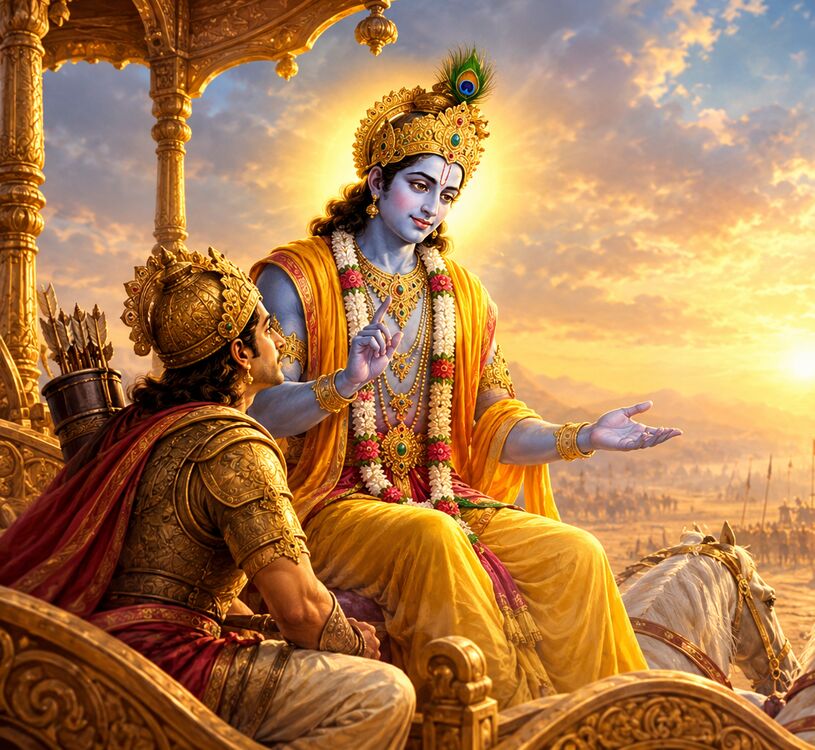


Bhagavad Gita Chapter 3
Karma Yoga · The path of action (कर्मयोग)
Printed from jeevandrishti.com/books/bhagavad-gita/chapter-3, where the meaning of every verse is in English and Hindi.
Duty · Knowledge · Devotion
About Chapter 3, Karma Yoga
Chapter 3, Karma Yoga, answers the question Chapter 2 left in Arjuna’s mind: if understanding is better than action, why should he fight at all? Krishna’s answer is that no one can live without acting, so the question is not whether to act but how.
Work done as an offering (yajna), without attachment to its fruits, does not bind (shlokas 9–16). The wise keep working for the good of the world, setting an example as King Janaka did (17–26). Actions come from nature’s qualities, not from the ego, and it is better to follow one’s own duty than another’s (27–35, including the well-known shloka 3.35). The chapter ends with Arjuna asking what drives a person to do wrong, and Krishna naming desire and anger as the enemy within (36–43).
A calm reading of all 43 shlokas with their meanings takes about twenty minutes.
Arjuna’s question: why act at all? 3.1–3.8
अर्जुन उवाच Arjuna said
ज्यायसी चेत्कर्मणस्ते मता बुद्धिर्जनार्दन।
तत्किं कर्मणि घोरे मां नियोजयसि केशव॥
Jyayasi chet karmanas te mata buddhir janardana
Tat kim karmani ghore mam niyojayasi keshava
हे जनार्दन, यदि आप कर्म से ज्ञान (बुद्धि) को श्रेष्ठ मानते हैं, तो हे केशव, मुझे इस भयानक कर्म में क्यों लगा रहे हैं?
Janardana, if you think understanding is better than action, then why, Keshava, do you push me into this terrible deed?
व्यामिश्रेणेव वाक्येन बुद्धिं मोहयसीव मे।
तदेकं वद निश्चित्य येन श्रेयोऽहमाप्नुयाम्॥
Vyamishreneva vakyena buddhim mohayasiva me
Tad ekam vada nishchitya yena shreyo ’ham apnuyam
आपके मिले-जुले से वचनों से मेरी बुद्धि उलझ रही है। इसलिए निश्चय करके एक ही बात बताइए, जिससे मेरा कल्याण हो।
Your words seem mixed, and they confuse my mind. Tell me one thing clearly, by which I may reach what is best.
श्रीभगवानुवाच Shri Krishna said
लोकेऽस्मिन्द्विविधा निष्ठा पुरा प्रोक्ता मयानघ।
ज्ञानयोगेन सांख्यानां कर्मयोगेन योगिनाम्॥
Loke’smin dvi-vidha nishtha pura prokta mayanagha
Jnana-yogena sankhyanam karma-yogena yoginam
हे निष्पाप अर्जुन, इस संसार में दो प्रकार की निष्ठा मैंने पहले बताई है: सांख्य वालों के लिए ज्ञानयोग, और योगियों के लिए कर्मयोग।
Sinless one, I said earlier that in this world there are two paths: the path of knowledge for those given to reflection, and the path of action for those given to work.
न कर्मणामनारम्भान्नैष्कर्म्यं पुरुषोऽश्नुते।
न च संन्यसनादेव सिद्धिं समधिगच्छति॥
Na karmanam anarambhan naishkarmyam purusho ’shnute
Na cha sannyasanad eva siddhim samadhigachchhati
कर्म शुरू न करने से कोई निष्कर्मता (कर्मबंधन से मुक्ति) नहीं पाता, और केवल त्याग कर देने से भी सिद्धि नहीं मिलती।
No one reaches freedom from action by simply not starting work, and no one reaches perfection by giving things up alone.
न हि कश्चित्क्षणमपि जातु तिष्ठत्यकर्मकृत्।
कार्यते ह्यवशः कर्म सर्वः प्रकृतिजैर्गुणैः॥
Na hi kashchit kshanam api jatu tishthatyakarma-krit
Karyate hyavashah karma sarvah prakriti-jair gunaih
कोई भी व्यक्ति एक क्षण भी कर्म किए बिना नहीं रह सकता। प्रकृति से उत्पन्न गुण हर किसी से विवश करके कर्म करवाते हैं।
No one can stay without acting even for a moment. Everyone is made to act, helplessly, by the qualities born of nature.
कर्मेन्द्रियाणि संयम्य य आस्ते मनसा स्मरन्।
इन्द्रियार्थान्विमूढात्मा मिथ्याचारः स उच्यते॥
Karmendriyani sanyamya ya aste manasa smaran
Indriyarthan vimudhatma mithyacharah sa uchyate
जो कर्मेन्द्रियों को रोककर भी मन से विषयों का चिंतन करता रहता है, वह मूढ़ व्यक्ति मिथ्याचारी (दिखावा करने वाला) कहलाता है।
One who holds back the organs of action but keeps dwelling on sense objects in the mind is deceiving himself, and is called a hypocrite.
यस्त्विन्द्रियाणि मनसा नियम्यारभतेऽर्जुन।
कर्मेन्द्रियैः कर्मयोगमसक्तः स विशिष्यते॥
Yas tvindriyani manasa niyamyarabhate ’rjuna
Karmendriyaih karma-yogam asaktah sa vishishyate
पर हे अर्जुन, जो मन से इन्द्रियों को वश में करके, आसक्ति के बिना कर्मेन्द्रियों से कर्मयोग करता है, वह श्रेष्ठ है।
But one who controls the senses with the mind, Arjuna, and without attachment uses the organs of action for the yoga of action, is far better.
नियतं कुरु कर्म त्वं कर्म ज्यायो ह्यकर्मणः।
शरीरयात्रापि च ते न प्रसिद्ध्येदकर्मणः॥
Niyatam kuru karma tvam karma jyayo hyakarmanah
Sharira-yatrapi cha te na prasiddhyed akarmanah
तुम अपना नियत कर्म करो, क्योंकि कर्म न करने से कर्म करना अच्छा है। कर्म के बिना तो तुम्हारे शरीर का निर्वाह भी नहीं हो सकता।
Do the work that is yours to do, for action is better than inaction. Without action you could not even keep your body going.
Work as an offering 3.9–3.16
यज्ञार्थात्कर्मणोऽन्यत्र लोकोऽयं कर्मबन्धनः।
तदर्थं कर्म कौन्तेय मुक्तसंगः समाचर॥
Yajnarthat karmano ’nyatra loko ’yam karma-bandhanah
Tad-artham karma kaunteya mukta-sangah samachara
यज्ञ (समर्पण) के लिए किए गए कर्म के सिवा दूसरे कर्मों से यह संसार बँधता है। इसलिए, हे कौन्तेय, आसक्ति छोड़कर उसी भाव से कर्म करो।
This world is bound by action, except action done as an offering (yajna). So, son of Kunti, do your work for that purpose, free of attachment.
सहयज्ञाः प्रजाः सृष्ट्वा पुरोवाच प्रजापतिः।
अनेन प्रसविष्यध्वमेष वोऽस्त्विष्टकामधुक्॥
Saha-yajnah prajah srishtva purovacha prajapatih
Anena prasavishyadhvam esha vo ’stvishta-kama-dhuk
आरंभ में प्रजापति ने यज्ञ के साथ प्रजा को रचकर कहा: इसी से तुम बढ़ो; यह तुम्हारी इच्छित वस्तुएँ देने वाला हो।
In the beginning, the Creator made people together with yajna and said: by this you will grow; may this give you all you wish for.
देवान्भावयतानेन ते देवा भावयन्तु वः।
परस्परं भावयन्तः श्रेयः परमवाप्स्यथ॥
Devan bhavayatanena te deva bhavayantu vah
Parasparam bhavayantah shreyah param avapsyatha
इससे तुम देवताओं को संतुष्ट करो और वे देवता तुम्हें संतुष्ट करें। एक-दूसरे का ध्यान रखते हुए तुम परम कल्याण पाओगे।
Nourish the gods with this, and let the gods nourish you. Caring for one another, you will reach the highest good.
इष्टान्भोगान्हि वो देवा दास्यन्ते यज्ञभाविताः।
तैर्दत्तानप्रदायैभ्यो यो भुङ्क्ते स्तेन एव सः॥
Ishtan bhogan hi vo deva dasyante yajna-bhavitah
Tair dattan apradayaibhyo yo bhunkte stena eva sah
यज्ञ से संतुष्ट होकर देवता तुम्हें मनचाहे भोग देंगे। जो उनके दिए हुए को उन्हें अर्पित किए बिना स्वयं भोगता है, वह चोर ही है।
Pleased by yajna, the gods will give you the good things you want. One who enjoys their gifts without offering anything back is simply a thief.
यज्ञशिष्टाशिनः सन्तो मुच्यन्ते सर्वकिल्बिषैः।
भुञ्जते ते त्वघं पापा ये पचन्त्यात्मकारणात्॥
Yajna-shishtashinah santo muchyante sarva-kilbishaih
Bhunjate te tvagham papa ye pachantyatma-karanat
यज्ञ से बचा हुआ अन्न खाने वाले सज्जन सब पापों से छूट जाते हैं। जो केवल अपने लिए पकाते हैं, वे तो पाप ही खाते हैं।
The good, who eat what remains after the offering, are freed from all wrongs. Those who cook only for themselves eat wrongdoing itself.
अन्नाद्भवन्ति भूतानि पर्जन्यादन्नसम्भवः।
यज्ञाद्भवति पर्जन्यो यज्ञः कर्मसमुद्भवः॥
Annad bhavanti bhutani parjanyad anna-sambhavah
Yajnad bhavati parjanyo yajnah karma-samudbhavah
सभी प्राणी अन्न से होते हैं, अन्न वर्षा से होता है, वर्षा यज्ञ से होती है, और यज्ञ कर्म से उत्पन्न होता है।
Beings live on food, food comes from rain, rain comes from yajna, and yajna is born of action.
कर्म ब्रह्मोद्भवं विद्धि ब्रह्माक्षरसमुद्भवम्।
तस्मात्सर्वगतं ब्रह्म नित्यं यज्ञे प्रतिष्ठितम्॥
Karma brahmodbhavam viddhi brahmakshara-samudbhavam
Tasmat sarva-gatam brahma nityam yajne pratishthitam
कर्म को वेद से उत्पन्न जानो, और वेद को अविनाशी परमात्मा से। इसलिए सर्वव्यापी ब्रह्म सदा यज्ञ में स्थित है।
Know that action comes from the Veda, and the Veda from the Imperishable. So the all-pervading Brahman is always present in yajna.
एवं प्रवर्तितं चक्रं नानुवर्तयतीह यः।
अघायुरिन्द्रियारामो मोघं पार्थ स जीवति॥
Evam pravartitam chakram nanuvartayatiha yah
Aghayur indriyaramo mogham partha sa jivati
हे पार्थ, जो इस प्रकार चलाए गए चक्र के अनुसार नहीं चलता और इन्द्रियों के सुख में ही रमा रहता है, उसका जीवन पापमय और व्यर्थ है।
One who does not keep this wheel turning, son of Pritha, but lives only for the pleasure of the senses, lives a wasted, wrongful life.
Acting for the good of the world 3.17–3.26
यस्त्वात्मरतिरेव स्यादात्मतृप्तश्च मानवः।
आत्मन्येव च सन्तुष्टस्तस्य कार्यं न विद्यते॥
Yas tvatma-ratir eva syad atma-triptash cha manavah
Atmanyeva cha santushtas tasya karyam na vidyate
पर जो मनुष्य आत्मा में ही रमा रहता है, आत्मा में ही तृप्त और आत्मा में ही संतुष्ट है, उसके लिए कोई कर्तव्य शेष नहीं रहता।
But a person who delights in the self, is satisfied in the self and content in the self alone, has no duty left to do.
नैव तस्य कृतेनार्थो नाकृतेनेह कश्चन।
न चास्य सर्वभूतेषु कश्चिदर्थव्यपाश्रयः॥
Naiva tasya kritenartho nakriteneha kashchana
Na chasya sarva-bhuteshu kashchid artha-vyapashrayah
ऐसे व्यक्ति का इस संसार में न कर्म करने से कोई प्रयोजन है, न कर्म न करने से, और न ही उसे किसी प्राणी से कोई स्वार्थ रहता है।
Such a person gains nothing here by acting, and loses nothing by not acting, and depends on no being for anything.
तस्मादसक्तः सततं कार्यं कर्म समाचर।
असक्तो ह्याचरन्कर्म परमाप्नोति पूरुषः॥
Tasmad asaktah satatam karyam karma samachara
Asakto hyacharan karma param apnoti purushah
इसलिए आसक्ति के बिना सदा अपना कर्तव्य कर्म करते रहो। आसक्ति के बिना कर्म करता हुआ मनुष्य परमात्मा को प्राप्त होता है।
So always do the work that should be done, without attachment. Working without attachment, a person reaches the Supreme.
कर्मणैव हि संसिद्धिमास्थिता जनकादयः।
लोकसंग्रहमेवापि संपश्यन्कर्तुमर्हसि॥
Karmanaiva hi sansiddhim asthita janakadayah
Loka-sangraham evapi sampashyan kartum arhasi
जनक आदि ने कर्म के द्वारा ही सिद्धि पाई थी। लोक-कल्याण (लोकसंग्रह) को देखते हुए भी तुम्हें कर्म करना चाहिए।
King Janaka and others reached perfection through action alone. And looking to the good of the world, you too should act.
यद्यदाचरति श्रेष्ठस्तत्तदेवेतरो जनः।
स यत्प्रमाणं कुरुते लोकस्तदनुवर्तते॥
Yad yad acharati shreshthas tat tad evetaro janah
Sa yat pramanam kurute lokas tad anuvartate
श्रेष्ठ व्यक्ति जैसा आचरण करता है, दूसरे लोग भी वैसा ही करते हैं। वह जो आदर्श रखता है, संसार उसी के अनुसार चलता है।
Whatever a great person does, others follow. Whatever standard such a person sets, the world goes by it.
न मे पार्थास्ति कर्तव्यं त्रिषु लोकेषु किञ्चन।
नानवाप्तमवाप्तव्यं वर्त एव च कर्मणि॥
Na me parthasti kartavyam trishu lokeshu kinchana
Nanavaptam avaptavyam varta eva cha karmani
हे पार्थ, तीनों लोकों में मेरे लिए कुछ भी करना आवश्यक नहीं है, और न कुछ ऐसा है जो मुझे पाना हो और न मिला हो; फिर भी मैं कर्म में लगा रहता हूँ।
Son of Pritha, there is nothing in the three worlds that I must do, and nothing I need to gain that I do not have; yet I go on working.
यदि ह्यहं न वर्तेयं जातु कर्मण्यतन्द्रितः।
मम वर्त्मानुवर्तन्ते मनुष्याः पार्थ सर्वशः॥
Yadi hyaham na varteyam jatu karmanyatandritah
Mama vartmanuvartante manushyah partha sarvashah
क्योंकि हे पार्थ, यदि मैं कभी सावधान होकर कर्म न करूँ, तो मनुष्य हर प्रकार से मेरे ही मार्ग पर चलेंगे।
For if I ever stopped working tirelessly, son of Pritha, people would follow my path in every way.
उत्सीदेयुरिमे लोका न कुर्यां कर्म चेदहम्।
सङ्करस्य च कर्ता स्यामुपहन्यामिमाः प्रजाः॥
Utsideyur ime loka na kuryam karma ched aham
Sankarasya cha karta syam upahanyam imah prajah
यदि मैं कर्म न करूँ तो ये सब लोक नष्ट हो जाएँ। मैं अव्यवस्था का कारण बनूँ और इस सारी प्रजा का अहित करूँ।
If I did not act, these worlds would fall into ruin. I would be the cause of confusion and would harm all these people.
सक्ताः कर्मण्यविद्वांसो यथा कुर्वन्ति भारत।
कुर्याद्विद्वांस्तथासक्तश्चिकीर्षुर्लोकसंग्रहम्॥
Saktah karmanyavidvanso yatha kurvanti bharata
Kuryad vidvans tathasaktash chikirshur loka-sangraham
हे भारत, जैसे अज्ञानी लोग आसक्त होकर कर्म करते हैं, वैसे ही ज्ञानी व्यक्ति को लोक-कल्याण की इच्छा से, आसक्ति के बिना कर्म करना चाहिए।
As the unwise act out of attachment to their work, Bharata, so the wise should act without attachment, wishing for the good of the world.
न बुद्धिभेदं जनयेदज्ञानां कर्मसङ्गिनाम्।
जोषयेत्सर्वकर्माणि विद्वान् युक्तः समाचरन्॥
Na buddhi-bhedam janayed ajnanam karma-sanginam
Joshayet sarva-karmani vidvan yuktah samacharan
ज्ञानी व्यक्ति को कर्मों में आसक्त अज्ञानी लोगों की बुद्धि में भ्रम पैदा नहीं करना चाहिए, बल्कि स्वयं योग में स्थित होकर सब कर्म अच्छी तरह करते हुए उनसे भी करवाने चाहिए।
The wise should not unsettle the minds of the unknowing who are attached to work. Doing all work steadily themselves, they should encourage others to do theirs.
Nature, ego and one’s own duty 3.27–3.35
प्रकृतेः क्रियमाणानि गुणैः कर्माणि सर्वशः।
अहङ्कारविमूढात्मा कर्ताऽहमिति मन्यते॥
Prakriteh kriyamanani gunaih karmani sarvashah
Ahankara-vimudhatma kartaham iti manyate
सारे कर्म प्रकृति के गुणों द्वारा होते हैं, पर अहंकार से मोहित व्यक्ति मानता है कि “मैं कर्ता हूँ”।
All actions are done by the qualities of nature, yet one confused by ego thinks, “I am the doer.”
तत्त्ववित्तु महाबाहो गुणकर्मविभागयोः।
गुणा गुणेषु वर्तन्त इति मत्वा न सज्जते॥
Tattva-vit tu maha-baho guna-karma-vibhagayoh
Guna guneshu vartanta iti matva na sajjate
पर हे महाबाहो, जो गुणों और कर्मों के विभाग का तत्त्व जानता है, वह समझता है कि गुण ही गुणों में बरत रहे हैं, और आसक्त नहीं होता।
But one who knows the truth about the qualities and their actions, mighty-armed one, understands that qualities act on qualities, and does not get attached.
प्रकृतेर्गुणसम्मूढाः सज्जन्ते गुणकर्मसु।
तानकृत्स्नविदो मन्दान्कृत्स्नविन्न विचालयेत्॥
Prakriter guna-sammudhah sajjante guna-karmasu
Tan akritsna-vido mandan kritsna-vin na vichalayet
प्रकृति के गुणों से मोहित लोग गुणों और कर्मों में आसक्त रहते हैं। पूरा तत्त्व जानने वाला ज्ञानी उन अधूरा जानने वाले मंदबुद्धि लोगों को विचलित न करे।
Those confused by the qualities of nature get attached to their actions. One who knows the whole truth should not unsettle these slow, partly knowing people.
मयि सर्वाणि कर्माणि संन्यस्याध्यात्मचेतसा।
निराशीर्निर्ममो भूत्वा युध्यस्व विगतज्वरः॥
Mayi sarvani karmani sannyasyadhyatma-chetasa
Nirashir nirmamo bhutva yudhyasva vigata-jvarah
अपने सारे कर्म मुझे अर्पित करके, मन को आत्मा में लगाकर, आशा और ममता से रहित होकर, चिंता का ताप छोड़कर युद्ध करो।
Offering all your actions to me, with your mind on the self, free of hope for gain and of the sense of “mine”, fight, with your fever of worry gone.
ये मे मतमिदं नित्यमनुतिष्ठन्ति मानवाः।
श्रद्धावन्तोऽनसूयन्तो मुच्यन्ते तेऽपि कर्मभिः॥
Ye me matam idam nityam anutishthanti manavah
Shraddhavanto ’nasuyanto muchyante te ’pi karmabhih
जो मनुष्य श्रद्धा के साथ और दोष देखे बिना मेरे इस मत का सदा पालन करते हैं, वे भी कर्मों के बंधन से छूट जाते हैं।
Those who always follow this teaching of mine with faith and without finding fault are also freed from the bonds of action.
ये त्वेतदभ्यसूयन्तो नानुतिष्ठन्ति मे मतम्।
सर्वज्ञानविमूढांस्तान्विद्धि नष्टानचेतसः॥
Ye tvetad abhyasuyanto nanutishthanti me matam
Sarva-jnana-vimudhans tan viddhi nashtan achetasah
पर जो इसमें दोष निकालते हुए मेरे मत का पालन नहीं करते, उन्हें सब ज्ञान से भ्रमित, विवेकहीन और नष्ट हुआ समझो।
But those who find fault with it and do not follow my teaching, know them to be confused about all knowledge, lost and without discernment.
सदृशं चेष्टते स्वस्याः प्रकृतेर्ज्ञानवानपि।
प्रकृतिं यान्ति भूतानि निग्रहः किं करिष्यति॥
Sadrisham cheshtate svasyah prakriter jnanavan api
Prakritim yanti bhutani nigrahah kim karishyati
ज्ञानी व्यक्ति भी अपने स्वभाव के अनुसार ही चेष्टा करता है। सभी प्राणी अपने स्वभाव के अनुसार चलते हैं; फिर ज़बरदस्ती रोकने से क्या होगा?
Even a wise person acts according to their own nature. All beings follow their nature; what can forcing achieve?
इन्द्रियस्येन्द्रियस्यार्थे रागद्वेषौ व्यवस्थितौ।
तयोर्न वशमागच्छेत्तौ ह्यस्य परिपन्थिनौ॥
Indriyasyendriyasyarthe raga-dveshau vyavasthitau
Tayor na vasham agachchhet tau hyasya paripanthinau
हर इन्द्रिय के अपने विषय में राग और द्वेष छिपे रहते हैं। इनके वश में नहीं आना चाहिए, क्योंकि ये मनुष्य के मार्ग की बाधाएँ हैं।
Liking and dislike sit in every sense towards its objects. Do not come under their control, for they are obstacles on one’s path.
श्रेयान्स्वधर्मो विगुणः परधर्मात्स्वनुष्ठितात्।
स्वधर्मे निधनं श्रेयः परधर्मो भयावहः॥
Shreyan swa-dharmo vigunah para-dharmat sv-anushthitat
Swa-dharme nidhanam shreyah para-dharmo bhayavahah
अच्छी तरह निभाए गए दूसरे के धर्म से अपना धर्म, गुणों में कम होने पर भी, श्रेष्ठ है। अपने धर्म में मरना भी अच्छा है; दूसरे का धर्म भय देने वाला है।
Better one’s own duty, even done imperfectly, than another’s duty done well. Better even to die in one’s own duty; another’s duty is full of danger.
Desire, the enemy within 3.36–3.43
अर्जुन उवाच Arjuna said
अथ केन प्रयुक्तोऽयं पापं चरति पूरुषः।
अनिच्छन्नपि वार्ष्णेय बलादिव नियोजितः॥
Atha kena prayukto ’yam papam charati purushah
Anichchhann api varshneya balad iva niyojitah
हे वार्ष्णेय, तो फिर मनुष्य किससे प्रेरित होकर, न चाहते हुए भी, मानो बलपूर्वक लगाया गया हो, पाप करता है?
Then, Varshneya, what drives a person to do wrong, even against their will, as if pushed by force?
श्रीभगवानुवाच Shri Krishna said
काम एष क्रोध एष रजोगुणसमुद्भवः।
महाशनो महापाप्मा विद्ध्येनमिह वैरिणम्॥
Kama esha krodha esha rajo-guna-samudbhavah
Mahashano maha-papma viddhyenam iha vairinam
यह काम है, यही क्रोध है, जो रजोगुण से उत्पन्न होता है। यह कभी तृप्त नहीं होता और बड़ा पापी है। इसे ही यहाँ शत्रु जानो।
It is desire, it is anger, born of the quality of rajas (restless passion). It is never satisfied and leads to great wrong. Know it to be the enemy here.
धूमेनाव्रियते वह्निर्यथाऽऽदर्शो मलेन च।
यथोल्बेनावृतो गर्भस्तथा तेनेदमावृतम्॥
Dhumenavriyate vahnir yathadarsho malena cha
Yatholbenavrito garbhas tatha tenedam avritam
जैसे धुएँ से अग्नि, धूल से दर्पण और गर्भ की झिल्ली से गर्भ ढका रहता है, वैसे ही काम से यह ज्ञान ढका रहता है।
As fire is covered by smoke, a mirror by dust, and an unborn child by the womb, so this (knowledge) is covered by desire.
आवृतं ज्ञानमेतेन ज्ञानिनो नित्यवैरिणा।
कामरूपेण कौन्तेय दुष्पूरेणानलेन च॥
Avritam jnanam etena jnanino nitya-vairina
Kama-rupena kaunteya dushpurenanalena cha
हे कौन्तेय, ज्ञानियों का ज्ञान इस काम रूपी नित्य शत्रु से ढका रहता है, जो आग की तरह कभी तृप्त नहीं होता।
Son of Kunti, the knowledge of the wise is covered by this constant enemy in the form of desire, which, like fire, can never be filled.
इन्द्रियाणि मनो बुद्धिरस्याधिष्ठानमुच्यते।
एतैर्विमोहयत्येष ज्ञानमावृत्य देहिनम्॥
Indriyani mano buddhir asyadhishthanam uchyate
Etair vimohayatyesha jnanam avritya dehinam
इन्द्रियाँ, मन और बुद्धि इसके रहने के स्थान कहे जाते हैं। इन्हीं के द्वारा यह ज्ञान को ढककर देहधारी को मोहित करता है।
The senses, the mind and the intellect are said to be its home. Through them it covers knowledge and confuses the soul in the body.
तस्मात्त्वमिन्द्रियाण्यादौ नियम्य भरतर्षभ।
पाप्मानं प्रजहि ह्येनं ज्ञानविज्ञाननाशनम्॥
Tasmat tvam indriyanyadau niyamya bharatarshabha
Papmanam prajahi hyenam jnana-vijnana-nashanam
इसलिए, हे भरतश्रेष्ठ, पहले इन्द्रियों को वश में करो, और फिर ज्ञान और विज्ञान का नाश करने वाले इस पापी काम को नष्ट कर दो।
So first bring your senses under control, best of the Bharatas, and then drive out this wrongdoer that destroys knowledge and realisation.
इन्द्रियाणि पराण्याहुरिन्द्रियेभ्यः परं मनः।
मनसस्तु परा बुद्धिर्यो बुद्धेः परतस्तु सः॥
Indriyani paranyahur indriyebhyah param manah
Manasas tu para buddhir yo buddheh paratas tu sah
इन्द्रियों को (शरीर से) श्रेष्ठ कहा जाता है, इन्द्रियों से मन श्रेष्ठ है, मन से बुद्धि श्रेष्ठ है, और जो बुद्धि से भी परे है, वह आत्मा है।
The senses are said to be higher than the body, the mind higher than the senses, the intellect higher than the mind, and higher than the intellect is the self.
एवं बुद्धेः परं बुद्ध्वा संस्तभ्यात्मानमात्मना।
जहि शत्रुं महाबाहो कामरूपं दुरासदम्॥
Evam buddheh param buddhva sanstabhyatmanam atmana
Jahi shatrum maha-baho kama-rupam durasadam
इस प्रकार आत्मा को बुद्धि से भी श्रेष्ठ जानकर और अपने आप से मन को स्थिर करके, हे महाबाहो, काम रूपी इस कठिन शत्रु को मार डालो।
Knowing the self to be higher than the intellect, and steadying yourself by the self, mighty-armed one, defeat this enemy in the form of desire, so hard to overcome.
ॐ तत्सदिति श्रीमद्भगवद्गीतासूपनिषत्सु ब्रह्मविद्यायां योगशास्त्रे श्रीकृष्णार्जुनसंवादे
कर्मयोगो नाम तृतीयोऽध्यायः ॥३॥
The meanings here are written in plain words and follow the common reading of each shloka; they are not a word-for-word translation or a commentary. The Roman lettering is simplified for easy reading. This page is for reading and reflection; it is not a substitute for medical or other professional help.
Questions people ask
What is Chapter 3 of the Bhagavad Gita about?
Karma Yoga, the path of action: why no one can stop acting, how work done as an offering and without attachment does not bind, why the wise keep working for the good of the world, and how desire is the enemy within.
What does Karma Yoga mean?
Doing one’s work as a duty and an offering, without attachment to its results. Krishna teaches it in Chapter 2 and explains it fully in Chapter 3.
What does shloka 3.35 say?
“Shreyan swadharmo vigunah”: it is better to follow one’s own duty, even imperfectly, than to do another’s duty well.
What is yajna in Chapter 3?
An offering. Krishna uses it for any work done for a higher purpose rather than for oneself; such work does not bind (3.9–3.16).
Who is the enemy Krishna names at the end of the chapter?
Desire (kama), which turns into anger when blocked. It hides in the senses, mind and intellect, and is overcome by first steadying the senses (3.37–3.43).

Join us on Facebook
New books and chapters, festival days and easy-to-read astrology, in your feed. Free, and you can leave any time.