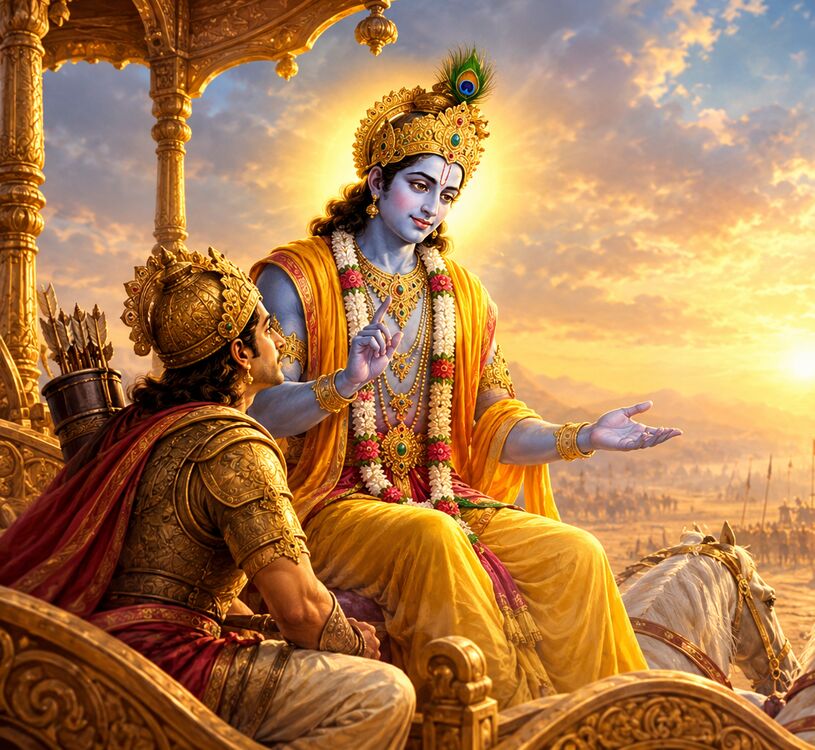


Bhagavad Gita Chapter 12
Bhakti Yoga · The path of devotion (भक्तियोग)
Printed from jeevandrishti.com/books/bhagavad-gita/chapter-12, where the meaning of every verse is in English and Hindi.
Duty · Knowledge · Devotion
About Chapter 12, Bhakti Yoga
Chapter 12, Bhakti Yoga (the path of devotion), is the shortest chapter of the Gita and one of the most loved. Arjuna asks who knows yoga better: those who worship Krishna in his form, or those who worship the formless, unmanifest Brahman? Krishna answers that both reach him, but devotion to him is the easier path for embodied beings (shlokas 1–7).
He then gives a ladder anyone can climb: fix the mind on me; if you cannot, practise; if you cannot practise, work for me; if you cannot do even that, give up the fruits of your actions (8–12). The chapter ends with the marks of the devotee who is dear to him: free of hatred, friendly and compassionate, the same in pleasure and pain, honour and dishonour, praise and blame (13–20).
A calm reading of all 20 shlokas with their meanings takes about ten minutes.
Which devotee is best? 12.1–12.7
अर्जुन उवाच Arjuna said
एवं सततयुक्ता ये भक्तास्त्वां पर्युपासते।
ये चाप्यक्षरमव्यक्तं तेषां के योगवित्तमाः॥
Evam satata-yukta ye bhaktas tvam paryupasate
Ye chapy aksharam avyaktam tesham ke yoga-vittamah
जो भक्त इस प्रकार सदा आपमें लगे रहकर आपकी उपासना करते हैं, और जो अविनाशी, अव्यक्त ब्रह्म की उपासना करते हैं, उनमें योग को अधिक जानने वाले कौन हैं?
Those devotees who, always steady, worship you in this way, and those who worship the imperishable, the unmanifest: which of them knows yoga better?
श्रीभगवानुवाच Shri Krishna said
मय्यावेश्य मनो ये मां नित्ययुक्ता उपासते।
श्रद्धया परयोपेतास्ते मे युक्ततमा मताः॥
Mayy aveshya mano ye mam nitya-yukta upasate
Shraddhaya parayopetas te me yuktatama matah
जो मुझमें मन लगाकर, सदा मुझमें स्थित रहकर, परम श्रद्धा के साथ मेरी उपासना करते हैं, उन्हें मैं सबसे श्रेष्ठ योगी मानता हूँ।
Those who fix their minds on me and worship me, always steady and filled with the highest faith, I consider the most united in yoga.
ये त्वक्षरमनिर्देश्यमव्यक्तं पर्युपासते।
सर्वत्रगमचिन्त्यं च कूटस्थमचलं ध्रुवम्॥
Ye tv aksharam anirdeshyam avyaktam paryupasate sarvatra-gam achintyancha kuta-stham achalandhruvam
Sanniyamyendriya-gramam sarvatra sama-buddhayah te prapnuvanti mam eva sarva-bhuta-hite ratah
पर जो अविनाशी, जिसका वर्णन न हो सके, अव्यक्त, सर्वव्यापी, अचिन्त्य, कूटस्थ, अचल और नित्य ब्रह्म की उपासना करते हैं,
But those who worship the imperishable, the indefinable, the unmanifest, present everywhere, beyond thought, unchanging, unmoving and constant,
संनियम्येन्द्रियग्रामं सर्वत्र समबुद्धयः।
ते प्राप्नुवन्ति मामेव सर्वभूतहिते रताः॥
Sanniyamyendriya-gramam sarvatra sama-buddhayah
Te prapnuvanti mam eva sarva-bhuta-hite ratah
सब इन्द्रियों को वश में करके, सब जगह समान बुद्धि रखते हुए और सब प्राणियों के हित में लगे रहकर, वे भी मुझे ही प्राप्त होते हैं।
holding all their senses in check, even-minded everywhere, and devoted to the good of all beings, they too come to me.
क्लेशोऽधिकतरस्तेषामव्यक्तासक्तचेतसाम्।
अव्यक्ता हि गतिर्दुःखं देहवद्भिरवाप्यते॥
Klesho ’dhikataras tesham avyaktasakta-chetasam
Avyakta hi gatir duhkham dehavadbhir avapyate
पर अव्यक्त में मन लगाने वालों के लिए कठिनाई अधिक है, क्योंकि देहधारियों के लिए अव्यक्त की गति कठिनता से प्राप्त होती है।
But the struggle is greater for those whose minds are set on the unmanifest, for the path of the unmanifest is hard for embodied beings to walk.
ये तु सर्वाणि कर्माणि मयि संन्यस्य मत्पराः।
अनन्येनैव योगेन मां ध्यायन्त उपासते॥
Ye tu sarvani karmani mayi sannyasya mat-parah
Ananyenaiva yogena mam dhyayanta upasate
पर जो अपने सब कर्म मुझे अर्पित करके, मुझे लक्ष्य मानकर, अनन्य भक्ति योग से मेरा ध्यान करते हुए मेरी उपासना करते हैं,
But those who offer all their actions to me, hold me as their goal, and worship me, meditating on me with undivided devotion,
तेषामहं समुद्धर्ता मृत्युसंसारसागरात्।
भवामि नचिरात्पार्थ मय्यावेशितचेतसाम्॥
Tesham aham samuddharta mrityu-samsara-sagarat
Bhavami na chirat partha mayy aveshita-chetasam
हे पार्थ, मुझमें मन लगाने वाले उन भक्तों का मैं जल्दी ही मृत्यु रूपी संसार सागर से उद्धार करने वाला बन जाता हूँ।
for them, whose minds are fixed on me, I soon become the one who lifts them out of the ocean of death and rebirth, son of Pritha.
Step by step towards me 12.8–12.12
मय्येव मन आधत्स्व मयि बुद्धिं निवेशय।
निवसिष्यसि मय्येव अत ऊर्ध्वं न संशयः॥
Mayy eva mana adhatsva mayi buddhim niveshaya
Nivasishyasi mayy eva ata urdhvam na sanshayah
अपना मन मुझमें ही लगाओ और बुद्धि मुझमें ही स्थिर करो; इसके बाद तुम मुझमें ही निवास करोगे, इसमें संशय नहीं।
Fix your mind on me alone and let your understanding rest in me. Then you will live in me; there is no doubt.
अथ चित्तं समाधातुं न शक्नोषि मयि स्थिरम्।
अभ्यासयोगेन ततो मामिच्छाप्तुं धनञ्जय॥
Atha chittam samadhatum na shaknoshi mayi sthiram
Abhyasa-yogena tato mam ichchhaptum dhananjaya
हे धनंजय, यदि तुम अपने मन को मुझमें स्थिर नहीं रख सकते, तो अभ्यास योग के द्वारा मुझे पाने की इच्छा करो।
If you cannot keep your mind steadily on me, Dhananjaya, then seek to reach me by the yoga of practice.
अभ्यासेऽप्यसमर्थोऽसि मत्कर्मपरमो भव।
मदर्थमपि कर्माणि कुर्वन् सिद्धिमवाप्स्यसि॥
Abhyase ’py asamartho ’si mat-karma-paramo bhava
Mad-artham api karmani kurvan siddhim avapsyasi
यदि तुम अभ्यास में भी असमर्थ हो, तो मेरे लिए कर्म करने को ही अपना लक्ष्य बना लो; मेरे लिए कर्म करते हुए भी तुम सिद्धि पा लोगे।
If you are not able even to practise, then make working for me your highest aim. Even doing actions for my sake, you will reach perfection.
अथैतदप्यशक्तोऽसि कर्तुं मद्योगमाश्रितः।
सर्वकर्मफलत्यागं ततः कुरु यतात्मवान्॥
Athaitad apy ashakto ’si kartum mad-yogam ashritah
Sarva-karma-phala-tyagam tatah kuru yatatmavan
यदि यह भी नहीं कर सकते, तो मेरी शरण लेकर और मन को वश में करके सब कर्मों के फल का त्याग करो।
If you cannot do even this, then, taking refuge in me and controlling yourself, give up the fruits of all your actions.
श्रेयो हि ज्ञानमभ्यासाज्ज्ञानाद्ध्यानं विशिष्यते।
ध्यानात्कर्मफलत्यागस्त्यागाच्छान्तिरनन्तरम्॥
Shreyo hi jnanam abhyasaj jnanad dhyanam vishishyate
Dhyanat karma-phala-tyagas tyagach chhantir anantaram
अभ्यास से ज्ञान श्रेष्ठ है, ज्ञान से ध्यान श्रेष्ठ है, और ध्यान से कर्मफल का त्याग श्रेष्ठ है, क्योंकि त्याग से तुरंत शांति मिलती है।
Knowledge is better than practice, meditation is better than knowledge, and giving up the fruits of action is better than meditation, for peace follows giving up at once.
The devotee who is dear to me 12.13–12.20
अद्वेष्टा सर्वभूतानां मैत्रः करुण एव च।
निर्ममो निरहङ्कारः समदुःखसुखः क्षमी॥
Adveshta sarva-bhutanam maitrah karuna eva cha
Nirmamo nirahankarah sama-duhkha-sukhah kshami
जो किसी प्राणी से द्वेष नहीं करता, सबका मित्र और दयालु है, ममता और अहंकार से रहित है, सुख-दुःख में समान और क्षमाशील है,
One who hates no being, is friendly and compassionate, free of “mine” and of ego, even in pain and pleasure, and forgiving,
सन्तुष्टः सततं योगी यतात्मा दृढनिश्चयः।
मय्यर्पितमनोबुद्धिर्यो मद्भक्तः स मे प्रियः॥
Santushtah satatam yogi yatatma dridha-nishchayah
Mayy arpita-mano-buddhir yo mad-bhaktah sa me priyah
जो सदा संतुष्ट है, योगी है, मन को वश में रखता है, दृढ़ निश्चय वाला है, और जिसने मन और बुद्धि मुझे अर्पित कर दी है, ऐसा मेरा भक्त मुझे प्रिय है।
always content, steady in yoga, self-controlled, firm in resolve, with mind and understanding given to me: such a devotee of mine is dear to me.
यस्मान्नोद्विजते लोको लोकान्नोद्विजते च यः।
हर्षामर्षभयोद्वेगैर्मुक्तो यः स च मे प्रियः॥
Yasman nodvijate loko lokan nodvijate cha yah
Harshamarsha-bhayodvegair mukto yah sa cha me priyah
जिससे संसार को कष्ट नहीं होता और जो संसार से कष्ट नहीं पाता, जो हर्ष, ईर्ष्या, भय और उद्वेग से मुक्त है, वह मुझे प्रिय है।
One by whom the world is not disturbed and who is not disturbed by the world, who is free of excitement, impatience, fear and anxiety, is dear to me.
अनपेक्षः शुचिर्दक्ष उदासीनो गतव्यथः।
सर्वारम्भपरित्यागी यो मद्भक्तः स मे प्रियः॥
Anapekshah shuchir daksha udasino gata-vyathah
Sarvarambha-parityagi yo mad-bhaktah sa me priyah
जो किसी चीज़ की अपेक्षा नहीं रखता, पवित्र है, कुशल है, उदासीन है, जिसकी व्यथा चली गई है, और जिसने अपने लिए नए आरंभ करना छोड़ दिया है, ऐसा मेरा भक्त मुझे प्रिय है।
One who wants nothing, is pure, capable, unconcerned and untroubled, and has given up self-driven undertakings: such a devotee of mine is dear to me.
यो न हृष्यति न द्वेष्टि न शोचति न काङ्क्षति।
शुभाशुभपरित्यागी भक्तिमान्यः स मे प्रियः॥
Yo na hrishyati na dveshti na shochati na kankshati
Shubhashubha-parityagi bhaktiman yah sa me priyah
जो न हर्षित होता है, न द्वेष करता है, न शोक करता है, न कामना करता है, और जिसने शुभ और अशुभ दोनों छोड़ दिए हैं, वह भक्तिमान मुझे प्रिय है।
One who neither rejoices nor hates, neither grieves nor craves, and has given up both good and bad, full of devotion, is dear to me.
समः शत्रौ च मित्रे च तथा मानापमानयोः।
शीतोष्णसुखदुःखेषु समः सङ्गविवर्जितः॥
Samah shatrau cha mitre cha tatha manapamanayoh
Shitoshna-sukha-duhkheshu samah sanga-vivarjitah
जो शत्रु और मित्र में, मान और अपमान में, सर्दी-गर्मी और सुख-दुःख में समान है, और आसक्ति से रहित है,
One who is the same to friend and foe, in honour and dishonour, in cold and heat, pleasure and pain, and free of attachment,
तुल्यनिन्दास्तुतिर्मौनी सन्तुष्टो येनकेनचित्।
अनिकेतः स्थिरमतिर्भक्तिमान्मे प्रियो नरः॥
Tulya-ninda-stutir mauni santushto yena kenachit
Aniketah sthira-matir bhaktiman me priyo narah
जो निंदा और स्तुति को समान समझता है, मौन रहता है, जो कुछ मिले उसी में संतुष्ट है, किसी घर से बँधा नहीं, और स्थिर बुद्धि वाला है, वह भक्तिमान मनुष्य मुझे प्रिय है।
who takes praise and blame alike, is quiet, content with whatever comes, without a fixed home and steady in mind, full of devotion: that person is dear to me.
ये तु धर्म्यामृतमिदं यथोक्तं पर्युपासते।
श्रद्दधाना मत्परमा भक्तास्तेऽतीव मे प्रियाः॥
Ye tu dharmyamritam idam yathoktam paryupasate
Shraddadhana mat-parama bhaktas te ’tiva me priyah
पर जो श्रद्धा के साथ, मुझे परम लक्ष्य मानकर, मेरे बताए इस धर्ममय अमृत का पालन करते हैं, वे भक्त मुझे अत्यंत प्रिय हैं।
But those who follow this nectar of dharma as I have taught it, with faith, holding me as their goal, those devotees are exceedingly dear to me.
ॐ तत्सदिति श्रीमद्भगवद्गीतासूपनिषत्सु ब्रह्मविद्यायां योगशास्त्रे श्रीकृष्णार्जुनसंवादे
भक्तियोगो नाम द्वादशोऽध्यायः ॥१२॥
The meanings here are written in plain words and follow the common reading of each shloka; they are not a word-for-word translation or a commentary. The Roman lettering is simplified for easy reading. This page is for reading and reflection; it is not a substitute for medical or other professional help.
Questions people ask
What is Chapter 12 of the Bhagavad Gita about?
Devotion (bhakti): whether to worship Krishna in form or the formless Brahman, the steps by which anyone can come closer to him, and the qualities of the devotee who is dear to him.
Which is better, worship of the formless or of Krishna in form?
Krishna says both reach him, but the path of the unmanifest is harder for embodied beings, and those devoted to him with faith are the most united in yoga (12.2–12.5).
What are the steps given in 12.8–12.11?
Fix the mind on Krishna; if not, practise; if not, work for him; if not even that, give up the fruits of all actions.
What does shloka 12.13 say?
“Adveshta sarva-bhutanam”: the devotee dear to Krishna hates no being, is friendly and compassionate, free of “mine” and of ego, even in pain and pleasure, and forgiving.
How many shlokas does Chapter 12 have?
Twenty, the fewest of any chapter, along with Chapter 15.
Join us on Facebook
New books and chapters, festival days and easy-to-read astrology, in your feed. Free, and you can leave any time.