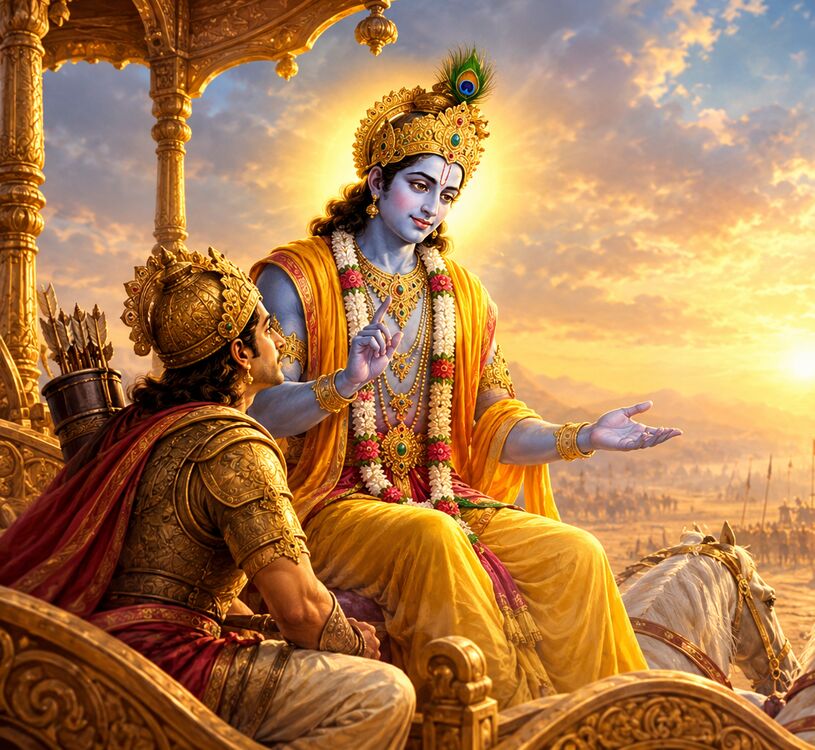


Bhagavad Gita Chapter 16
Daivasura Sampad Vibhaga Yoga · The divine and the demonic natures (दैवासुरसम्पद्विभागयोग)
Printed from jeevandrishti.com/books/bhagavad-gita/chapter-16, where the meaning of every verse is in English and Hindi.
Duty · Knowledge · Devotion
About Chapter 16, Daivasura Sampad Vibhaga Yoga
Chapter 16, Daivasura Sampad Vibhaga Yoga, sets out two kinds of nature. The divine nature is fearlessness, purity of heart, generosity, self-control, truth, freedom from anger, kindness to all beings, forgiveness and modesty; it leads to freedom. Krishna tells Arjuna not to grieve, for he is born with it (shlokas 1–5).
The demonic nature is hypocrisy, arrogance, anger and harshness: people who say the world has no God, chase endless desires, pile up wealth by unjust means and think “I am the lord, I am the enjoyer”; it leads to bondage (6–20). Desire, anger and greed are the three gates of hell, to be given up, and scripture is the guide to what should and should not be done (21–24).
A calm reading of all 24 shlokas with their meanings takes about ten minutes.
The divine nature 16.1–16.5
श्रीभगवानुवाच Shri Krishna said
अभयं सत्त्वसंशुद्धिः ज्ञानयोगव्यवस्थितिः।
दानं दमश्च यज्ञश्च स्वाध्यायस्तप आर्जवम्॥
Abhayam sattva-sanshuddhir jnana-yoga-vyavasthitih
Danam damash cha yajnash cha svadhyayas tapa arjavam
निर्भयता, अंतःकरण की शुद्धि, ज्ञान और योग में दृढ़ स्थिति, दान, इन्द्रियों का संयम, यज्ञ, स्वाध्याय, तप और सरलता,
Fearlessness, purity of heart, steadiness in knowledge and yoga, generosity, self-control, offering, study of scripture, austerity and honesty,
अहिंसा सत्यमक्रोधस्त्यागः शान्तिरपैशुनम्।
दया भूतेष्वलोलुप्त्वं मार्दवं ह्रीरचापलम्॥
Ahinsa satyam akrodhas tyagah shantir apaishunam
Daya bhuteshv aloluptvam mardavam hrir achapalam
अहिंसा, सत्य, क्रोध न करना, त्याग, शांति, किसी की निंदा न करना, प्राणियों पर दया, लालच न होना, कोमलता, लज्जा और चंचलता का अभाव,
non-violence, truth, freedom from anger, renunciation, peace, not speaking ill of others, kindness to beings, freedom from greed, gentleness, modesty and steadiness,
तेजः क्षमा धृतिः शौचमद्रोहो नातिमानिता।
भवन्ति सम्पदं दैवीमभिजातस्य भारत॥
Tejah kshama dhritih shaucham adroho nati-manita
Bhavanti sampadam daivim abhijatasya bharata
तेज, क्षमा, धैर्य, पवित्रता, किसी से द्रोह न करना और अत्यधिक अभिमान न होना: हे भारत, ये दैवी संपदा लेकर जन्मे व्यक्ति के लक्षण हैं।
vigour, forgiveness, patience, purity, freedom from malice and from excessive pride: these belong to one born with the divine nature, Bharata.
दम्भो दर्पोऽभिमानश्च क्रोधः पारुष्यमेव च।
अज्ञानं चाभिजातस्य पार्थ सम्पदमासुरीम्॥
Dambho darpo ’bhimanash cha krodhah parushyam eva cha
Ajnanam chabhijatasya partha sampadam asurim
हे पार्थ, दंभ, घमंड, अभिमान, क्रोध, कठोरता और अज्ञान, ये आसुरी संपदा लेकर जन्मे व्यक्ति के लक्षण हैं।
Hypocrisy, arrogance, pride, anger, harshness and ignorance belong to one born with the demonic nature, son of Pritha.
दैवी सम्पद्विमोक्षाय निबन्धायासुरी मता।
मा शुचः सम्पदं दैवीमभिजातोऽसि पाण्डव॥
Daivi sampad vimokshaya nibandhayasuri mata
Ma shuchah sampadam daivim abhijato ’si pandava
दैवी संपदा मुक्ति की ओर ले जाती है और आसुरी संपदा बंधन की ओर। हे पाण्डव, शोक मत करो, तुम दैवी संपदा लेकर जन्मे हो।
The divine nature leads to freedom, the demonic to bondage. Do not grieve, Pandava: you are born with the divine nature.
The demonic nature 16.6–16.20
द्वौ भूतसर्गौ लोकेऽस्मिन् दैव आसुर एव च।
दैवो विस्तरशः प्रोक्त आसुरं पार्थ मे शृणु॥
Dvau bhuta-sargau loke ’smin daiva asura eva cha
Daivo vistarashah prokta asuram partha me shrinu
हे पार्थ, इस संसार में दो प्रकार के प्राणी हैं, दैवी और आसुरी। दैवी का विस्तार से वर्णन हो चुका, अब आसुरी के बारे में मुझसे सुनो।
There are two kinds of beings in this world, the divine and the demonic. The divine has been described in detail; now hear from me about the demonic, son of Pritha.
प्रवृत्तिं च निवृत्तिं च जना न विदुरासुराः।
न शौचं नापि चाचारो न सत्यं तेषु विद्यते॥
Pravrittim cha nivrittim cha jana na vidur asurah
Na shaucham napi chacharo na satyam teshu vidyate
आसुरी स्वभाव वाले लोग यह नहीं जानते कि क्या करना चाहिए और क्या नहीं। उनमें न पवित्रता होती है, न अच्छा आचरण, न सत्य।
People of demonic nature do not know what to do and what to refrain from. Neither purity, nor good conduct, nor truth is found in them.
असत्यमप्रतिष्ठं ते जगदाहुरनीश्वरम्।
अपरस्परसम्भूतं किमन्यत्कामहैतुकम्॥
Asatyam apratishtham te jagad ahur anishvaram
Aparaspara-sambhutam kim anyat kama-haitukam
वे कहते हैं कि यह संसार असत्य है, बिना आधार का है, बिना ईश्वर का है, आपस के संयोग से उत्पन्न हुआ है, और कामना के सिवा इसका कोई कारण नहीं।
They say the world is unreal, without foundation, without a God, produced by chance union, with nothing but desire as its cause.
एतां दृष्टिमवष्टभ्य नष्टात्मानोऽल्पबुद्धयः।
प्रभवन्त्युग्रकर्माणः क्षयाय जगतोऽहिताः॥
Etam drishtim avashtabhya nashtatmano ’lpa-buddhayah
Prabhavanty ugra-karmanah kshayaya jagato ’hitah
इस दृष्टि को पकड़कर, नष्ट आत्मा वाले, अल्प बुद्धि वाले, क्रूर कर्म करने वाले ये लोग संसार के शत्रु बनकर उसके नाश के लिए उठते हैं।
Holding this view, these lost souls of small understanding and cruel deeds rise up as enemies of the world, for its destruction.
काममाश्रित्य दुष्पूरं दम्भमानमदान्विताः।
मोहाद्गृहीत्वासद्ग्राहान्प्रवर्तन्तेऽशुचिव्रताः॥
Kamam ashritya dushpuram dambha-mana-madanvitah
Mohad grihitvasad-grahan pravartante ’shuchi-vratah
कभी पूरी न होने वाली कामनाओं का सहारा लेकर, दंभ, मान और मद से भरे हुए, मोह से गलत विचारों को पकड़कर वे अपवित्र संकल्पों के साथ काम करते हैं।
Clinging to insatiable desire, full of hypocrisy, pride and arrogance, holding wrong ideas out of delusion, they act with impure resolves.
चिन्तामपरिमेयां च प्रलयान्तामुपाश्रिताः।
कामोपभोगपरमा एतावदिति निश्चिताः॥
Chintam aparimeyam cha pralayantam upashritah
Kamopabhoga-parama etavad iti nishchitah
मृत्यु तक चलने वाली अनगिनत चिंताओं से घिरे, कामनाओं के भोग को ही परम लक्ष्य मानने वाले, और यह निश्चय रखने वाले कि बस यही सब कुछ है,
Taken over by endless worries that last until death, holding the enjoyment of desires as the highest aim, certain that this is all there is,
आशापाशशतैर्बद्धाः कामक्रोधपरायणाः।
ईहन्ते कामभोगार्थमन्यायेनार्थसञ्चयान्॥
Asha-pasha-shatair baddhah kama-krodha-parayanah
Ihante kama-bhogartham anyayenartha-sanchayan
आशा की सैकड़ों फाँसियों से बँधे, काम और क्रोध के अधीन होकर वे भोगों के लिए अन्याय से धन जमा करने का प्रयत्न करते हैं।
bound by hundreds of ropes of hope, given over to desire and anger, they strive to pile up wealth by unjust means for the enjoyment of their desires.
इदमद्य मया लब्धमिमं प्राप्स्ये मनोरथम्।
इदमस्तीदमपि मे भविष्यति पुनर्धनम्॥
Idam adya maya labdham imam prapsye manoratham
Idam astidam api me bhavishyati punar dhanam
“आज मैंने यह पाया है, अब यह इच्छा पूरी करूँगा; यह धन मेरे पास है, और यह भी फिर मेरा हो जाएगा।
“This I have gained today; this wish I shall fulfil. This wealth is mine, and more will be mine too.
असौ मया हतः शत्रुर्हनिष्ये चापरानपि।
ईश्वरोऽहमहं भोगी सिद्धोऽहं बलवान्सुखी॥
Asau maya hatah shatrur hanishye chaparan api
Ishvaro ’ham aham bhogi siddho ’ham balavan sukhi
उस शत्रु को मैंने मार दिया, और दूसरों को भी मारूँगा; मैं ईश्वर हूँ, मैं भोगने वाला हूँ, मैं सफल, बलवान और सुखी हूँ।
That enemy I have killed, and I shall kill others too. I am the lord, I am the enjoyer, I am successful, strong and happy.
आढ्योऽभिजनवानस्मि कोऽन्योऽस्ति सदृशो मया।
यक्ष्ये दास्यामि मोदिष्य इत्यज्ञानविमोहिताः॥
Adhyo ’bhijanavan asmi ko ’nyo ’sti sadrisho maya yakshye dasyami modishya ity ajnana-vimohitah
Aneka-chitta-vibhranta moha-jala-samavritah prasaktah kama-bhogeshu patanti narake ’shuchau
मैं धनी हूँ, ऊँचे कुल का हूँ, मेरे समान दूसरा कौन है? मैं यज्ञ करूँगा, दान दूँगा, मौज करूँगा”, इस प्रकार अज्ञान से मोहित होकर वे सोचते हैं।
I am rich and well-born; who else is like me? I shall perform rites, I shall give, I shall rejoice,” so they think, deluded by ignorance.
अनेकचित्तविभ्रान्ता मोहजालसमावृताः।
प्रसक्ताः कामभोगेषु पतन्ति नरकेऽशुचौ॥
Aneka-citta-vibhranta moha-jala-samavritah
Prasaktah kama-bhogeshu patanti narake ’shucau
अनेक प्रकार से भ्रमित मन वाले, मोह के जाल में फँसे और भोगों में आसक्त वे अपवित्र नरक में गिरते हैं।
Bewildered by many thoughts, caught in the net of delusion, addicted to the enjoyment of desires, they fall into a foul hell.
आत्मसम्भाविताः स्तब्धा धनमानमदान्विताः।
यजन्ते नामयज्ञैस्ते दम्भेनाविधिपूर्वकम्॥
Atma-sambhavitah stabdha dhana-mana-madanvitah
Yajante nama-yajnais te dambhenavidhi-purvakam
अपने को ही श्रेष्ठ मानने वाले, घमंडी, धन और मान के मद से भरे वे लोग दिखावे के लिए, विधि के बिना, नाम मात्र के यज्ञ करते हैं।
Self-important, stubborn, filled with the pride and intoxication of wealth, they perform rites in name only, with hypocrisy and not by the rules.
अहङ्कारं बलं दर्पं कामं क्रोधं च संश्रिताः।
मामात्मपरदेहेषु प्रद्विषन्तोऽभ्यसूयकाः॥
Ahankaram balam darpam kamam krodham cha sanshritah
Mam atma-para-deheshu pradvishanto ’bhyasuyakah
अहंकार, बल, घमंड, काम और क्रोध के सहारे रहने वाले, दूसरों में दोष देखने वाले वे लोग अपने और दूसरों के शरीर में स्थित मुझसे द्वेष करते हैं।
Given over to ego, force, arrogance, desire and anger, these envious people hate me, who dwell in their own bodies and in the bodies of others.
तानहं द्विषतः क्रूरान्संसारेषु नराधमान्।
क्षिपाम्यजस्रमशुभानासुरीष्वेव योनिषु॥
Tan aham dvishatah kruran sansareshu naradhaman
Kshipamy ajasram ashubhan asurishv eva yonishu
उन द्वेष करने वाले, क्रूर, नीच और अशुभ लोगों को मैं संसार में बार-बार आसुरी योनियों में ही डालता हूँ।
These hateful, cruel, lowest of people, doers of harm, I cast again and again into demonic wombs in the cycle of births.
आसुरीं योनिमापन्ना मूढा जन्मनि जन्मनि।
मामप्राप्यैव कौन्तेय ततो यान्त्यधमां गतिम्॥
Asurim yonim apanna mudha janmani janmani
Mam aprapyaiva kaunteya tato yanty adhamam gatim
हे कौन्तेय, जन्म-जन्म में आसुरी योनि पाकर वे मूढ़ लोग मुझे प्राप्त किए बिना उससे भी नीची गति को जाते हैं।
Falling into demonic wombs birth after birth, the deluded, never reaching me, son of Kunti, go down to the lowest state.
The three gates, and scripture as guide 16.21–16.24
त्रिविधं नरकस्येदं द्वारं नाशनमात्मनः।
कामः क्रोधस्तथा लोभस्तस्मादेतत्त्रयं त्यजेत्॥
Tri-vidham narakasyedam dvaram nashanam atmanah
Kamah krodhas tatha lobhas tasmad etat trayam tyajet
काम, क्रोध और लोभ, ये तीन नरक के द्वार हैं जो आत्मा का नाश करते हैं; इसलिए इन तीनों को छोड़ देना चाहिए।
Desire, anger and greed: these are the three gates of hell that destroy the self. So one should give up these three.
एतैर्विमुक्तः कौन्तेय तमोद्वारैस्त्रिभिर्नरः।
आचरत्यात्मनः श्रेयस्ततो याति परां गतिम्॥
Etair vimuktah kaunteya tamo-dvarais tribhir narah
Acharaty atmanah shreyas tato yati param gatim
हे कौन्तेय, अंधकार के इन तीन द्वारों से छूटा हुआ मनुष्य अपने कल्याण का आचरण करता है, और इससे परम गति को प्राप्त होता है।
A person freed from these three gates of darkness, son of Kunti, does what is good for the self, and so reaches the highest goal.
यः शास्त्रविधिमुत्सृज्य वर्तते कामकारतः।
न स सिद्धिमवाप्नोति न सुखं न परां गतिम्॥
Yah shastra-vidhim utsrijya vartate kama-karatah
Na sa siddhim avapnoti na sukham na param gatim
जो शास्त्र की विधि को छोड़कर अपनी इच्छा से मनमाना आचरण करता है, वह न सिद्धि पाता है, न सुख, न परम गति।
One who sets aside the guidance of scripture and acts on the impulse of desire reaches neither perfection, nor happiness, nor the highest goal.
तस्माच्छास्त्रं प्रमाणं ते कार्याकार्यव्यवस्थितौ।
ज्ञात्वा शास्त्रविधानोक्तं कर्म कर्तुमिहार्हसि॥
Tasmach chhastram pramanam te karyakarya-vyavasthitau
Jnatva shastra-vidhanoktam karma kartum iharhasi
इसलिए क्या करना चाहिए और क्या नहीं, इसका निर्णय करने में शास्त्र ही तुम्हारे लिए प्रमाण है; शास्त्र में बताए विधान को जानकर तुम्हें यहाँ कर्म करना चाहिए।
So let scripture be your guide in deciding what should and should not be done. Knowing what scripture teaches, you should do your work here.
ॐ तत्सदिति श्रीमद्भगवद्गीतासूपनिषत्सु ब्रह्मविद्यायां योगशास्त्रे श्रीकृष्णार्जुनसंवादे
दैवासुरसम्पद्विभागयोगो नाम षोडशोऽध्यायः ॥१६॥
The meanings here are written in plain words and follow the common reading of each shloka; they are not a word-for-word translation or a commentary. The Roman lettering is simplified for easy reading. This page is for reading and reflection; it is not a substitute for medical or other professional help.
Questions people ask
What is Chapter 16 of the Bhagavad Gita about?
The divine nature, which leads to freedom, and the demonic nature, which leads to bondage; the three gates of hell; and scripture as the guide to action.
What are the qualities of the divine nature?
Fearlessness, purity of heart, steadiness in knowledge, generosity, self-control, truth, freedom from anger, kindness to all beings, patience, purity and freedom from excessive pride (16.1–16.3).
What are the three gates of hell (16.21)?
Desire (kama), anger (krodha) and greed (lobha). They destroy the self, so one should give up all three.
What does Krishna tell Arjuna in 16.5?
Not to grieve: he is born with the divine nature, which leads to freedom.
What does the chapter say about scripture?
That one who sets aside scripture and acts on the impulse of desire reaches neither perfection nor happiness, so scripture should guide what one does (16.23–16.24).

Join us on Facebook
New books and chapters, festival days and easy-to-read astrology, in your feed. Free, and you can leave any time.