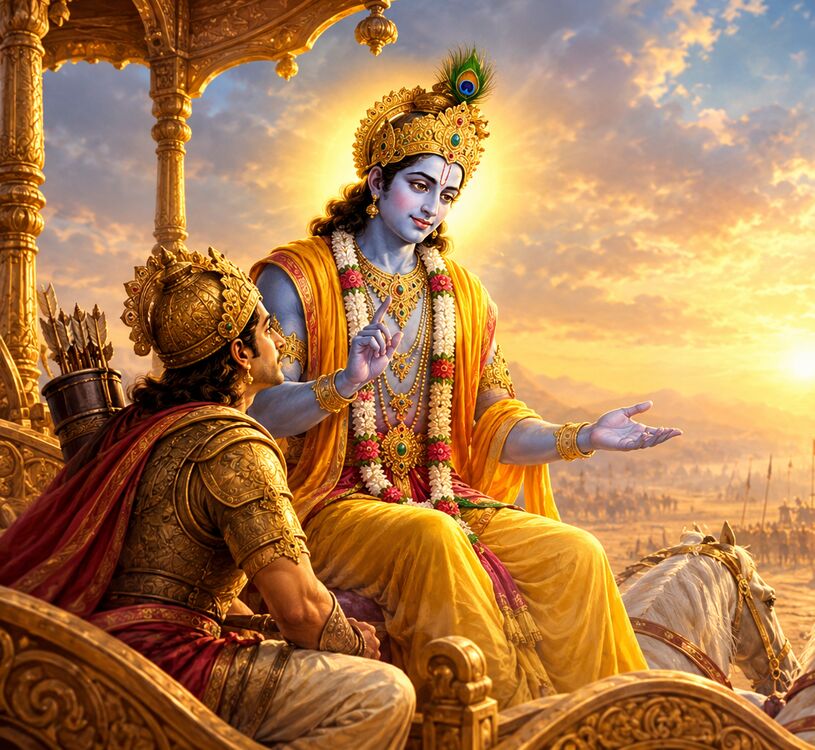


Bhagavad Gita Chapter 4
Jnana Karma Sannyasa Yoga · Knowledge and giving up action (ज्ञानकर्मसंन्यासयोग)
Printed from jeevandrishti.com/books/bhagavad-gita/chapter-4, where the meaning of every verse is in English and Hindi.
Duty · Knowledge · Devotion
About Chapter 4, Jnana Karma Sannyasa Yoga
Chapter 4, Jnana Karma Sannyasa Yoga, joins the two threads of the earlier chapters: knowledge (jnana) and action (karma). Krishna first tells Arjuna that this yoga is ancient, taught by him to the Sun and handed down through the royal sages, and explains why he takes birth: to protect the good and restore dharma, age after age (shlokas 1–10, including the well-known 4.7–4.8).
He then explains the hidden nature of action: seeing inaction in action and action in inaction, working without craving its fruits, so that action does not bind (11–23). Every kind of discipline is described as an offering (yajna), from offering wealth to offering the breath (24–32). Above them all is the offering of knowledge, learnt from those who have seen the truth with humility, questions and service; it burns away all actions like fire burns wood (33–42).
A calm reading of all 42 shlokas with their meanings takes about twenty minutes.
An ancient teaching, and why Krishna comes 4.1–4.10
श्रीभगवानुवाच Shri Krishna said
इमं विवस्वते योगं प्रोक्तवानहमव्ययम्।
विवस्वान् मनवे प्राह मनुरिक्ष्वाकवेऽब्रवीत्॥
Imam vivasvate yogam proktavan aham avyayam
Vivasvan manave praha manur ikshvakave ’bravit
यह अविनाशी योग मैंने सूर्य (विवस्वान) को बताया था; विवस्वान ने इसे मनु को बताया, और मनु ने राजा इक्ष्वाकु को।
I taught this unending yoga to Vivasvan, the Sun; Vivasvan taught it to Manu, and Manu told it to Ikshvaku.
एवं परम्पराप्राप्तमिमं राजर्षयो विदुः।
स कालेनेह महता योगो नष्टः परन्तप॥
Evam parampara-praptam imam rajarshayo viduh
Sa kaleneha mahata yogo nashtah parantapa
इस प्रकार परंपरा से मिले इस योग को राजर्षियों ने जाना। पर हे परंतप, बहुत समय बीतने पर यह योग इस संसार से लुप्त हो गया।
Handed down in this way, the royal sages knew it. But over a long time, scorcher of foes, this yoga was lost to the world.
स एवायं मया तेऽद्य योगः प्रोक्तः पुरातनः।
भक्तोऽसि मे सखा चेति रहस्यं ह्येतदुत्तमम्॥
Sa evayam maya te ’dya yogah proktah puratanah
Bhakto ’si me sakha cheti rahasyam hyetad uttamam
वही पुराना योग आज मैंने तुम्हें बताया है, क्योंकि तुम मेरे भक्त और सखा हो। यह उत्तम रहस्य है।
That same ancient yoga I have told you today, because you are my devotee and my friend. It is the highest secret.
अर्जुन उवाच Arjuna said
अपरं भवतो जन्म परं जन्म विवस्वतः।
कथमेतद्विजानीयां त्वमादौ प्रोक्तवानिति॥
Aparam bhavato janma param janma vivasvatah
Katham etad vijaniyam tvam adau proktavan iti
आपका जन्म तो अभी का है और विवस्वान का जन्म बहुत पहले का। तो मैं यह कैसे समझूँ कि आपने ही आरंभ में यह योग बताया था?
Your birth was recent, and the birth of Vivasvan was long ago. How am I to understand that you taught it in the beginning?
श्रीभगवानुवाच Shri Krishna said
बहूनि मे व्यतीतानि जन्मानि तव चार्जुन।
तान्यहं वेद सर्वाणि न त्वं वेत्थ परन्तप॥
Bahuni me vyatitani janmani tava charjuna
Tanyaham veda sarvani na tvam vettha parantapa
हे अर्जुन, मेरे और तुम्हारे बहुत से जन्म हो चुके हैं। मैं उन सबको जानता हूँ, पर हे परंतप, तुम नहीं जानते।
Many births of mine have passed, and of yours too, Arjuna. I know them all, but you do not, scorcher of foes.
अजोऽपि सन्नव्ययात्मा भूतानामीश्वरोऽपि सन्।
प्रकृतिं स्वामधिष्ठाय संभवाम्यात्ममायया॥
Ajo ’pi sannavyayatma bhutanam ishvaro ’pi san
Prakritim svam adhishthaya sambhavamyatma-mayaya
मैं अजन्मा और अविनाशी हूँ, सब प्राणियों का ईश्वर हूँ, फिर भी अपनी प्रकृति को अधीन करके अपनी योगमाया से प्रकट होता हूँ।
Though I am unborn and unchanging, and the Lord of all beings, I take birth by my own power, through my own nature.
यदा यदा हि धर्मस्य ग्लानिर्भवति भारत।
अभ्युत्थानमधर्मस्य तदाऽऽत्मानं सृजाम्यहम्॥
Yada yada hi dharmasya glanir bhavati bharata
Abhyutthanam adharmasya tadatmanam srijamyaham
हे भारत, जब-जब धर्म की हानि होती है और अधर्म बढ़ता है, तब-तब मैं अपने आप को प्रकट करता हूँ।
Whenever goodness declines and wrongdoing rises, Bharata, then I bring myself forth.
परित्राणाय साधूनां विनाशाय च दुष्कृताम्।
धर्मसंस्थापनार्थाय संभवामि युगे युगे॥
Paritranaya sadhunam vinashaya cha dushkritam
Dharma-sansthapanarthaya sambhavami yuge yuge
सज्जनों की रक्षा, दुष्कर्म करने वालों के विनाश और धर्म की फिर से स्थापना के लिए मैं युग-युग में प्रकट होता हूँ।
To protect the good, to end the work of the wicked, and to set dharma firmly in place again, I appear age after age.
जन्म कर्म च मे दिव्यमेवं यो वेत्ति तत्त्वतः।
त्यक्त्वा देहं पुनर्जन्म नैति मामेति सोऽर्जुन॥
Janma karma cha me divyam evam yo vetti tattvatah
Tyaktva deham punar janma naiti mam eti so ’rjuna
हे अर्जुन, जो मेरे दिव्य जन्म और कर्म को तत्त्व से जान लेता है, वह शरीर छोड़ने के बाद फिर जन्म नहीं लेता, बल्कि मुझे प्राप्त होता है।
One who truly knows my divine birth and work does not take birth again after leaving the body, Arjuna, but comes to me.
वीतरागभयक्रोधा मन्मया मामुपाश्रिताः।
बहवो ज्ञानतपसा पूता मद्भावमागताः॥
Vita-raga-bhaya-krodha man-maya mam upashritah
Bahavo jnana-tapasa puta mad-bhavam agatah
राग, भय और क्रोध से मुक्त, मुझमें मन लगाए और मेरी शरण में रहने वाले बहुत से लोग ज्ञान रूपी तप से पवित्र होकर मेरे स्वरूप को प्राप्त हो चुके हैं।
Free of attachment, fear and anger, absorbed in me and taking refuge in me, many, made pure by the discipline of knowledge, have reached my nature.
Action, inaction and wrong action 4.11–4.23
ये यथा मां प्रपद्यन्ते तांस्तथैव भजाम्यहम्।
मम वर्त्मानुवर्तन्ते मनुष्याः पार्थ सर्वशः॥
Ye yatha mam prapadyante tans tathaiva bhajamyaham
Mama vartmanuvartante manushyah partha sarvashah
जो जिस भाव से मेरी शरण में आते हैं, मैं उन्हें उसी प्रकार अपनाता हूँ। हे पार्थ, मनुष्य सब प्रकार से मेरे ही मार्ग पर चलते हैं।
As people come to me, so I receive them. Son of Pritha, people follow my path in every way.
काङ्क्षन्तः कर्मणां सिद्धिं यजन्त इह देवताः।
क्षिप्रं हि मानुषे लोके सिद्धिर्भवति कर्मजा॥
Kankshantah karmanam siddhim yajanta iha devatah
Kshipram hi manushe loke siddhir bhavati karmaja
कर्मों में सफलता चाहने वाले लोग इस संसार में देवताओं की उपासना करते हैं, क्योंकि मनुष्य लोक में कर्म से मिलने वाली सफलता जल्दी मिलती है।
Wanting success in their work, people here worship the gods, for in the human world success born of action comes quickly.
चातुर्वर्ण्यं मया सृष्टं गुणकर्मविभागशः।
तस्य कर्तारमपि मां विद्ध्यकर्तारमव्ययम्॥
Chatur-varnyam maya srishtam guna-karma-vibhagashah
Tasya kartaram api mam viddhyakartaram avyayam
गुणों और कर्मों के विभाग के अनुसार चार वर्णों की रचना मैंने की है। उनका रचयिता होते हुए भी मुझ अविनाशी को अकर्ता ही जानो।
The four orders of society were made by me according to people’s qualities and work. Though I am their maker, know me as the non-doer, the unchanging.
न मां कर्माणि लिम्पन्ति न मे कर्मफले स्पृहा।
इति मां योऽभिजानाति कर्मभिर्न स बध्यते॥
Na mam karmani limpanti na me karma-phale spriha
Iti mam yo ’bhijanati karmabhir na sa badhyate
कर्म मुझे लिप्त नहीं करते, और न मुझे कर्मों के फल की इच्छा है। जो मुझे इस प्रकार जानता है, वह भी कर्मों से नहीं बँधता।
Actions do not touch me, nor do I long for their fruits. One who knows me in this way is not bound by actions.
एवं ज्ञात्वा कृतं कर्म पूर्वैरपि मुमुक्षुभिः।
कुरु कर्मैव तस्मात्त्वं पूर्वैः पूर्वतरं कृतम्॥
Evam jnatva kritam karma purvair api mumukshubhih
Kuru karmaiva tasmattvam purvaih purvataram kritam
यह जानकर पुराने समय के मुक्ति चाहने वालों ने भी कर्म किए थे। इसलिए तुम भी वैसे ही कर्म करो, जैसे पूर्वजों ने बहुत पहले किए थे।
Knowing this, the seekers of freedom of old also did their work. So you too should act, as those before you did long ago.
किं कर्म किमकर्मेति कवयोऽप्यत्र मोहिताः।
तत्ते कर्म प्रवक्ष्यामि यज्ज्ञात्वा मोक्ष्यसेऽशुभात्॥
Kim karma kim akarmeti kavayo ’pyatra mohitah
Tat te karma pravakshyami yaj jnatva mokshyase ’shubhat
कर्म क्या है और अकर्म क्या है, इस विषय में ज्ञानी भी उलझ जाते हैं। इसलिए मैं तुम्हें कर्म का स्वरूप बताता हूँ, जिसे जानकर तुम अशुभ से छूट जाओगे।
What is action and what is inaction? Even the wise are confused here. I will tell you what action is; knowing it, you will be free from harm.
कर्मणो ह्यपि बोद्धव्यं बोद्धव्यं च विकर्मणः।
अकर्मणश्च बोद्धव्यं गहना कर्मणो गतिः॥
Karmano hyapi boddhavyam boddhavyam cha vikarmanah
Akarmanash cha boddhavyam gahana karmano gatih
कर्म को भी समझना चाहिए, विकर्म (गलत कर्म) को भी समझना चाहिए और अकर्म को भी; क्योंकि कर्म की गति गहरी है।
One must understand action, understand wrong action, and understand inaction too; the way of action is hard to fathom.
कर्मण्यकर्म यः पश्येदकर्मणि च कर्म यः।
स बुद्धिमान् मनुष्येषु स युक्तः कृत्स्नकर्मकृत्॥
Karmanyakarma yah pashyed akarmani cha karma yah
Sa buddhiman manushyeshu sa yuktah kritsna-karma-krit
जो कर्म में अकर्म और अकर्म में कर्म देखता है, वह मनुष्यों में बुद्धिमान है; वह योगी है और सब कर्म करते हुए भी स्थिर है।
One who sees inaction in action and action in inaction is wise among people; such a person is steady in yoga while doing all their work.
यस्य सर्वे समारम्भाः कामसङ्कल्पवर्जिताः।
ज्ञानाग्निदग्धकर्माणं तमाहुः पण्डितं बुधाः॥
Yasya sarve samarambhah kama-sankalpa-varjitah
Jnanagni-dagdha-karmanam tam ahuh panditam budhah
जिसके सारे कार्य कामना और संकल्प से रहित हैं, और जिसके कर्म ज्ञान रूपी अग्नि में जल गए हैं, उसे ज्ञानी लोग पंडित कहते हैं।
One whose every undertaking is free of selfish desire and planning, whose actions are burnt in the fire of knowledge, is called wise by the learned.
त्यक्त्वा कर्मफलासङ्गं नित्यतृप्तो निराश्रयः।
कर्मण्यभिप्रवृत्तोऽपि नैव किञ्चित्करोति सः॥
Tyaktva karma-phalasangam nitya-tripto nirashrayah
Karmanyabhipravritto ’pi naiva kinchit karoti sah
कर्मफल की आसक्ति छोड़कर, सदा तृप्त और किसी पर निर्भर न रहने वाला व्यक्ति कर्म में पूरी तरह लगा रहकर भी वास्तव में कुछ नहीं करता।
Giving up attachment to the fruits of action, always content and depending on nothing, such a person does nothing at all, even while fully engaged in work.
निराशीर्यतचित्तात्मा त्यक्तसर्वपरिग्रहः।
शारीरं केवलं कर्म कुर्वन्नाप्नोति किल्बिषम्॥
Nirashir yata-chittatma tyakta-sarva-parigrahah
Shariram kevalam karma kurvan napnoti kilbisham
आशा के बिना, मन और शरीर को वश में रखकर, सब प्रकार के संग्रह को छोड़कर, केवल शरीर से कर्म करता हुआ व्यक्ति पाप का भागी नहीं होता।
Without expectation, with mind and body controlled, giving up all possessiveness, and doing only bodily work, such a person incurs no wrong.
यदृच्छालाभसन्तुष्टो द्वन्द्वातीतो विमत्सरः।
समः सिद्धावसिद्धौ च कृत्वापि न निबध्यते॥
Yadrichchha-labha-santushto dvandvatito vimatsarah
Samah siddhavasiddhau cha kritvapi na nibadhyate
जो अपने आप मिल जाए उसी में संतुष्ट, द्वंद्वों से परे, ईर्ष्या से रहित, और सफलता-असफलता में समान रहने वाला व्यक्ति कर्म करके भी नहीं बँधता।
Content with whatever comes on its own, beyond the pairs of opposites, free of envy, even-minded in success and failure, such a person is not bound even when acting.
गतसङ्गस्य मुक्तस्य ज्ञानावस्थितचेतसः।
यज्ञायाचरतः कर्म समग्रं प्रविलीयते॥
Gata-sangasya muktasya jnanavasthita-chetasah
Yajnayacharatah karma samagram praviliyate
जो आसक्ति से रहित और मुक्त है, जिसका मन ज्ञान में स्थित है, और जो यज्ञ के लिए कर्म करता है, उसके सारे कर्म विलीन हो जाते हैं।
For one who is free of attachment and liberated, whose mind rests in knowledge, and who works as an offering, all action dissolves away.
Many kinds of offering 4.24–4.32
ब्रह्मार्पणं ब्रह्महविर्ब्रह्माग्नौ ब्रह्मणा हुतम्।
ब्रह्मैव तेन गन्तव्यं ब्रह्मकर्मसमाधिना॥
Brahmarpanam brahma havir brahmagnau brahmana hutam
Brahmaiva tena gantavyam brahma-karma-samadhina
अर्पण ब्रह्म है, हवि ब्रह्म है, ब्रह्म रूपी कर्ता द्वारा ब्रह्म रूपी अग्नि में आहुति दी जाती है। जो हर कर्म में ब्रह्म को देखता है, वह ब्रह्म को ही प्राप्त होता है।
The offering is Brahman, the oblation is Brahman, poured by Brahman into the fire that is Brahman. One who sees Brahman in every action reaches Brahman.
दैवमेवापरे यज्ञं योगिनः पर्युपासते।
ब्रह्माग्नावपरे यज्ञं यज्ञेनैवोपजुह्वति॥
Daivam evapare yajnam yoginah paryupasate
Brahmagnavapare yajnam yajnenaivopajuhvati
कुछ योगी देवताओं के लिए यज्ञ करते हैं; और कुछ ब्रह्म रूपी अग्नि में यज्ञ के द्वारा ही यज्ञ (आत्मा) की आहुति देते हैं।
Some yogis make offerings to the gods; others offer the self as an offering into the fire of Brahman.
श्रोत्रादीनीन्द्रियाण्यन्ये संयमाग्निषु जुह्वति।
शब्दादीन्विषयानन्य इन्द्रियाग्निषु जुह्वति॥
Shrotradinindriyanyanye sanyamagnishu juhvati
Shabdadin vishayananya indriyagnishu juhvati
कुछ लोग कान आदि इन्द्रियों की संयम रूपी अग्नि में आहुति देते हैं; और कुछ शब्द आदि विषयों की इन्द्रिय रूपी अग्नि में आहुति देते हैं।
Some offer hearing and the other senses into the fires of restraint; others offer sound and the other sense objects into the fires of the senses.
सर्वाणीन्द्रियकर्माणि प्राणकर्माणि चापरे।
आत्मसंयमयोगाग्नौ जुह्वति ज्ञानदीपिते॥
Sarvanindriya-karmani prana-karmani chapare
Atma-sanyama-yogagnau juhvati jnana-dipite
कुछ लोग इन्द्रियों और प्राणों की सारी क्रियाओं की, ज्ञान से प्रज्वलित आत्मसंयम रूपी योग की अग्नि में आहुति देते हैं।
Others offer all the workings of the senses and of the life breath into the fire of self-control, lit by knowledge.
द्रव्ययज्ञास्तपोयज्ञा योगयज्ञास्तथापरे।
स्वाध्यायज्ञानयज्ञाश्च यतयः संशितव्रताः॥
Dravya-yajnas tapo-yajna yoga-yajnas tathapare
Swadhyaya-jnana-yajnash cha yatayah sanshita-vratah
कुछ लोग धन से यज्ञ करते हैं, कुछ तप से, कुछ योग से; और कठोर व्रत वाले साधक स्वाध्याय और ज्ञान से यज्ञ करते हैं।
Some make offerings of their wealth, some of austerity, some of the practice of yoga; and disciplined seekers with firm vows make offerings of study and knowledge.
अपाने जुह्वति प्राणं प्राणेऽपानं तथाऽपरे।
प्राणापानगती रुद्ध्वा प्राणायामपरायणाः॥
Apane juhvati pranam prane ’panam tathapare
Pranapana-gati ruddhva pranayama-parayanah
कुछ लोग प्राणायाम में लगे रहकर अपान में प्राण की और प्राण में अपान की आहुति देते हैं, और प्राण और अपान की गति रोक लेते हैं।
Others, devoted to the control of breath, offer the outgoing breath into the incoming and the incoming into the outgoing, holding back the flow of both.
अपरे नियताहाराः प्राणान्प्राणेषु जुह्वति।
सर्वेऽप्येते यज्ञविदो यज्ञक्षपितकल्मषाः॥
Apare niyataharah pranan praneshu juhvati
Sarve ’pyete yajna-vido yajna-kshapita-kalmashah
कुछ लोग नियमित आहार करके प्राणों की प्राणों में आहुति देते हैं। ये सभी यज्ञ को जानने वाले हैं, और यज्ञ से इनके दोष नष्ट हो जाते हैं।
Others, eating with restraint, offer the life breaths into the life breaths. All of these know what offering is, and through it their faults are cleansed.
यज्ञशिष्टामृतभुजो यान्ति ब्रह्म सनातनम्।
नायं लोकोऽस्त्ययज्ञस्य कुतोऽन्यः कुरुसत्तम॥
Yajna-shishtamrita-bhujo yanti brahma sanatanam
Nayam loko ’styayajnasya kuto ’nyah kuru-sattama
यज्ञ से बचे अमृत रूपी अन्न को खाने वाले सनातन ब्रह्म को प्राप्त होते हैं। हे कुरुश्रेष्ठ, जो यज्ञ नहीं करता, उसके लिए यह लोक भी सुखद नहीं, फिर परलोक कैसे होगा?
Those who partake of what remains of the offering, which is like nectar, reach the eternal Brahman. Best of the Kurus, this world is not for one who makes no offering; how then the next?
एवं बहुविधा यज्ञा वितता ब्रह्मणो मुखे।
कर्मजान्विद्धि तान्सर्वानेवं ज्ञात्वा विमोक्ष्यसे॥
Evam bahu-vidha yajna vitata brahmano mukhe
Karma-jan viddhi tan sarvan evam jnatva vimokshyase
इस प्रकार के बहुत से यज्ञ वेदों में विस्तार से बताए गए हैं। उन सबको कर्म से उत्पन्न जानो; यह जानकर तुम मुक्त हो जाओगे।
Many such kinds of offering are described in the Vedas. Know that all of them are born of action; knowing this, you will be set free.
The offering of knowledge 4.33–4.42
श्रेयान्द्रव्यमयाद्यज्ञाज्ज्ञानयज्ञः परन्तप।
सर्वं कर्माखिलं पार्थ ज्ञाने परिसमाप्यते॥
Shreyan dravya-mayad yajnaj jnana-yajnah parantapa
Sarvam karmakhilam partha jnane parisamapyate
हे परंतप, द्रव्य से होने वाले यज्ञ से ज्ञान यज्ञ श्रेष्ठ है। हे पार्थ, सभी कर्म पूरी तरह ज्ञान में ही समाप्त होते हैं।
The offering of knowledge is better than any offering of material things, scorcher of foes. All action, without exception, son of Pritha, finds its fulfilment in knowledge.
तद्विद्धि प्रणिपातेन परिप्रश्नेन सेवया।
उपदेक्ष्यन्ति ते ज्ञानं ज्ञानिनस्तत्त्वदर्शिनः॥
Tad viddhi pranipatena pariprashnena sevaya
Upadekshyanti te jnanam jnaninas tattva-darshinah
उस ज्ञान को विनम्र होकर प्रणाम करके, प्रश्न पूछकर और सेवा करके सीखो। तत्त्व को जानने वाले ज्ञानी तुम्हें वह ज्ञान सिखाएँगे।
Learn it by bowing down, by asking questions, and by serving. The wise, who have seen the truth, will teach you that knowledge.
यज्ज्ञात्वा न पुनर्मोहमेवं यास्यसि पाण्डव।
येन भूतान्यशेषेण द्रक्ष्यस्यात्मन्यथो मयि॥
Yaj jnatva na punar moham evam yasyasi pandava
Yena bhutanyasheshena drakshyasyatmanyatho mayi
हे पाण्डव, उसे जानकर तुम फिर इस प्रकार मोह में नहीं पड़ोगे, और उसके द्वारा सब प्राणियों को अपने में और फिर मुझमें देखोगे।
Knowing it, Pandava, you will not fall into confusion like this again, and through it you will see all beings in yourself, and then in me.
अपि चेदसि पापेभ्यः सर्वेभ्यः पापकृत्तमः।
सर्वं ज्ञानप्लवेनैव वृजिनं सन्तरिष्यसि॥
Api ched asi papebhyah sarvebhyah papa-krit-tamah
Sarvam jnana-plavenaiva vrijinam santarishyasi
यदि तुम सब पापियों से भी बढ़कर पाप करने वाले हो, तब भी ज्ञान रूपी नाव से सारे पापों को पार कर जाओगे।
Even if you were the worst of all wrongdoers, you would cross over all wrongdoing by the boat of knowledge alone.
यथैधांसि समिद्धोऽग्निर्भस्मसात्कुरुतेऽर्जुन।
ज्ञानाग्निः सर्वकर्माणि भस्मसात्कुरुते तथा॥
Yathaidhansi samiddho ’gnir bhasma-sat kurute ’rjuna
Jnanagnih sarva-karmani bhasma-sat kurute tatha
हे अर्जुन, जैसे जलती हुई आग लकड़ियों को राख कर देती है, वैसे ही ज्ञान रूपी अग्नि सारे कर्मों को राख कर देती है।
As a blazing fire turns wood to ashes, Arjuna, so the fire of knowledge turns all actions to ashes.
न हि ज्ञानेन सदृशं पवित्रमिह विद्यते।
तत्स्वयं योगसंसिद्धः कालेनात्मनि विन्दति॥
Na hi jnanena sadrisham pavitramiha vidyate
Tat svayam yoga-sansiddhah kalenatmani vindati
इस संसार में ज्ञान के समान पवित्र करने वाला कुछ भी नहीं है। योग में सिद्ध हुआ व्यक्ति समय आने पर उसे अपने भीतर ही पा लेता है।
Nothing in this world purifies like knowledge. One who has become perfect in yoga finds it within the self in time.
श्रद्धावाँल्लभते ज्ञानं तत्परः संयतेन्द्रियः।
ज्ञानं लब्ध्वा परां शान्तिमचिरेणाधिगच्छति॥
Shraddhavan labhate jnanam tat-parah sanyatendriyah
Jnanam labdhva param shantim achirenadhigachchhati
श्रद्धा वाला, उसमें लगा हुआ और इन्द्रियों को वश में रखने वाला व्यक्ति ज्ञान पाता है; और ज्ञान पाकर जल्दी ही परम शांति को प्राप्त होता है।
One who has faith, is devoted to it and has mastered the senses gains knowledge; and having gained knowledge, soon reaches the highest peace.
अज्ञश्चाश्रद्दधानश्च संशयात्मा विनश्यति।
नायं लोकोऽस्ति न परो न सुखं संशयात्मनः॥
Ajnash chashraddadhanash cha sanshayatma vinashyati
Nayam loko ’sti na paro na sukham sanshayatmanah
पर जो अज्ञानी है, जिसमें श्रद्धा नहीं और जो संशय से भरा है, वह नष्ट हो जाता है। संशय करने वाले के लिए न यह लोक है, न परलोक, न सुख।
But one who lacks knowledge and faith, and is full of doubt, is lost. For the doubting mind there is neither this world, nor the next, nor happiness.
योगसंन्यस्तकर्माणं ज्ञानसंछिन्नसंशयम्।
आत्मवन्तं न कर्माणि निबध्नन्ति धनञ्जय॥
Yoga-sannyasta-karmanam jnana-sanchhinna-sanshayam
Atmavantam na karmani nibadhnanti dhananjaya
हे धनंजय, जिसने योग से कर्मों को समर्पित कर दिया है, जिसके संशय ज्ञान से कट गए हैं और जो आत्मनिष्ठ है, उसे कर्म नहीं बाँधते।
Actions do not bind one who has given up action through yoga, whose doubts are cut away by knowledge, and who is centred in the self, Dhananjaya.
तस्मादज्ञानसंभूतं हृत्स्थं ज्ञानासिनाऽऽत्मनः।
छित्त्वैनं संशयं योगमातिष्ठोत्तिष्ठ भारत॥
Tasmad ajnana-sambhutam hrit-stham jnanasinatmanah
Chhittvainam sanshayam yogam atishthottishtha bharata
इसलिए हे भारत, अज्ञान से पैदा हुए, हृदय में बैठे इस संशय को ज्ञान रूपी तलवार से काटकर योग में स्थित हो जाओ, और उठ खड़े हो।
So cut away this doubt in your heart, born of ignorance, with the sword of knowledge. Take refuge in yoga, Bharata, and stand up.
ॐ तत्सदिति श्रीमद्भगवद्गीतासूपनिषत्सु ब्रह्मविद्यायां योगशास्त्रे श्रीकृष्णार्जुनसंवादे
ज्ञानकर्मसंन्यासयोगो नाम चतुर्थोऽध्यायः ॥४॥
The meanings here are written in plain words and follow the common reading of each shloka; they are not a word-for-word translation or a commentary. The Roman lettering is simplified for easy reading. This page is for reading and reflection; it is not a substitute for medical or other professional help.
Questions people ask
What is Chapter 4 of the Bhagavad Gita about?
Knowledge and action together: the ancient line of this teaching, why Krishna takes birth, how to act without being bound, the many kinds of offering, and the offering of knowledge as the highest.
What do shlokas 4.7 and 4.8 say?
“Yada yada hi dharmasya”: whenever goodness declines and wrongdoing rises, Krishna brings himself forth, to protect the good, end the work of the wicked and restore dharma, age after age.
What is “inaction in action” (4.18)?
Seeing that one who works without attachment or craving for results is, in truth, not bound by the work; such a person is called wise and steady in yoga.
How does Chapter 4 say knowledge should be learnt?
By bowing down, asking questions and serving those who have seen the truth (4.34).
What does the closing shloka ask Arjuna to do?
To cut away the doubt in his heart with the sword of knowledge, take refuge in yoga, and stand up (4.42).
Join us on Facebook
New books and chapters, festival days and easy-to-read astrology, in your feed. Free, and you can leave any time.