Bhagavad Gita Chapter 6
Atma Samyama Yoga · Meditation and self-control (आत्मसंयमयोग)
Printed from jeevandrishti.com/books/bhagavad-gita/chapter-6, where the meaning of every verse is in English and Hindi.
Duty · Knowledge · Devotion
About Chapter 6, Atma Samyama Yoga
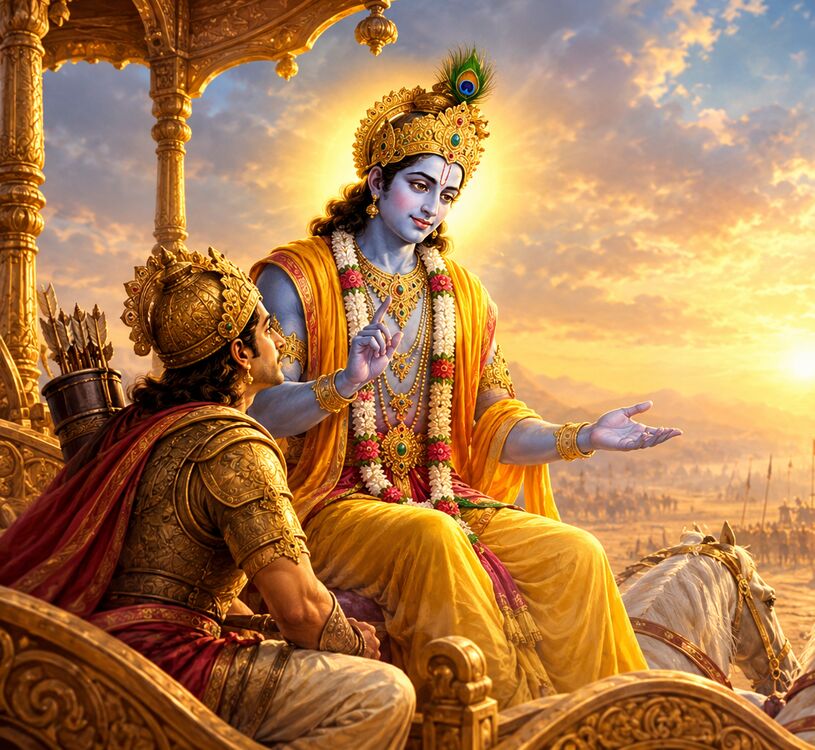
Chapter 6, Atma Samyama Yoga (the yoga of self-control), is often called Dhyana Yoga, the yoga of meditation. Krishna begins by saying that the true renunciate is the one who works without depending on the fruit, and that each person must lift themselves up: the self is its own friend and its own enemy (shlokas 1–9).
He then describes how to meditate: a quiet, clean place, a firm seat, the body straight and still, the mind on him, and balance in eating, sleep and work. The steady mind is “like a lamp in a windless place” (10–23). The mind is brought back gently each time it wanders, until one sees the same Self in all beings (24–32). Arjuna says the mind is as hard to hold as the wind; Krishna agrees, and answers that it is held by practice (abhyasa) and letting go (vairagya) (33–36). Last, Arjuna asks what happens to one who falls from the path before reaching the goal. Krishna says no one who does good comes to a bad end (37–47).
A calm reading of all 47 shlokas with their meanings takes about twenty minutes.
Be your own friend 6.1–6.9
श्रीभगवानुवाच Shri Krishna said
अनाश्रितः कर्मफलं कार्यं कर्म करोति यः।
स संन्यासी च योगी च न निरग्निर्न चाक्रियः॥
Anashritah karma-phalam karyam karma karoti yah
Sa sannyasi cha yogi cha na niragnir na chakriyah
जो कर्मफल का आश्रय लिए बिना करने योग्य कर्म करता है, वही संन्यासी और योगी है; केवल अग्नि छोड़ देने वाला या सारी क्रियाएँ छोड़ देने वाला नहीं।
One who does the work that should be done without depending on its fruit is a true renunciate and a true yogi; not one who merely gives up the sacred fire or stops all activity.
यं संन्यासमिति प्राहुर्योगं तं विद्धि पाण्डव।
न ह्यसंन्यस्तसङ्कल्पो योगी भवति कश्चन॥
Yam sannyasam iti prahur yogam tam viddhi pandava
Na hyasannyasta-sankalpo yogi bhavati kashchana
हे पाण्डव, जिसे संन्यास कहते हैं, उसी को योग जानो, क्योंकि संकल्पों को छोड़े बिना कोई योगी नहीं बनता।
What they call renunciation, know that to be yoga, Pandava, for no one becomes a yogi without giving up selfish intentions.
आरुरुक्षोर्मुनेर्योगं कर्म कारणमुच्यते।
योगारूढस्य तस्यैव शमः कारणमुच्यते॥
Arurukshor muner yogam karma karanam uchyate
Yogarudhasya tasyaiva shamah karanam uchyate
योग में ऊपर चढ़ने की इच्छा रखने वाले मुनि के लिए कर्म साधन कहा गया है; और योग में स्थित हो जाने पर उसी के लिए शांति (शम) साधन कहा गया है।
For the sage who wants to climb to yoga, action is said to be the means. For the same person, once established in yoga, calm is said to be the means.
यदा हि नेन्द्रियार्थेषु न कर्मस्वनुषज्जते।
सर्वसङ्कल्पसंन्यासी योगारूढस्तदोच्यते॥
Yada hi nendriyartheshu na karmasv-anushajjate
Sarva-sankalpa-sannyasi yogarudhas tadochyate
जब व्यक्ति न इन्द्रियों के विषयों में आसक्त होता है, न कर्मों में, और सब संकल्पों को छोड़ देता है, तब वह योगारूढ़ कहलाता है।
When one is no longer attached to sense objects or to actions, and has given up all selfish intentions, one is said to be established in yoga.
उद्धरेदात्मनाऽऽत्मानं नात्मानमवसादयेत्।
आत्मैव ह्यात्मनो बन्धुरात्मैव रिपुरात्मनः॥
Uddhared atmanatmanam natmanam avasadayet
Atmaiva hyatmano bandhur atmaiva ripur atmanah
अपने द्वारा अपना उद्धार करो, अपने को गिरने मत दो। क्योंकि मनुष्य स्वयं ही अपना मित्र है और स्वयं ही अपना शत्रु।
Lift yourself up by your own self; do not let yourself sink. For the self alone is one’s own friend, and the self alone is one’s own enemy.
बन्धुरात्माऽऽत्मनस्तस्य येनात्मैवात्मना जितः।
अनात्मनस्तु शत्रुत्वे वर्तेतात्मैव शत्रुवत्॥
Bandhur atmatmanas tasya yenatmaivatmana jitah
Anatmanas tu shatrutve vartetatmaiva shatru-vat
जिसने अपने आप से अपने मन को जीत लिया है, उसके लिए वह स्वयं मित्र है; पर जिसने नहीं जीता, उसके लिए वही शत्रु की तरह बरतता है।
For one who has mastered the self by the self, the self is a friend. But for one who has not, the self acts like an enemy.
जितात्मनः प्रशान्तस्य परमात्मा समाहितः।
शीतोष्णसुखदुःखेषु तथा मानापमानयोः॥
Jitatmanah prashantasya paramatma samahitah
Shitoshna-sukha-duhkheshu tatha manapamanayoh
जिसने अपने को जीत लिया है और जो शांत है, उसका मन सर्दी-गर्मी, सुख-दुःख और मान-अपमान में परमात्मा में स्थिर रहता है।
For one who has mastered the self and is at peace, the Supreme Self stays steady in cold and heat, pleasure and pain, honour and dishonour.
ज्ञानविज्ञानतृप्तात्मा कूटस्थो विजितेन्द्रियः।
युक्त इत्युच्यते योगी समलोष्टाश्मकाञ्चनः॥
Jnana-vijnana-triptatma kuta-stho vijitendriyah
Yukta ityuchyate yogi sama-loshtashma-kanchanah
जो ज्ञान और विज्ञान से तृप्त है, अचल है, जिसने इन्द्रियों को जीत लिया है, और जिसके लिए मिट्टी, पत्थर और सोना एक समान हैं, वह योगी युक्त कहलाता है।
The yogi who is content with knowledge and realisation, unshaken, master of the senses, and to whom a lump of earth, a stone and gold are the same, is called steady.
सुहृन्मित्रार्युदासीनमध्यस्थद्वेष्यबन्धुषु।
साधुष्वपि च पापेषु समबुद्धिर्विशिष्यते॥
Suhrin-mitraryudasina-madhyastha-dveshya-bandhushu
Sadhushvapi cha papeshu sama-buddhir vishishyate
जो हितैषी, मित्र, शत्रु, उदासीन, मध्यस्थ, द्वेष करने वाले और संबंधियों में, तथा सज्जनों और पापियों में भी समान बुद्धि रखता है, वह और भी श्रेष्ठ है।
Better still is one who looks with an equal mind on well-wishers, friends, enemies, the indifferent, the neutral, the hateful and relatives, on the good and on wrongdoers alike.
How to meditate 6.10–6.23
योगी युञ्जीत सततमात्मानं रहसि स्थितः।
एकाकी यतचित्तात्मा निराशीरपरिग्रहः॥
Yogi yunjita satatam atmanam rahasi sthitah
Ekaki yata-chittatma nirashir aparigrahah
योगी को एकांत में अकेले रहकर, मन और शरीर को वश में करके, आशा और संग्रह से रहित होकर, निरंतर मन को आत्मा में लगाना चाहिए।
A yogi should keep the mind steadily on the self, staying in a quiet place, alone, with mind and body controlled, free of expectation and possessiveness.
शुचौ देशे प्रतिष्ठाप्य स्थिरमासनमात्मनः।
नात्युच्छ्रितं नातिनीचं चैलाजिनकुशोत्तरम्॥
Shuchau deshe pratishthapya sthiram asanam atmanah
Natyuchchhritam nati-nicham chailajina-kushottaram
पवित्र स्थान पर अपने लिए स्थिर आसन बिछाकर, जो न बहुत ऊँचा हो न बहुत नीचा, और जिस पर कुशा, मृगछाला और वस्त्र बिछे हों,
In a clean place, setting up a firm seat for himself, neither too high nor too low, covered with kusha grass, a deerskin and a cloth,
तत्रैकाग्रं मनः कृत्वा यतचित्तेन्द्रियक्रियः।
उपविश्यासने युञ्ज्याद्योगमात्मविशुद्धये॥
Tatraikagram manah kritva yata-chittendriya-kriyah
Upavishyasane yunjyad yogam atma-vishuddhaye
उस आसन पर बैठकर, मन को एकाग्र करके और मन तथा इन्द्रियों की क्रियाओं को वश में रखकर, अपनी शुद्धि के लिए योग का अभ्यास करना चाहिए।
sitting there, making the mind one-pointed and controlling the workings of the mind and senses, one should practise yoga to purify oneself.
समं कायशिरोग्रीवं धारयन्नचलं स्थिरः।
संप्रेक्ष्य नासिकाग्रं स्वं दिशश्चानवलोकयन्॥
Samam kaya-shiro-grivam dharayann achalam sthirah
Samprekshya nasikagram svam dishash chanavalokayan
शरीर, सिर और गर्दन को सीधा और अचल रखकर, स्थिर होकर, अपनी नाक के अगले भाग पर दृष्टि टिकाकर और इधर-उधर न देखते हुए,
Holding the body, head and neck straight and still, steady, gazing at the tip of the nose and not looking around,
प्रशान्तात्मा विगतभीर्ब्रह्मचारिव्रते स्थितः।
मनः संयम्य मच्चित्तो युक्त आसीत मत्परः॥
Prashantatma vigata-bhir brahmachari-vrate sthitah
Manah sanyamya mach-chitto yukta asita mat-parah
शांत मन से, भय छोड़कर, ब्रह्मचर्य के व्रत में स्थित होकर, मन को वश में करके, मुझमें चित्त लगाकर और मुझे परम लक्ष्य मानकर बैठना चाहिए।
calm and free of fear, firm in the vow of self-discipline, controlling the mind, thinking of me, one should sit steady, with me as the highest aim.
युञ्जन्नेवं सदाऽऽत्मानं योगी नियतमानसः।
शान्तिं निर्वाणपरमां मत्संस्थामधिगच्छति॥
Yunjann evam sadatmanam yogi niyata-manasah
Shantim nirvana-paramam mat-sanstham adhigachchhati
इस प्रकार सदा मन को आत्मा में लगाने वाला, संयमित मन वाला योगी मुझमें स्थित परम निर्वाण रूपी शांति को प्राप्त होता है।
Always keeping the mind steady in this way, the yogi with a controlled mind reaches the peace that rests in me, the supreme peace of nirvana.
नात्यश्नतस्तु योगोऽस्ति न चैकान्तमनश्नतः।
न चातिस्वप्नशीलस्य जाग्रतो नैव चार्जुन॥
Natyashnatastu yogo ’sti na chaikantam anashnatah
Na chati-svapna-shilasya jagrato naiva charjuna
हे अर्जुन, यह योग न बहुत अधिक खाने वाले के लिए है, न बिल्कुल न खाने वाले के लिए; न बहुत सोने वाले के लिए, न बहुत जागने वाले के लिए।
Yoga is not for one who eats too much or for one who does not eat at all, nor for one who sleeps too much or one who stays awake too long, Arjuna.
युक्ताहारविहारस्य युक्तचेष्टस्य कर्मसु।
युक्तस्वप्नावबोधस्य योगो भवति दुःखहा॥
Yuktahara-viharasya yukta-cheshtasya karmasu
Yukta-svapnavabodhasya yogo bhavati duhkha-ha
जिसका खाना-पीना और घूमना-फिरना संतुलित है, जिसके कर्मों में प्रयास संतुलित है, और जिसका सोना-जागना संतुलित है, उसके लिए योग दुःखों को दूर करने वाला होता है।
For one who is balanced in eating and recreation, balanced in effort at work, and balanced in sleep and waking, yoga takes away sorrow.
यदा विनियतं चित्तमात्मन्येवावतिष्ठते।
निःस्पृहः सर्वकामेभ्यो युक्त इत्युच्यते तदा॥
Yada viniyatam chittam atmanyevavatishthate
Nihsprihah sarva-kamebhyo yukta ityuchyate tada
जब वश में किया हुआ मन आत्मा में ही स्थिर हो जाता है, और व्यक्ति सब कामनाओं से निःस्पृह हो जाता है, तब वह योग में स्थित कहलाता है।
When the disciplined mind rests in the self alone, free of longing for any desire, then one is said to be steady in yoga.
यथा दीपो निवातस्थो नेङ्गते सोपमा स्मृता।
योगिनो यतचित्तस्य युञ्जतो योगमात्मनः॥
Yatha dipo nivata-stho nengate sopama smrita
Yogino yata-chittasya yunjato yogam atmanah
“जैसे वायुरहित स्थान में रखा दीपक हिलता नहीं”, यही उपमा उस योगी के लिए दी जाती है जिसका मन वश में है और जो आत्मा में ध्यान लगाता है।
“Like a lamp in a windless place that does not flicker”: this is the image used for the yogi whose mind is controlled and who practises yoga of the self.
यत्रोपरमते चित्तं निरुद्धं योगसेवया।
यत्र चैवात्मनाऽऽत्मानं पश्यन्नात्मनि तुष्यति॥
Yatroparamate chittam niruddham yoga-sevaya
Yatra chaivatmanatmanam pashyann atmani tushyati
जब योग के अभ्यास से रुका हुआ मन शांत हो जाता है, और जब व्यक्ति अपने आप से आत्मा को देखकर आत्मा में ही संतुष्ट रहता है,
When the mind, held back by the practice of yoga, comes to rest, and when, seeing the self by the self, one is content in the self,
सुखमात्यन्तिकं यत्तद्बुद्धिग्राह्यमतीन्द्रियम्।
वेत्ति यत्र न चैवायं स्थितश्चलति तत्त्वतः॥
Sukham atyantikam yat tad buddhi-grahyam atindriyam
Vetti yatra na chaivayam sthitash chalati tattvatah
जब वह उस असीम सुख को जानता है जो बुद्धि से ग्रहण होता है और इन्द्रियों से परे है, और उसमें स्थित होकर तत्त्व से कभी नहीं हटता,
when one knows that boundless happiness which is grasped by the intellect and lies beyond the senses, and, established there, never moves from the truth,
यं लब्ध्वा चापरं लाभं मन्यते नाधिकं ततः।
यस्मिन्स्थितो न दुःखेन गुरुणापि विचाल्यते॥
Yam labdhva chaparam labham manyate nadhikam tatah
Yasmin sthito na duhkhena gurunapi vichalyate
जिसे पाकर वह उससे बड़ा कोई लाभ नहीं मानता, और जिसमें स्थित होकर बड़े से बड़े दुःख से भी विचलित नहीं होता,
having gained which one thinks no other gain is greater, and established in which one is not shaken even by great sorrow,
तं विद्याद् दुःखसंयोगवियोगं योगसंज्ञितम्।
स निश्चयेन योक्तव्यो योगोऽनिर्विण्णचेतसा॥
Tam vidyad duhkha-sanyoga-viyogam yoga-sanjnitam
Sa nishchayena yoktavyo yogo ’nirvinna-chetasa
दुःख के संयोग से इस वियोग को ही योग जानो। इस योग का अभ्यास निश्चय के साथ और बिना ऊबे मन से करना चाहिए।
know that this release from contact with sorrow is called yoga. This yoga should be practised with determination and a mind that does not lose heart.
Steadying the mind, seeing the same everywhere 6.24–6.32
सङ्कल्पप्रभवान्कामांस्त्यक्त्वा सर्वानशेषतः।
मनसैवेन्द्रियग्रामं विनियम्य समन्ततः॥
Sankalpa-prabhavan kamans tyaktva sarvan asheshatah
Manasaivendriya-gramam viniyamya samantatah
संकल्प से उत्पन्न होने वाली सारी कामनाओं को पूरी तरह छोड़कर, और मन से ही इन्द्रियों के समूह को सब ओर से वश में करके,
Giving up completely all desires born of selfish intention, and holding back all the senses on every side with the mind alone,
शनैः शनैरुपरमेद् बुद्ध्या धृतिगृहीतया।
आत्मसंस्थं मनः कृत्वा न किञ्चिदपि चिन्तयेत्॥
Shanaih shanair uparamed buddhya dhriti-grihitaya
Atma-sanstham manah kritva na kinchid api chintayet
धैर्य से युक्त बुद्धि के द्वारा धीरे-धीरे शांत होना चाहिए; मन को आत्मा में स्थित करके और कुछ भी नहीं सोचना चाहिए।
one should slowly, slowly come to rest, with an understanding held firm by patience; fixing the mind on the self, one should think of nothing else.
यतो यतो निश्चरति मनश्चञ्चलमस्थिरम्।
ततस्ततो नियम्यैतदात्मन्येव वशं नयेत्॥
Yato yato nishcharati manash chanchalam asthiram
Tatas tato niyamyaitad atmanyeva vasham nayet
यह चंचल और अस्थिर मन जहाँ-जहाँ भटके, वहाँ-वहाँ से उसे रोककर बार-बार आत्मा के वश में लाना चाहिए।
Wherever the restless, unsteady mind wanders off, from there one should draw it back and bring it under the control of the self.
प्रशान्तमनसं ह्येनं योगिनं सुखमुत्तमम्।
उपैति शान्तरजसं ब्रह्मभूतमकल्मषम्॥
Prashanta-manasam hyenam yoginam sukham uttamam
Upaiti shanta-rajasam brahma-bhutam akalmasham
जिसका मन पूरी तरह शांत है, जिसका रजोगुण शांत हो गया है, जो निष्पाप है और ब्रह्मरूप हो गया है, उस योगी को उत्तम सुख प्राप्त होता है।
Supreme happiness comes to the yogi whose mind is at peace, whose restlessness is stilled, who is free of fault and has become one with Brahman.
युञ्जन्नेवं सदाऽऽत्मानं योगी विगतकल्मषः।
सुखेन ब्रह्मसंस्पर्शमत्यन्तं सुखमश्नुते॥
Yunjann evam sadatmanam yogi vigata-kalmashah
Sukhena brahma-sansparsham atyantam sukham ashnute
इस प्रकार सदा मन को आत्मा में लगाने वाला निष्पाप योगी सहज ही ब्रह्म के संपर्क रूपी असीम सुख का अनुभव करता है।
Always keeping the mind steady in this way, the yogi, free of faults, easily enjoys the boundless happiness of contact with Brahman.
सर्वभूतस्थमात्मानं सर्वभूतानि चात्मनि।
ईक्षते योगयुक्तात्मा सर्वत्र समदर्शनः॥
Sarva-bhuta-stham atmanam sarva-bhutani chatmani
Ikshate yoga-yuktatma sarvatra sama-darshanah
योग से युक्त मन वाला व्यक्ति आत्मा को सब प्राणियों में और सब प्राणियों को आत्मा में देखता है; वह सब जगह समान देखता है।
One whose self is joined in yoga sees the self in all beings and all beings in the self, seeing the same everywhere.
यो मां पश्यति सर्वत्र सर्वं च मयि पश्यति।
तस्याहं न प्रणश्यामि स च मे न प्रणश्यति॥
Yo mam pashyati sarvatra sarvam cha mayi pashyati
Tasyaham na pranashyami sa cha me na pranashyati
जो मुझे सब जगह देखता है और सबको मुझमें देखता है, उसके लिए मैं कभी ओझल नहीं होता और वह मेरे लिए कभी ओझल नहीं होता।
One who sees me everywhere and sees everything in me, I am never lost to them, and they are never lost to me.
सर्वभूतस्थितं यो मां भजत्येकत्वमास्थितः।
सर्वथा वर्तमानोऽपि स योगी मयि वर्तते॥
Sarva-bhuta-sthitam yo mam bhajatyekatvam asthitah
Sarvatha vartamano ’pi sa yogi mayi vartate
जो एकत्व में स्थित होकर सब प्राणियों में रहने वाले मुझे भजता है, वह योगी किसी भी प्रकार रहते हुए भी मुझमें ही रहता है।
The yogi who, established in oneness, worships me as dwelling in all beings, lives in me, however he may live.
आत्मौपम्येन सर्वत्र समं पश्यति योऽर्जुन।
सुखं वा यदि वा दुःखं स योगी परमो मतः॥
Atmaupamyena sarvatra samam pashyati yo ’rjuna
Sukham va yadi va duhkham sa yogi paramo matah
हे अर्जुन, जो अपनी तुलना से सब जगह सुख और दुःख को समान देखता है, यानी दूसरों के सुख-दुःख को अपने जैसा समझता है, वह परम योगी माना गया है।
Arjuna, one who, by comparing with oneself, sees the joy and sorrow of others as equal to one’s own, is thought to be the highest yogi.
The restless mind: practice and letting go 6.33–6.36
अर्जुन उवाच Arjuna said
योऽयं योगस्त्वया प्रोक्तः साम्येन मधुसूदन।
एतस्याहं न पश्यामि चञ्चलत्वात् स्थितिं स्थिराम्॥
Yo ’yam yogas tvaya proktah samyena madhusudana
Etasyaham na pashyami chanchalatvat sthitim sthiram
हे मधुसूदन, आपने समता का जो यह योग बताया है, मन की चंचलता के कारण मुझे इसकी स्थिर स्थिति दिखाई नहीं देती।
Madhusudana, this yoga of evenness that you have taught, I do not see how it can last, because the mind is so restless.
चञ्चलं हि मनः कृष्ण प्रमाथि बलवद्दृढम्।
तस्याहं निग्रहं मन्ये वायोरिव सुदुष्करम्॥
Chanchalam hi manah krishna pramathi balavad dridham
Tasyaham nigraham manye vayor iva su-dushkaram
हे कृष्ण, यह मन बड़ा चंचल, हलचल मचाने वाला, बलवान और हठी है। इसे वश में करना मुझे वायु को रोकने जैसा कठिन लगता है।
For the mind is restless, Krishna, turbulent, strong and stubborn. I think controlling it is as hard as controlling the wind.
श्रीभगवानुवाच Shri Krishna said
असंशयं महाबाहो मनो दुर्निग्रहं चलम्।
अभ्यासेन तु कौन्तेय वैराग्येण च गृह्यते॥
Asanshayam maha-baho mano durnigraham chalam
Abhyasena tu kaunteya vairagyena cha grihyate
हे महाबाहो, इसमें संदेह नहीं कि मन चंचल है और कठिनता से वश में होता है। पर हे कौन्तेय, अभ्यास और वैराग्य से यह वश में होता है।
No doubt, mighty-armed one, the mind is restless and hard to control. But it can be held, son of Kunti, by practice and by letting go of attachment.
असंयतात्मना योगो दुष्प्राप इति मे मतिः।
वश्यात्मना तु यतता शक्योऽवाप्तुमुपायतः॥
Asanyatatmana yogo dushprapa iti me matih
Vashyatmana tu yatata shakyo ’vaptum upayatah
मेरा मत है कि जिसका मन वश में नहीं, उसके लिए योग पाना कठिन है; पर जिसका मन वश में है और जो प्रयत्न करता रहता है, वह सही उपाय से इसे पा सकता है।
I hold that yoga is hard to reach for one who is not self-controlled. But one who has mastered the self and keeps striving can reach it by the right means.
What happens to one who falls from yoga? 6.37–6.47
अर्जुन उवाच Arjuna said
अयतिः श्रद्धयोपेतो योगाच्चलितमानसः।
अप्राप्य योगसंसिद्धिं कां गतिं कृष्ण गच्छति॥
Ayatih shraddhayopeto yogach chalita-manasah
Aprapya yoga-sansiddhim kan gatim krishna gachchhati
हे कृष्ण, जो श्रद्धा रखता है पर पूरा प्रयत्न नहीं करता, और जिसका मन सिद्धि पाने से पहले योग से भटक जाता है, उसकी क्या गति होती है?
Krishna, what happens to one who has faith but does not strive enough, whose mind wanders from yoga before reaching its perfection? What end does such a person reach?
कच्चिन्नोभयविभ्रष्टश्छिन्नाभ्रमिव नश्यति।
अप्रतिष्ठो महाबाहो विमूढो ब्रह्मणः पथि॥
Kachchin nobhaya-vibhrashtash chhinnabhram iva nashyati
Apratishtho maha-baho vimudho brahmanah pathi
हे महाबाहो, दोनों ओर से भटका हुआ, बिना आधार का और ब्रह्म के मार्ग में मोहित हुआ वह व्यक्ति कहीं फटे हुए बादल की तरह नष्ट तो नहीं हो जाता?
Mighty-armed one, fallen from both, without a footing and lost on the path to Brahman, does such a person not perish like a scattered cloud?
एतन्मे संशयं कृष्ण छेत्तुमर्हस्यशेषतः।
त्वदन्यः संशयस्यास्य छेत्ता न ह्युपपद्यते॥
Etan me sanshayam krishna chhettum arhasyasheshatah
Tvad-anyah sanshayasyasya chhetta na hyupapadyate
हे कृष्ण, मेरे इस संशय को पूरी तरह दूर कीजिए, क्योंकि आपके सिवा कोई इसे दूर नहीं कर सकता।
Krishna, you should remove this doubt of mine completely, for no one but you can remove it.
श्रीभगवानुवाच Shri Krishna said
पार्थ नैवेह नामुत्र विनाशस्तस्य विद्यते।
नहि कल्याणकृत्कश्चिद्दुर्गतिं तात गच्छति॥
Partha naiveha namutra vinashas tasya vidyate
Na hi kalyana-krit kashchid durgatim tata gachchhati
हे पार्थ, ऐसे व्यक्ति का न इस लोक में नाश होता है, न परलोक में; क्योंकि हे प्रिय, भलाई करने वाला कोई भी दुर्गति को नहीं जाता।
Son of Pritha, there is no ruin for such a person, either here or hereafter. No one who does good, my friend, ever comes to a bad end.
प्राप्य पुण्यकृतां लोकानुषित्वा शाश्वतीः समाः।
शुचीनां श्रीमतां गेहे योगभ्रष्टोऽभिजायते॥
Prapya punya-kritam lokan ushitva shashvatih samah
Shuchinam shrimatam gehe yoga-bhrashto ’bhijayate
योग से भटका हुआ व्यक्ति पुण्यवानों के लोकों को पाकर, वहाँ बहुत वर्षों तक रहकर, पवित्र और समृद्ध लोगों के घर में जन्म लेता है।
Reaching the worlds of the righteous and living there for many years, one who fell from yoga is born again in the home of the pure and prosperous.
अथवा योगिनामेव कुले भवति धीमताम्।
एतद्धि दुर्लभतरं लोके जन्म यदीदृशम्॥
Atha va yoginam eva kule bhavati dhimatam
Etad dhi durlabhataram loke janma yad idrisham
या फिर वह ज्ञानी योगियों के कुल में ही जन्म लेता है; पर ऐसा जन्म इस संसार में बहुत दुर्लभ है।
Or else he is born in a family of wise yogis; but such a birth is very hard to gain in this world.
तत्र तं बुद्धिसंयोगं लभते पौर्वदेहिकम्।
यतते च ततो भूयः संसिद्धौ कुरुनन्दन॥
Tatra tam buddhi-sanyogam labhate paurva-dehikam
Yatate cha tato bhuyah sansiddhau kuru-nandana
हे कुरुनन्दन, वहाँ वह पिछले शरीर की बुद्धि के संस्कार को फिर पा लेता है, और उसके बाद सिद्धि के लिए फिर से प्रयत्न करता है।
There he regains the understanding of his former life, and from there he strives again for perfection, joy of the Kurus.
पूर्वाभ्यासेन तेनैव ह्रियते ह्यवशोऽपि सः।
जिज्ञासुरपि योगस्य शब्दब्रह्मातिवर्तते॥
Purvabhyasena tenaiva hriyate hyavasho ’pi sah
Jijnasur api yogasya shabda-brahmativartate
उसी पुराने अभ्यास के कारण वह न चाहते हुए भी योग की ओर खिंच जाता है। योग को जानने की इच्छा रखने वाला भी वेदों के कर्मकांड से आगे निकल जाता है।
By that same past practice he is carried forward, even without trying. Even one who only wishes to know about yoga goes beyond the ritual words of the Vedas.
प्रयत्नाद्यतमानस्तु योगी संशुद्धकिल्बिषः।
अनेकजन्मसंसिद्धस्ततो याति परां गतिम्॥
Prayatnad yatamanas tu yogi sanshuddha-kilbishah
Aneka-janma-sansiddhas tato yati param gatim
पर जो योगी प्रयत्न से साधना करता है, जिसके दोष धुल गए हैं और जो अनेक जन्मों में सिद्ध हुआ है, वह परम गति को प्राप्त होता है।
But the yogi who strives with effort, cleansed of faults and perfected over many births, then reaches the highest goal.
तपस्विभ्योऽधिको योगी ज्ञानिभ्योऽपि मतोऽधिकः।
कर्मिभ्यश्चाधिको योगी तस्माद्योगी भवार्जुन॥
Tapasvibhyo ’dhiko yogi jnanibhyo ’pi mato ’dhikah
Karmibhyash chadhiko yogi tasmad yogi bhavarjuna
योगी तपस्वियों से श्रेष्ठ है, ज्ञानियों से भी श्रेष्ठ माना गया है, और कर्मकांड करने वालों से भी श्रेष्ठ है। इसलिए हे अर्जुन, तुम योगी बनो।
The yogi is greater than those who practise austerity, greater than the learned, and greater than those who perform rituals. So be a yogi, Arjuna.
योगिनामपि सर्वेषां मद्गतेनान्तरात्मना।
श्रद्धावान्भजते यो मां स मे युक्ततमो मतः॥
Yoginam api sarvesham mad-gatenantar-atmana
Shraddhavan bhajate yo mam sa me yuktatamo matah
और सब योगियों में भी जो श्रद्धा के साथ, अपने अंतर्मन को मुझमें लगाकर मुझे भजता है, उसे मैं सबसे श्रेष्ठ योगी मानता हूँ।
And of all yogis, the one who worships me with faith, with the inner self absorbed in me, I consider the most united with me.
ॐ तत्सदिति श्रीमद्भगवद्गीतासूपनिषत्सु ब्रह्मविद्यायां योगशास्त्रे श्रीकृष्णार्जुनसंवादे
आत्मसंयमयोगो नाम षष्ठोऽध्यायः ॥६॥
The meanings here are written in plain words and follow the common reading of each shloka; they are not a word-for-word translation or a commentary. The Roman lettering is simplified for easy reading. This page is for reading and reflection; it is not a substitute for medical or other professional help.
Questions people ask
What is Chapter 6 of the Bhagavad Gita about?
Meditation and self-control: being one’s own friend, how to sit and steady the mind, balance in daily life, how the restless mind is held, and what becomes of one who falls from the path.
What does shloka 6.5 say?
“Uddhared atmanatmanam”: lift yourself up by your own self and do not let yourself sink, for the self alone is one’s friend and the self alone is one’s enemy.
How does Chapter 6 describe meditation?
A clean, quiet place and a firm seat, neither too high nor too low; the body, head and neck straight and still; the mind made one-pointed and fixed on Krishna (6.10–6.15).
How can the restless mind be controlled?
Krishna agrees that the mind is restless and hard to hold, and says it is held by practice (abhyasa) and letting go of attachment (vairagya) (6.35).
What does the Gita say about balance in daily life?
Yoga is not for one who eats or sleeps too much or too little; it takes away sorrow for one who is balanced in food, rest, work, sleep and waking (6.16–6.17).
Join us on Facebook
New books and chapters, festival days and easy-to-read astrology, in your feed. Free, and you can leave any time.