
Bhagavad Gita Chapter 7
Jnana Vijnana Yoga · Knowledge and realisation (ज्ञानविज्ञानयोग)
Printed from jeevandrishti.com/books/bhagavad-gita/chapter-7, where the meaning of every verse is in English and Hindi.
Duty · Knowledge · Devotion
About Chapter 7, Jnana Vijnana Yoga
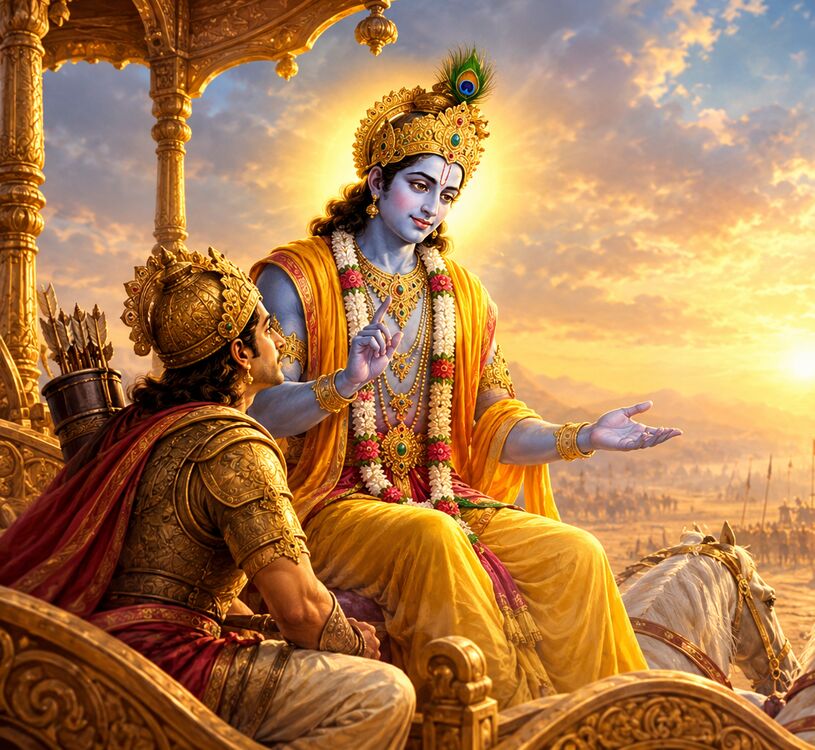
Chapter 7, Jnana Vijnana Yoga (knowledge and its realisation), begins the second part of the Gita, where Krishna speaks more about himself. He promises Arjuna knowledge “together with realisation”, knowing which nothing more remains to be known, and describes his two natures: the lower one of earth, water, fire, air, space, mind, intellect and ego, and the higher one, the life in all beings (shlokas 1–7).
Everything is strung on him “like pearls on a thread”: he is the taste in water, the light of the sun and moon, Om in the Vedas, the strength of the strong (8–14). Four kinds of people turn to him, the distressed, the seeker of knowledge, the one who wants something and the wise, and the wise is dearest (15–23). The chapter ends with Krishna as the unseen, unborn Lord, hidden by his own power, known by those who take refuge in him (24–30).
A calm reading of all 30 shlokas with their meanings takes about fifteen minutes.
Knowledge and realisation: my two natures 7.1–7.7
श्रीभगवानुवाच Shri Krishna said
मय्यासक्तमनाः पार्थ योगं युञ्जन्मदाश्रयः।
असंशयं समग्रं मां यथा ज्ञास्यसि तच्छृणु॥
Mayyasakta-manah partha yogam yunjan mad-ashrayah
Asanshayam samagram mam yatha jnasyasi tach chhrinu
हे पार्थ, मुझमें मन लगाकर, मेरी शरण लेकर योग का अभ्यास करते हुए तुम मुझे पूरी तरह और बिना संशय के कैसे जानोगे, वह सुनो।
Son of Pritha, hear how, with your mind attached to me, practising yoga and taking refuge in me, you will know me fully and without doubt.
ज्ञानं तेऽहं सविज्ञानमिदं वक्ष्याम्यशेषतः।
यज्ज्ञात्वा नेह भूयोऽन्यज्ज्ञातव्यमवशिष्यते॥
Jnanam te ’ham sa-vijnanam idam vakshyamyasheshatah
Yaj jnatva neha bhuyo ’nyaj jnatavyam-avashishyate
मैं तुम्हें विज्ञान सहित यह ज्ञान पूरा बताऊँगा, जिसे जानकर इस संसार में और कुछ जानना बाकी नहीं रहता।
I will tell you, in full, this knowledge together with its realisation, knowing which nothing more remains to be known here.
मनुष्याणां सहस्रेषु कश्चिद्यतति सिद्धये।
यततामपि सिद्धानां कश्चिन्मां वेत्ति तत्त्वतः॥
Manushyanam sahasreshu kashchid yatati siddhaye
Yatatam api siddhanam kashchin mam vetti tattvatah
हज़ारों मनुष्यों में कोई एक सिद्धि के लिए प्रयत्न करता है, और प्रयत्न करने वाले सिद्धों में भी कोई एक ही मुझे तत्त्व से जानता है।
Among thousands of people, hardly one strives for perfection; and among those who strive and succeed, hardly one knows me as I truly am.
भूमिरापोऽनलो वायुः खं मनो बुद्धिरेव च।
अहङ्कार इतीयं मे भिन्ना प्रकृतिरष्टधा॥
Bhumir-apo ’nalo vayuh kham mano buddhir eva cha
Ahankara itiyam me bhinna prakritir ashtadha
पृथ्वी, जल, अग्नि, वायु, आकाश, मन, बुद्धि और अहंकार: यह मेरी आठ प्रकार में बँटी हुई प्रकृति है।
Earth, water, fire, air, space, mind, intellect and ego: these are the eight parts of my nature.
अपरेयमितस्त्वन्यां प्रकृतिं विद्धि मे पराम्।
जीवभूतां महाबाहो ययेदं धार्यते जगत्॥
Apareyam itas tvanyam prakritim viddhi me param
Jiva-bhutam maha-baho yayedam dharyate jagat
यह मेरी अपरा (निचली) प्रकृति है। पर हे महाबाहो, इससे भिन्न मेरी परा (ऊँची) प्रकृति को जानो, जो जीव रूप है और जिससे यह संसार धारण किया जाता है।
This is my lower nature. But know my other, higher nature, mighty-armed one, which is the life in all beings, by which this world is held up.
एतद्योनीनि भूतानि सर्वाणीत्युपधारय।
अहं कृत्स्नस्य जगतः प्रभवः प्रलयस्तथा॥
Etad-yonini bhutani sarvanityupadharaya
Aham kritsnasya jagatah prabhavah pralayas tatha
जान लो कि सभी प्राणी इन्हीं दोनों प्रकृतियों से उत्पन्न होते हैं। मैं पूरे संसार की उत्पत्ति हूँ और उसका प्रलय भी।
Know that all beings have these two natures as their source. I am the origin of the whole world, and its dissolution too.
मत्तः परतरं नान्यत्किञ्चिदस्ति धनञ्जय।
मयि सर्वमिदं प्रोतं सूत्रे मणिगणा इव॥
Mattah parataram nanyat kinchid asti dhananjaya
Mayi sarvam idam protam sutre mani-gana iva
हे धनंजय, मुझसे बढ़कर कुछ भी नहीं है। यह सब मुझमें वैसे ही पिरोया हुआ है, जैसे धागे में मोतियों के दाने।
There is nothing higher than me, Dhananjaya. All this is strung on me, like pearls on a thread.
The thread through everything 7.8–7.14
रसोऽहमप्सु कौन्तेय प्रभास्मि शशिसूर्ययोः।
प्रणवः सर्ववेदेषु शब्दः खे पौरुषं नृषु॥
Raso ’ham apsu kaunteya prabhasmi shashi-suryayoh
Pranavah sarva-vedeshu shabdah khe paurusham nrishu
हे कौन्तेय, मैं जल में रस हूँ, चंद्रमा और सूर्य में प्रकाश हूँ, सब वेदों में ओंकार हूँ, आकाश में शब्द और मनुष्यों में पुरुषार्थ हूँ।
Son of Kunti, I am the taste in water, the light of the moon and the sun, the sacred syllable Om in all the Vedas, the sound in space and the strength in people.
पुण्यो गन्धः पृथिव्यां च तेजश्चास्मि विभावसौ।
जीवनं सर्वभूतेषु तपश्चास्मि तपस्विषु॥
Punyo gandhah prithivyam cha tejash chasmi vibhavasau
Jivanam sarva-bhuteshu tapash chasmi tapasvishu
मैं पृथ्वी में पवित्र गंध और अग्नि में तेज हूँ। मैं सब प्राणियों में जीवन हूँ और तपस्वियों में तप हूँ।
I am the pure fragrance of the earth and the brightness of fire. I am the life in all beings and the discipline of those who practise austerity.
बीजं मां सर्वभूतानां विद्धि पार्थ सनातनम्।
बुद्धिर्बुद्धिमतामस्मि तेजस्तेजस्विनामहम्॥
Bijam mam sarva-bhutanam viddhi partha sanatanam
Buddhir buddhimatam asmi tejas tejasvinam aham
हे पार्थ, मुझे सब प्राणियों का सनातन बीज जानो। मैं बुद्धिमानों की बुद्धि और तेजस्वियों का तेज हूँ।
Son of Pritha, know me as the eternal seed of all beings. I am the intelligence of the intelligent and the brilliance of the brilliant.
बलं बलवतां चाहं कामरागविवर्जितम्।
धर्माविरुद्धो भूतेषु कामोऽस्मि भरतर्षभ॥
Balam balavatam chaham kama-raga-vivarjitam
Dharmaviruddho bhuteshu kamo ’smi bharatarshabha
हे भरतश्रेष्ठ, मैं बलवानों का कामना और आसक्ति से रहित बल हूँ, और सब प्राणियों में धर्म के अनुकूल काम (इच्छा) हूँ।
Of the strong, I am the strength that is free of desire and attachment. In all beings, best of the Bharatas, I am the desire that is not against dharma.
ये चैव सात्त्विका भावा राजसास्तामसाश्च ये।
मत्त एवेति तान्विद्धि नत्वहं तेषु ते मयि॥
Ye chaiva sattvika bhava rajasas tamasash cha ye
Matta eveti tan viddhi na tvaham teshu te mayi
जो भी सात्त्विक, राजस और तामस भाव हैं, उन सबको मुझसे ही उत्पन्न जानो। पर मैं उनमें नहीं हूँ, वे मुझमें हैं।
Know that all states of being, whether of clarity, passion or dullness, come from me alone. Yet I am not in them; they are in me.
त्रिभिर्गुणमयैर्भावैरेभिः सर्वमिदं जगत्।
मोहितं नाभिजानाति मामेभ्यः परमव्ययम्॥
Tribhir guna-mayair bhavair ebhih sarvam idam jagat
Mohitam nabhijanati mamebhyah param avyayam
इन तीन गुणों से बने भावों से मोहित होकर सारा संसार मुझे नहीं जानता, जो इनसे परे और अविनाशी हूँ।
Confused by these three states made of the gunas, the whole world does not know me, who am beyond them and unchanging.
दैवी ह्येषा गुणमयी मम माया दुरत्यया।
मामेव ये प्रपद्यन्ते मायामेतां तरन्ति ते॥
Daivi hyesha guna-mayi mama maya duratyaya
Mam eva ye prapadyante mayam etam taranti te
मेरी यह गुणमयी दिव्य माया पार करना कठिन है। पर जो केवल मेरी शरण में आते हैं, वे इस माया को पार कर जाते हैं।
This divine power of mine, made of the gunas, is hard to cross. But those who take refuge in me alone cross over it.
Who turns to me, and who does not 7.15–7.23
न मां दुष्कृतिनो मूढाः प्रपद्यन्ते नराधमाः।
माययापहृतज्ञाना आसुरं भावमाश्रिताः॥
Na mam dushkritino mudhah prapadyante naradhamah
Mayayapahrita-jnana asuram bhavam ashritah
दुष्कर्म करने वाले, मूढ़ और नीच मनुष्य मेरी शरण में नहीं आते; माया ने उनका ज्ञान हर लिया है और वे आसुरी स्वभाव अपना लेते हैं।
Wrongdoers, the deluded and the lowest of people do not turn to me; their knowledge is stolen by illusion and they take on a demonic nature.
चतुर्विधा भजन्ते मां जनाः सुकृतिनोऽर्जुन।
आर्तो जिज्ञासुरर्थार्थी ज्ञानी च भरतर्षभ॥
Chatur-vidha bhajante mam janah sukritino ’rjuna
Arto jijnasur artharthi jnani cha bharatarshabha
हे अर्जुन, चार प्रकार के पुण्यात्मा लोग मुझे भजते हैं: दुःखी, जिज्ञासु, कुछ पाने की इच्छा वाले और ज्ञानी, हे भरतश्रेष्ठ।
Four kinds of good people worship me, Arjuna: the distressed, the seeker of knowledge, the one who wants something, and the wise, best of the Bharatas.
तेषां ज्ञानी नित्ययुक्त एकभक्तिर्विशिष्यते।
प्रियो हि ज्ञानिनोऽत्यर्थमहं स च मम प्रियः॥
Tesham jnani nitya-yukta eka-bhaktir vishishyate
Priyo hi jnanino ’tyartham aham sa cha mama priyah
इनमें सदा मुझमें लगा हुआ, एक मुझमें ही भक्ति रखने वाला ज्ञानी श्रेष्ठ है। ज्ञानी को मैं बहुत प्रिय हूँ और वह मुझे प्रिय है।
Of these, the wise one, always steady and devoted to me alone, is the best. I am very dear to the wise, and they are dear to me.
उदाराः सर्व एवैते ज्ञानी त्वात्मैव मे मतम्।
आस्थितः स हि युक्तात्मा मामेवानुत्तमां गतिम्॥
Udarah sarva evaite jnani tvatmaiva me matam
Asthitah sa hi yuktatma mam evanuttamam gatim
ये सभी उदार (श्रेष्ठ) हैं, पर ज्ञानी तो मेरा ही स्वरूप है, ऐसा मेरा मत है; क्योंकि स्थिर मन वाला वह मुझे ही परम गति मानकर मुझमें स्थित रहता है।
All of these are noble, but the wise one I hold to be my very self, for, steady in mind, such a person rests in me alone as the highest goal.
बहूनां जन्मनामन्ते ज्ञानवान्मां प्रपद्यते।
वासुदेवः सर्वमिति स महात्मा सुदुर्लभः॥
Bahunam janmanam ante jnanavan mam prapadyate
Vasudevah sarvam iti sa mahatma su-durlabhah
बहुत जन्मों के अंत में ज्ञानी यह जानकर मेरी शरण में आता है कि “सब कुछ वासुदेव ही है”। ऐसा महात्मा बहुत दुर्लभ है।
At the end of many births, the wise one comes to me, knowing, “Vasudeva is everything.” Such a great soul is very rare.
कामैस्तैस्तैर्हृतज्ञानाः प्रपद्यन्तेऽन्यदेवताः।
तं तं नियममास्थाय प्रकृत्या नियताः स्वया॥
Kamais tais tair hrita-jnanah prapadyante ’nya-devatah
Tam tam niyamam asthaya prakritya niyatah svaya
जिनका ज्ञान तरह-तरह की कामनाओं ने हर लिया है, वे अपने स्वभाव से प्रेरित होकर, अलग-अलग नियमों का पालन करते हुए दूसरे देवताओं की शरण लेते हैं।
Those whose understanding is carried away by various desires turn to other gods, following this or that practice, led by their own nature.
यो यो यां यां तनुं भक्तः श्रद्धयार्चितुमिच्छति।
तस्य तस्याचलां श्रद्धां तामेव विदधाम्यहम्॥
Yo yo yam yam tanum bhaktah shraddhayarchitum ichchhati
Tasya tasyachalam shraddham tam eva vidadhamyaham
जो-जो भक्त जिस-जिस रूप की श्रद्धा से पूजा करना चाहता है, उस-उस भक्त की उसी रूप में श्रद्धा को मैं स्थिर कर देता हूँ।
Whatever form a devotee wishes to worship with faith, I make that devotee’s faith in it steady.
स तया श्रद्धया युक्तस्तस्याराधनमीहते।
लभते च ततः कामान्मयैव विहितान् हि तान्॥
Sa taya shraddhaya yuktas tasyaradhanam ihate
Labhate cha tatah kaman mayaiva vihitan hi tan
उस श्रद्धा से युक्त होकर वह उस रूप की आराधना करता है, और उससे अपनी इच्छित वस्तुएँ पाता है; पर वे वास्तव में मेरे द्वारा ही दी जाती हैं।
Filled with that faith, he worships that form, and from it he gains what he wants; but in truth those things are given by me alone.
अन्तवत्तु फलं तेषां तद्भवत्यल्पमेधसाम्।
देवान्देवयजो यान्ति मद्भक्ता यान्ति मामपि॥
Antavat tu phalam tesham tad bhavatyalpa-medhasam
Devan deva-yajo yanti mad-bhakta yanti mam api
पर उन अल्प बुद्धि वालों को मिलने वाला फल नाशवान होता है। देवताओं को पूजने वाले देवताओं को प्राप्त होते हैं, और मेरे भक्त मुझे प्राप्त होते हैं।
But the fruit gained by those of small understanding comes to an end. Those who worship the gods go to the gods; my devotees come to me.
The unseen, unborn Lord 7.24–7.30
अव्यक्तं व्यक्तिमापन्नं मन्यन्ते मामबुद्धयः।
परं भावमजानन्तो ममाव्ययमनुत्तमम्॥
Avyaktam vyaktim apannam manyante mam abuddhayah
Param bhavam ajananto mamavyayam anuttamam
अज्ञानी लोग मेरे परम, अविनाशी और सर्वश्रेष्ठ स्वरूप को न जानकर, मुझ अव्यक्त को व्यक्ति रूप में आया हुआ मानते हैं।
The unwise think of me, the unseen, as having taken a visible form, not knowing my higher, unchanging, supreme nature.
नाहं प्रकाशः सर्वस्य योगमायासमावृतः।
मूढोऽयं नाभिजानाति लोको मामजमव्ययम्॥
Naham prakashah sarvasya yoga-maya-samavritah
Mudho ’yam nabhijanati loko mam ajam avyayam
अपनी योगमाया से ढका होने के कारण मैं सबके सामने प्रकट नहीं होता। यह मोहित संसार मुझ अजन्मे और अविनाशी को नहीं जानता।
Covered by my own power of illusion, I am not revealed to all. This confused world does not know me, the unborn and unchanging.
वेदाहं समतीतानि वर्तमानानि चार्जुन।
भविष्याणि च भूतानि मां तु वेद न कश्चन॥
Vedaham samatitani vartamanani charjuna
Bhavishyani cha bhutani mam tu veda na kashchana
हे अर्जुन, मैं बीते हुए, वर्तमान और आने वाले सब प्राणियों को जानता हूँ, पर मुझे कोई नहीं जानता।
Arjuna, I know all beings past, present and yet to come; but no one knows me.
इच्छाद्वेषसमुत्थेन द्वन्द्वमोहेन भारत।
सर्वभूतानि संमोहं सर्गे यान्ति परन्तप॥
Ichchha-dvesha-samutthena dvandva-mohena bharata
Sarva-bhutani sammoham sarge yanti parantapa
हे भारत, हे परंतप, इच्छा और द्वेष से उत्पन्न द्वंद्व रूपी मोह के कारण सब प्राणी जन्म से ही मोह में पड़ जाते हैं।
Bharata, from birth all beings fall into confusion, through the delusion of opposites that arises from liking and dislike, scorcher of foes.
येषां त्वन्तगतं पापं जनानां पुण्यकर्मणाम्।
ते द्वन्द्वमोहनिर्मुक्ता भजन्ते मां दृढव्रताः॥
Yesham tvanta-gatam papam jananam punya-karmanam
Te dvandva-moha-nirmukta bhajante mam dridha-vratah
पर पुण्य कर्म करने वाले जिन लोगों का पाप नष्ट हो गया है, वे द्वंद्व रूपी मोह से मुक्त होकर दृढ़ निश्चय के साथ मुझे भजते हैं।
But people of good deeds, whose wrongdoing has come to an end, free of the delusion of opposites, worship me with firm resolve.
जरामरणमोक्षाय मामाश्रित्य यतन्ति ये।
ते ब्रह्म तद्विदुः कृत्स्नमध्यात्मं कर्म चाखिलम्॥
Jara-marana-mokshaya mam ashritya yatanti ye
Te brahma tadviduh kritsnam adhyatmam karma chakhilam
जो मेरी शरण लेकर बुढ़ापे और मृत्यु से छूटने का प्रयत्न करते हैं, वे ब्रह्म को, अध्यात्म को और संपूर्ण कर्म को जान लेते हैं।
Those who take refuge in me and strive for freedom from old age and death come to know Brahman fully, the inner self, and all action.
साधिभूताधिदैवं मां साधियज्ञं च ये विदुः।
प्रयाणकालेऽपि च मां ते विदुर्युक्तचेतसः॥
Sadhibhutadhidaivam mam sadhiyajnam cha ye viduh
Prayana-kale ’pi cha mam te vidur yukta-chetasah
जो मुझे अधिभूत, अधिदैव और अधियज्ञ सहित जानते हैं, वे स्थिर मन वाले मृत्यु के समय भी मुझे जानते हैं।
Those who know me as the ground of all beings, of the gods and of all offerings, with minds steady, know me even at the hour of death.
ॐ तत्सदिति श्रीमद्भगवद्गीतासूपनिषत्सु ब्रह्मविद्यायां योगशास्त्रे श्रीकृष्णार्जुनसंवादे
ज्ञानविज्ञानयोगो नाम सप्तमोऽध्यायः ॥७॥
The meanings here are written in plain words and follow the common reading of each shloka; they are not a word-for-word translation or a commentary. The Roman lettering is simplified for easy reading. This page is for reading and reflection; it is not a substitute for medical or other professional help.
Questions people ask
What is Chapter 7 of the Bhagavad Gita about?
Knowledge of Krishna together with its realisation: his lower and higher natures, his presence in everything, the four kinds of people who turn to him, and his unseen, unborn nature.
What does “like pearls on a thread” (7.7) mean?
That everything rests on Krishna and is held together by him, as pearls are held on the thread that runs through them.
What are the eight parts of nature in 7.4?
Earth, water, fire, air, space, mind, intellect and ego. Krishna calls this his lower nature; his higher nature is the life in all beings (7.5).
Who are the four kinds of devotees (7.16)?
The distressed, the seeker of knowledge, the one who wants something, and the wise. All are noble, and the wise, devoted to Krishna alone, is dearest to him.
What does “Vasudevah sarvam iti” (7.19) mean?
“Vasudeva (Krishna) is everything”: the understanding the wise reach at the end of many births. Krishna says such a great soul is very rare.
Join us on Facebook
New books and chapters, festival days and easy-to-read astrology, in your feed. Free, and you can leave any time.