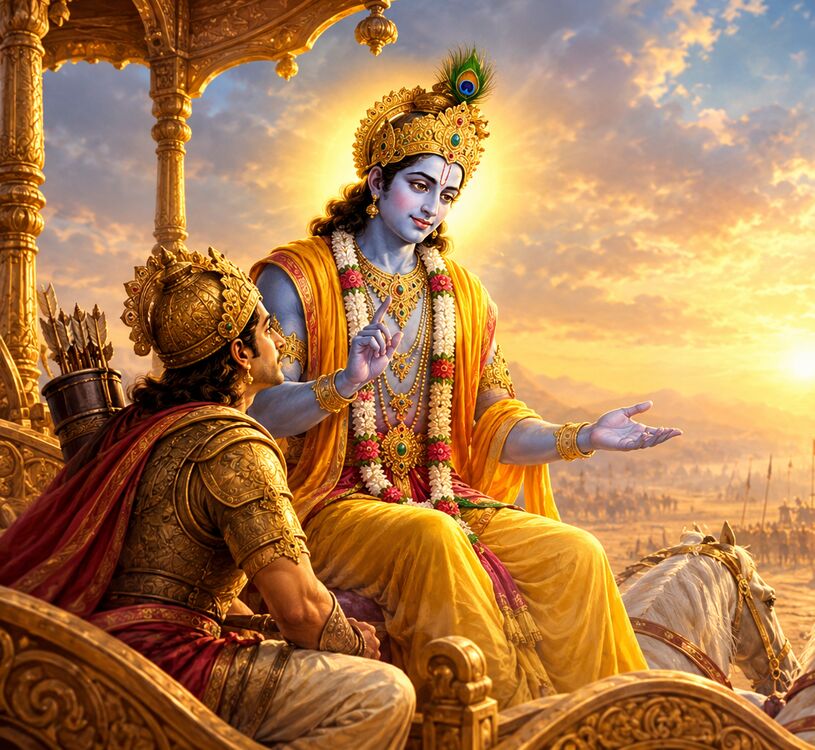


Bhagavad Gita Chapter 14
Gunatraya Vibhaga Yoga · The three gunas (गुणत्रयविभागयोग)
Printed from jeevandrishti.com/books/bhagavad-gita/chapter-14, where the meaning of every verse is in English and Hindi.
Duty · Knowledge · Devotion
About Chapter 14, Gunatraya Vibhaga Yoga
Chapter 14, Gunatraya Vibhaga Yoga, explains the three gunas, the qualities of nature that bind the soul to the body: sattva (clarity and goodness), which binds through attachment to happiness and knowledge; rajas (passion), which binds through attachment to action; and tamas (dullness), which binds through carelessness, laziness and sleep (shlokas 1–8).
Krishna describes how each guna shows itself, rises over the others, and where it leads (9–18). Arjuna asks how to recognise one who has gone beyond the gunas; Krishna answers: one who sits as if indifferent, the same in pleasure and pain, honour and dishonour, friend and foe, and who serves him with unfailing devotion (19–27).
A calm reading of all 27 shlokas with their meanings takes about fifteen minutes.
The three gunas 14.1–14.8
श्रीभगवानुवाच Shri Krishna said
परं भूयः प्रवक्ष्यामि ज्ञानानां ज्ञानमुत्तमम्।
यज्ज्ञात्वा मुनयः सर्वे परां सिद्धिमितो गताः॥
Param bhuyah pravakshyami jnananam jnanam uttamam
Yaj jnatva munayah sarve param siddhim ito gatah
मैं तुम्हें फिर से ज्ञानों में श्रेष्ठ वह परम ज्ञान बताऊँगा, जिसे जानकर सब मुनि इस संसार से परम सिद्धि को प्राप्त हुए।
I will tell you again the highest knowledge, the best of all knowledge, knowing which all the sages have gone from here to the highest perfection.
इदं ज्ञानमुपाश्रित्य मम साधर्म्यमागताः।
सर्गेऽपि नोपजायन्ते प्रलये न व्यथन्ति च॥
Idam jnanam upashritya mama sadharmyam agatah
Sarge ’pi nopajayante pralaye na vyathanti cha
इस ज्ञान का आश्रय लेकर वे मेरे स्वरूप को प्राप्त हुए हैं; वे सृष्टि के समय जन्म नहीं लेते और प्रलय के समय व्याकुल नहीं होते।
Taking refuge in this knowledge, they have come to share my nature. They are not born at creation and are not troubled at dissolution.
मम योनिर्महद्ब्रह्म तस्मिन् गर्भं दधाम्यहम्।
संभवः सर्वभूतानां ततो भवति भारत॥
Mama yonir mahad brahma tasmin garbham dadhamy aham
Sambhavah sarva-bhutanam tato bhavati bharata
हे भारत, महत् ब्रह्म (प्रकृति) मेरी योनि है, उसमें मैं गर्भ रखता हूँ, और उसी से सब प्राणियों की उत्पत्ति होती है।
Great nature (Brahman) is my womb; in it I place the seed, and from that, Bharata, all beings are born.
सर्वयोनिषु कौन्तेय मूर्तयः सम्भवन्ति याः।
तासां ब्रह्म महद्योनिरहं बीजप्रदः पिता॥
Sarva-yonishu kaunteya murtayah sambhavanti yah
Tasam brahma mahad yonir aham bija-pradah pita
हे कौन्तेय, सब योनियों में जो भी शरीर उत्पन्न होते हैं, उनकी योनि महत् प्रकृति है और बीज देने वाला पिता मैं हूँ।
Whatever forms are born in any womb, son of Kunti, great nature is their womb, and I am the father who gives the seed.
सत्त्वं रजस्तम इति गुणाः प्रकृतिसंभवाः।
निबध्नन्ति महाबाहो देहे देहिनमव्ययम्॥
Sattvam rajas tama iti gunah prakriti-sambhavah
Nibadhnanti maha-baho dehe dehinam avyayam
हे महाबाहो, सत्त्व, रज और तम, प्रकृति से उत्पन्न ये तीन गुण अविनाशी देही को शरीर में बाँधते हैं।
Sattva, rajas and tamas, the three gunas born of nature, bind the unchanging soul to the body, mighty-armed one.
तत्र सत्त्वं निर्मलत्वात्प्रकाशकमनामयम्।
सुखसङ्गेन बध्नाति ज्ञानसङ्गेन चानघ॥
Tatra sattvam nirmalatvat prakashakam anamayam
Sukha-sangena badhnati jnana-sangena chanagha
हे निष्पाप, इनमें सत्त्वगुण निर्मल होने के कारण प्रकाश करने वाला और विकाररहित है; वह सुख की आसक्ति और ज्ञान की आसक्ति से बाँधता है।
Of these, sattva, being pure, gives light and health. It binds, sinless one, through attachment to happiness and attachment to knowledge.
रजो रागात्मकं विद्धि तृष्णासङ्गसमुद्भवम्।
तन्निबध्नाति कौन्तेय कर्मसङ्गेन देहिनम्॥
Rajo ragatmakam viddhi trishna-sanga-samudbhavam
Tan nibadhnati kaunteya karma-sangena dehinam
हे कौन्तेय, रजोगुण को राग रूप जानो, जो तृष्णा और आसक्ति से उत्पन्न होता है; वह देही को कर्मों की आसक्ति से बाँधता है।
Know that rajas is passion, born of craving and attachment. It binds the soul, son of Kunti, through attachment to action.
तमस्त्वज्ञानजं विद्धि मोहनं सर्वदेहिनाम्।
प्रमादालस्यनिद्राभिस्तन्निबध्नाति भारत॥
Tamas tv ajnana-jam viddhi mohanam sarva-dehinam
Pramadalasya-nidrabhis tan nibadhnati bharata
हे भारत, तमोगुण को अज्ञान से उत्पन्न और सब देहधारियों को मोहित करने वाला जानो; वह प्रमाद, आलस्य और निद्रा से बाँधता है।
Know that tamas is born of ignorance and confuses all embodied beings. It binds, Bharata, through carelessness, laziness and sleep.
How each guna shows itself 14.9–14.18
सत्त्वं सुखे सञ्जयति रजः कर्मणि भारत।
ज्ञानमावृत्य तु तमः प्रमादे सञ्जयत्युत॥
Sattvam sukhe sanjayati rajah karmani bharata
Jnanam avritya tu tamah pramade sanjayaty uta
हे भारत, सत्त्व सुख में लगाता है, रज कर्म में, और तम ज्ञान को ढककर प्रमाद में लगाता है।
Sattva attaches one to happiness, rajas to action, Bharata, while tamas, covering knowledge, attaches one to carelessness.
रजस्तमश्चाभिभूय सत्त्वं भवति भारत।
रजः सत्त्वं तमश्चैव तमः सत्त्वं रजस्तथा॥
Rajas tamash chabhibhuya sattvam bhavati bharata
Rajah sattvam tamash chaiva tamah sattvam rajas tatha
हे भारत, रज और तम को दबाकर सत्त्व बढ़ता है, सत्त्व और तम को दबाकर रज, और सत्त्व और रज को दबाकर तम बढ़ता है।
Sattva rises by overcoming rajas and tamas, Bharata; rajas by overcoming sattva and tamas; and tamas by overcoming sattva and rajas.
सर्वद्वारेषु देहेऽस्मिन्प्रकाश उपजायते।
ज्ञानं यदा तदा विद्याद्विवृद्धं सत्त्वमित्युत॥
Sarva-dvareshu dehe ’smin prakasha upajayate
Jnanam yada tada vidyad vivriddham sattvam ity uta
जब इस शरीर के सब द्वारों में ज्ञान का प्रकाश उत्पन्न होता है, तब जानना चाहिए कि सत्त्वगुण बढ़ा है।
When the light of knowledge shines through all the gates of this body, then know that sattva has grown.
लोभः प्रवृत्तिरारम्भः कर्मणामशमः स्पृहा।
रजस्येतानि जायन्ते विवृद्धे भरतर्षभ॥
Lobhah pravrittir arambhah karmanam ashamah spriha
Rajasy etani jayante vivriddhe bharatarshabha
हे भरतश्रेष्ठ, रजोगुण बढ़ने पर लोभ, प्रवृत्ति, कर्मों का आरंभ, अशांति और लालसा उत्पन्न होते हैं।
Greed, busyness, rushing into undertakings, restlessness and craving arise when rajas grows, best of the Bharatas.
अप्रकाशोऽप्रवृत्तिश्च प्रमादो मोह एव च।
तमस्येतानि जायन्ते विवृद्धे कुरुनन्दन॥
Aprakasho ’pravrittish cha pramado moha eva cha
Tamasy etani jayante vivriddhe kuru-nandana
हे कुरुनन्दन, तमोगुण बढ़ने पर अंधकार, निष्क्रियता, प्रमाद और मोह उत्पन्न होते हैं।
Darkness, inactivity, carelessness and confusion arise when tamas grows, joy of the Kurus.
यदा सत्त्वे प्रवृद्धे तु प्रलयं याति देहभृत्।
तदोत्तमविदां लोकानमलान्प्रतिपद्यते॥
Yada sattve pravriddhe tu pralayam yati deha-bhrit
Tadottama-vidam lokan amalan pratipadyate
जब सत्त्वगुण बढ़ा हुआ हो और उस समय देहधारी मृत्यु को प्राप्त हो, तो वह उत्तम ज्ञानियों के निर्मल लोकों को जाता है।
If one dies when sattva is strong, one goes to the pure worlds of those who know the highest.
रजसि प्रलयं गत्वा कर्मसङ्गिषु जायते।
तथा प्रलीनस्तमसि मूढयोनिषु जायते॥
Rajasi pralayam gatva karma-sangishu jayate
Tatha pralinas tamasi mudha-yonishu jayate
रजोगुण में मृत्यु होने पर वह कर्मों में आसक्त लोगों में जन्म लेता है, और तमोगुण में मृत्यु होने पर मूढ़ योनियों में जन्म लेता है।
Dying in rajas, one is born among those attached to action; dying in tamas, one is born in the wombs of the dull.
कर्मणः सुकृतस्याहुः सात्त्विकं निर्मलं फलम्।
रजसस्तु फलं दुःखमज्ञानं तमसः फलम्॥
Karmanah sukritasyahuh sattvikam nirmalam phalam
Rajasas tu phalam duhkham ajnanam tamasah phalam
अच्छे कर्म का फल सात्त्विक और निर्मल कहा गया है, रजोगुण का फल दुःख है, और तमोगुण का फल अज्ञान है।
The fruit of good action is said to be pure and of sattva; the fruit of rajas is sorrow, and the fruit of tamas is ignorance.
सत्त्वात्सञ्जायते ज्ञानं रजसो लोभ एव च।
प्रमादमोहौ तमसो भवतोऽज्ञानमेव च॥
Sattvat sanjayate jnanam rajaso lobha eva cha
Pramada-mohau tamaso bhavato ’jnanam eva cha
सत्त्व से ज्ञान उत्पन्न होता है, रज से लोभ, और तम से प्रमाद, मोह और अज्ञान उत्पन्न होते हैं।
From sattva comes knowledge, from rajas greed, and from tamas come carelessness, confusion and ignorance.
ऊर्ध्वं गच्छन्ति सत्त्वस्था मध्ये तिष्ठन्ति राजसाः।
जघन्यगुणवृत्तिस्था अधो गच्छन्ति तामसाः॥
Urdhvam gachchhanti sattva-stha madhye tishthanti rajasah
Jaghanya-guna-vritti-stha adho gachchhanti tamasah
सत्त्वगुण में स्थित लोग ऊपर जाते हैं, रजोगुण वाले बीच में रहते हैं, और सबसे निचले गुण तम में स्थित लोग नीचे जाते हैं।
Those in sattva rise upward, those in rajas stay in the middle, and those in tamas, in the lowest of the gunas, go down.
Going beyond the gunas 14.19–14.27
नान्यं गुणेभ्यः कर्तारं यदा द्रष्टानुपश्यति।
गुणेभ्यश्च परं वेत्ति मद्भावं सोऽधिगच्छति॥
Nanyam gunebhyah kartaram yada drashtanupashyati
Gunebhyash cha param vetti mad-bhavam so ’dhigachchhati
जब देखने वाला गुणों के सिवा किसी को कर्ता नहीं देखता, और गुणों से परे परमात्मा को जानता है, तब वह मेरे भाव को प्राप्त होता है।
When the seer sees no doer other than the gunas, and knows what is beyond the gunas, he comes to my state.
गुणानेतानतीत्य त्रीन्देही देहसमुद्भवान्।
जन्ममृत्युजरादुःखैर्विमुक्तोऽमृतमश्नुते॥
Gunan etan atitya trin dehi deha-samudbhavan
Janma-mrityu-jara-duhkhair vimukto ’mritam ashnute
शरीर की उत्पत्ति के कारण इन तीनों गुणों को पार करके देही जन्म, मृत्यु, बुढ़ापे और दुःखों से छूटकर अमृत को प्राप्त होता है।
Going beyond these three gunas, which give rise to the body, the soul is freed from birth, death, old age and sorrow, and reaches immortality.
अर्जुन उवाच Arjuna said
कैर्लिंगैस्त्रीन्गुणानेतानतीतो भवति प्रभो।
किमाचारः कथं चैतांस्त्रीन्गुणानतिवर्तते॥
Kair lingais trin gunan etan atito bhavati prabho
Kim acharah katham chaitans trin gunan ativartate
हे प्रभो, इन तीनों गुणों से परे हुआ व्यक्ति किन लक्षणों से पहचाना जाता है? उसका आचरण कैसा होता है, और वह इन तीन गुणों को कैसे पार करता है?
Lord, by what marks is one known who has gone beyond these three gunas? How does such a person behave, and how does one go beyond them?
श्रीभगवानुवाच Shri Krishna said
प्रकाशं च प्रवृत्तिं च मोहमेव च पाण्डव।
न द्वेष्टि सम्प्रवृत्तानि न निवृत्तानि काङ्क्षति॥
Prakasham cha pravrittim cha moham eva cha pandava
Na dveshti sampravrittani na nivrittani kankshati
हे पाण्डव, जो प्रकाश, प्रवृत्ति और मोह के आने पर उनसे द्वेष नहीं करता, और उनके चले जाने पर उनकी इच्छा नहीं करता,
One who does not dislike light, activity or confusion when they arise, Pandava, nor long for them when they cease,
उदासीनवदासीनो गुणैर्यो न विचाल्यते।
गुणा वर्तन्त इत्येव योऽवतिष्ठति नेङ्गते॥
Udasina-vad asino gunair yo na vichalyate
Guna vartanta ity evam yo ’vatishthati nengate
जो उदासीन की तरह रहता है, गुणों से विचलित नहीं होता, और यह जानकर कि गुण ही बरत रहे हैं, स्थिर रहता है और डगमगाता नहीं,
who sits as one indifferent, unshaken by the gunas, knowing that only the gunas are at work, who stays firm and does not waver,
समदुःखसुखः स्वस्थः समलोष्टाश्मकाञ्चनः।
तुल्यप्रियाप्रियो धीरस्तुल्यनिन्दात्मसंस्तुतिः॥
Sama-duhkha-sukhah sva-sthah sama-loshtashma-kanchanah
Tulya-priyapriyo dhiras tulya-nindatma-sanstutih
जो सुख-दुःख में समान है, अपने स्वरूप में स्थित है, मिट्टी, पत्थर और सोने को समान देखता है, धीर है, प्रिय और अप्रिय में तथा निंदा और स्तुति में समान रहता है,
the same in pain and pleasure, centred in the self, to whom a lump of earth, a stone and gold are the same, steady, the same to the pleasant and the unpleasant, to blame and praise,
मानापमानयोस्तुल्यस्तुल्यो मित्रारिपक्षयोः।
सर्वारम्भपरित्यागी गुणातीतः स उच्यते॥
Manapamanayos tulyas tulyo mitrari-pakshayoh
Sarvarambha-parityagi gunatitah sa uchyate
जो मान और अपमान में समान है, मित्र और शत्रु के पक्ष में समान है, और जिसने अपने लिए सब आरंभ छोड़ दिए हैं, वह गुणातीत कहलाता है।
the same in honour and dishonour, the same to friend and foe, who has given up all self-driven undertakings: such a person is said to have gone beyond the gunas.
मां च योऽव्यभिचारेण भक्तियोगेन सेवते।
स गुणान्समतीत्यैतान् ब्रह्मभूयाय कल्पते॥
Mam cha yo ’vyabhicharena bhakti-yogena sevate
Sa gunan samatityaitan brahma-bhuyaya kalpate
और जो अटल भक्ति योग से मेरी सेवा करता है, वह इन गुणों को पार करके ब्रह्म को प्राप्त होने के योग्य हो जाता है।
And one who serves me with unfailing devotion goes beyond these gunas and becomes fit to become one with Brahman.
ब्रह्मणो हि प्रतिष्ठाऽहममृतस्याव्ययस्य च।
शाश्वतस्य च धर्मस्य सुखस्यैकान्तिकस्य च॥
Brahmano hi pratishthaham amritasyavyayasya cha
Shashvatasya cha dharmasya sukhasyaikantikasya cha
क्योंकि अविनाशी ब्रह्म का, अमृत का, सनातन धर्म का और परम सुख का आधार मैं ही हूँ।
For I am the foundation of Brahman, of the immortal and unchanging, of eternal dharma and of perfect happiness.
ॐ तत्सदिति श्रीमद्भगवद्गीतासूपनिषत्सु ब्रह्मविद्यायां योगशास्त्रे श्रीकृष्णार्जुनसंवादे
गुणत्रयविभागयोगो नाम चतुर्दशोऽध्यायः ॥१४॥
The meanings here are written in plain words and follow the common reading of each shloka; they are not a word-for-word translation or a commentary. The Roman lettering is simplified for easy reading. This page is for reading and reflection; it is not a substitute for medical or other professional help.
Questions people ask
What is Chapter 14 of the Bhagavad Gita about?
The three gunas (sattva, rajas and tamas): how they bind, how each shows itself, where each leads, and the marks of one who has gone beyond them.
What are sattva, rajas and tamas?
Sattva is clarity and goodness and binds through attachment to happiness and knowledge; rajas is passion and binds through attachment to action; tamas is dullness and binds through carelessness, laziness and sleep (14.6–14.8).
How can you tell which guna is strong?
When knowledge shines, sattva has grown; greed and restless activity show rajas; darkness, inactivity and confusion show tamas (14.11–14.13).
Who is gunatita, one beyond the gunas?
One who is the same in pleasure and pain, in honour and dishonour, to friend and foe, and is unshaken by the gunas, knowing that only the gunas are at work (14.22–14.25).
How does one go beyond the gunas?
By serving Krishna with unfailing devotion (14.26).
Join us on Facebook
New books and chapters, festival days and easy-to-read astrology, in your feed. Free, and you can leave any time.