Bhagavad Gita Chapter 9
Raja Vidya Raja Guhya Yoga · The royal knowledge (राजविद्याराजगुह्ययोग)
Printed from jeevandrishti.com/books/bhagavad-gita/chapter-9, where the meaning of every verse is in English and Hindi.
Duty · Knowledge · Devotion
About Chapter 9, Raja Vidya Raja Guhya Yoga
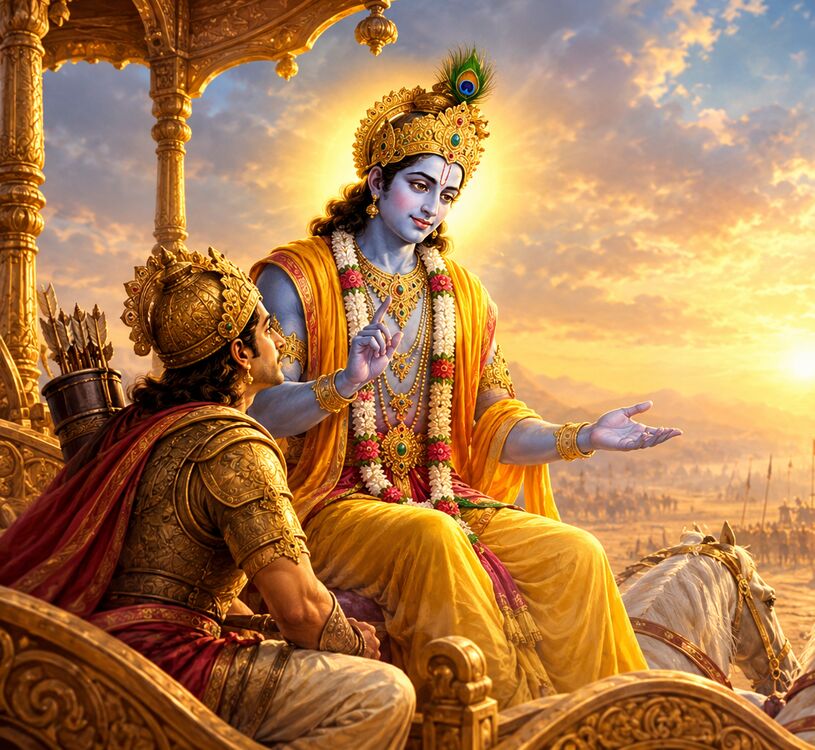
Chapter 9, Raja Vidya Raja Guhya Yoga (the royal knowledge, the royal secret), is the teaching Krishna calls the king of all knowledge: easy to practise and known by direct experience. All beings rest in him, as the wind rests in space, yet he is not bound by them (shlokas 1–10).
The deluded look down on him in human form, while great souls worship him with undivided minds; he is the father and mother of the world, its goal, friend and refuge (11–19). Those who seek heaven return when their merit is spent, but Krishna himself carries what his devotees need, and accepts with love even “a leaf, a flower, a fruit or water” (20–28). He is the same to all, and his devotee never perishes (29–34).
A calm reading of all 34 shlokas with their meanings takes about fifteen minutes.
The royal knowledge 9.1–9.10
श्रीभगवानुवाच Shri Krishna said
इदं तु ते गुह्यतमं प्रवक्ष्याम्यनसूयवे।
ज्ञानं विज्ञानसहितं यज्ज्ञात्वा मोक्ष्यसेऽशुभात्॥
Idam tu te guhyatamam pravakshyamyanasuyave
Jnanam vijnana-sahitam yaj jnatva mokshyase ’shubhat
तुम दोष नहीं देखते, इसलिए मैं तुम्हें यह परम गोपनीय ज्ञान विज्ञान सहित बताऊँगा, जिसे जानकर तुम अशुभ से मुक्त हो जाओगे।
Because you do not look for faults, I will now tell you this most secret knowledge, together with its realisation; knowing it, you will be free from harm.
राजविद्या राजगुह्यं पवित्रमिदमुत्तमम्।
प्रत्यक्षावगमं धर्म्यं सुसुखं कर्तुमव्ययम्॥
Raja-vidya raja-guhyam pavitram idam uttamam
Pratyakshavagamam dharmyam su-sukham kartum avyayam
यह विद्याओं का राजा, गोपनीय बातों का राजा, अत्यंत पवित्र और उत्तम है। यह प्रत्यक्ष अनुभव में आने वाला, धर्ममय, करने में सरल और अविनाशी है।
This is the king of knowledge, the king of secrets, the highest purifier. It is known by direct experience, in keeping with dharma, easy to practise and lasting.
अश्रद्दधानाः पुरुषा धर्मस्यास्य परन्तप।
अप्राप्य मां निवर्तन्ते मृत्युसंसारवर्त्मनि॥
Ashraddadhanah purusha dharmasyasya parantapa
Aprapya mam nivartante mrityu-samsara-vartmani
हे परंतप, इस धर्म में श्रद्धा न रखने वाले लोग मुझे प्राप्त न होकर मृत्यु रूपी संसार के मार्ग में लौटते रहते हैं।
People who have no faith in this teaching, scorcher of foes, do not reach me and return to the path of death and rebirth.
मया ततमिदं सर्वं जगदव्यक्तमूर्तिना।
मत्स्थानि सर्वभूतानि न चाहं तेष्ववस्थितः॥
Maya tatam idam sarvam jagad avyakta-murtina
Mat-sthani sarva-bhutani na chaham teshvavasthitah
मेरे अव्यक्त स्वरूप से यह सारा संसार व्याप्त है। सब प्राणी मुझमें स्थित हैं, पर मैं उनमें स्थित नहीं हूँ।
All this world is pervaded by me in my unseen form. All beings rest in me, but I do not rest in them.
न च मत्स्थानि भूतानि पश्य मे योगमैश्वरम्।
भूतभृन्न च भूतस्थो ममात्मा भूतभावनः॥
Na cha mat-sthani bhutani pashya me yogam aishwaram
Bhuta-bhrin na cha bhuta-stho mamatma bhuta-bhavanah
और फिर भी प्राणी मुझमें स्थित नहीं हैं; मेरी इस ईश्वरीय योगशक्ति को देखो। मैं प्राणियों का धारण और पोषण करने वाला हूँ, फिर भी मेरा स्वरूप उनमें स्थित नहीं है।
And yet beings do not rest in me: see my divine power. I sustain all beings and bring them forth, yet my self does not dwell in them.
यथाऽऽकाशस्थितो नित्यं वायुः सर्वत्रगो महान्।
तथा सर्वाणि भूतानि मत्स्थानीत्युपधारय॥
Yathakasha-sthito nityam vayuh sarvatra-go mahan
Tatha sarvani bhutani mat-sthanityupadharaya
जैसे सब जगह चलने वाली महान वायु सदा आकाश में ही रहती है, वैसे ही सब प्राणी मुझमें स्थित हैं, ऐसा जानो।
Just as the mighty wind, moving everywhere, always rests in space, so know that all beings rest in me.
सर्वभूतानि कौन्तेय प्रकृतिं यान्ति मामिकाम्।
कल्पक्षये पुनस्तानि कल्पादौ विसृजाम्यहम्॥
Sarva-bhutani kaunteya prakritim yanti mamikam
Kalpa-kshaye punas tani kalpadau visrijamyaham
हे कौन्तेय, कल्प के अंत में सब प्राणी मेरी प्रकृति में लीन हो जाते हैं, और कल्प के आरंभ में मैं उन्हें फिर से रचता हूँ।
At the end of an age of creation, son of Kunti, all beings return to my nature; at the start of the next, I send them forth again.
प्रकृतिं स्वामवष्टभ्य विसृजामि पुनः पुनः।
भूतग्राममिमं कृत्स्नमवशं प्रकृतेर्वशात्॥
Prakritim svam avashtabhya visrijami punah punah
Bhuta-gramam imam kritsnam avasham prakriter vashat
अपनी प्रकृति को अधीन करके मैं प्रकृति के वश में हुए इस सारे प्राणी-समूह को बार-बार रचता हूँ।
Taking hold of my own nature, I send forth again and again this whole multitude of beings, helpless under the sway of nature.
न च मां तानि कर्माणि निबध्नन्ति धनञ्जय।
उदासीनवदासीनमसक्तं तेषु कर्मसु॥
Na cha mam tani karmani nibadhnanti dhananjaya
Udasina-vad asinam asaktam teshu karmasu
हे धनंजय, ये कर्म मुझे नहीं बाँधते, क्योंकि मैं उन कर्मों में आसक्त न होकर उदासीन की तरह रहता हूँ।
These actions do not bind me, Dhananjaya, for I sit as one indifferent, unattached to them.
मयाऽध्यक्षेण प्रकृतिः सूयते सचराचरम्।
हेतुनाऽनेन कौन्तेय जगद्विपरिवर्तते॥
Mayadhyakshena prakritih suyate sa-characharam
Hetunanena kaunteya jagad viparivartate
हे कौन्तेय, मेरी अध्यक्षता में प्रकृति चर और अचर सहित सारे जगत को रचती है; इसी कारण संसार चक्र चलता रहता है।
With me as the overseer, nature brings forth all that moves and does not move; because of this, son of Kunti, the world keeps turning.
Those who know and those who do not 9.11–9.19
अवजानन्ति मां मूढा मानुषीं तनुमाश्रितम्।
परं भावमजानन्तो मम भूतमहेश्वरम्॥
Avajananti mam mudha manushim tanum ashritam
Param bhavam ajananto mama bhuta-maheshvaram
मूढ़ लोग मनुष्य रूप में आए मुझे तुच्छ समझते हैं, क्योंकि वे सब प्राणियों के महान ईश्वर के रूप में मेरे परम भाव को नहीं जानते।
The deluded look down on me when I take a human form, not knowing my higher nature as the great Lord of all beings.
मोघाशा मोघकर्माणो मोघज्ञाना विचेतसः।
राक्षसीमासुरीं चैव प्रकृतिं मोहिनीं श्रिताः॥
Moghasha mogha-karmano mogha-jnana vichetasah
Rakshasim asurim chaiva prakritim mohinim shritah
उनकी आशाएँ व्यर्थ, कर्म व्यर्थ और ज्ञान व्यर्थ होता है; ऐसे विवेकहीन लोग राक्षसी, आसुरी और मोहित करने वाली प्रकृति का सहारा लेते हैं।
Their hopes are in vain, their actions in vain, their knowledge in vain; senseless, they take on a deluding, fierce and demonic nature.
महात्मानस्तु मां पार्थ दैवीं प्रकृतिमाश्रिताः।
भजन्त्यनन्यमनसो ज्ञात्वा भूतादिमव्ययम्॥
Mahatmanas tu mam partha daivim prakritim ashritah
Bhajantyananya-manaso jnatva bhutadim avyayam
पर हे पार्थ, दैवी प्रकृति का आश्रय लेने वाले महात्मा मुझे सब प्राणियों का अविनाशी आदि कारण जानकर अनन्य मन से भजते हैं।
But the great souls, son of Pritha, taking refuge in the divine nature, worship me with minds on nothing else, knowing me as the unchanging source of all beings.
सततं कीर्तयन्तो मां यतन्तश्च दृढव्रताः।
नमस्यन्तश्च मां भक्त्या नित्ययुक्ता उपासते॥
Satatam kirtayanto mam yatantash cha dridha-vratah
Namasyantash cha mam bhaktya nitya-yukta upasate
वे सदा मेरा कीर्तन करते हुए, दृढ़ व्रत के साथ प्रयत्न करते हुए और भक्ति से मुझे प्रणाम करते हुए, सदा मुझमें लगे रहकर मेरी उपासना करते हैं।
Always singing my praise, striving with firm vows and bowing to me with devotion, they worship me, ever steady.
ज्ञानयज्ञेन चाप्यन्ये यजन्तो मामुपासते।
एकत्वेन पृथक्त्वेन बहुधा विश्वतोमुखम्॥
Jnana-yajnena chapyanye yajanto mam upasate
Ekatvena prithaktvena bahudha vishvato-mukham
कुछ लोग ज्ञान यज्ञ के द्वारा मेरी उपासना करते हैं: कोई एक भाव से, कोई अलग-अलग भाव से, और कोई अनेक प्रकार से मुझ सर्वव्यापी को पूजते हैं।
Others worship me with the offering of knowledge: as the One, as many, and in countless ways, as the one whose face is everywhere.
अहं क्रतुरहं यज्ञः स्वधाऽहमहमौषधम्।
मंत्रोऽहमहमेवाज्यमहमग्निरहं हुतम्॥
Aham kratur aham yajnah svadhaham aham aushadham
Mantro ’ham aham evajyam aham agnir aham hutam
मैं क्रतु हूँ, मैं यज्ञ हूँ, मैं पितरों को दिया जाने वाला अन्न (स्वधा) हूँ, मैं औषधि हूँ; मैं मंत्र हूँ, मैं घी हूँ, मैं अग्नि हूँ और मैं ही आहुति हूँ।
I am the ritual, I am the offering, I am the oblation to the ancestors and the healing herb. I am the sacred chant, I am the ghee, I am the fire and I am the act of offering.
पिताऽहमस्य जगतो माता धाता पितामहः।
वेद्यं पवित्रमोंकार ऋक् साम यजुरेव च॥
Pitaham asya jagato mata dhata pitamahah
Vedyam pavitram omkara rik sama yajur eva cha
मैं इस संसार का पिता, माता, धारण करने वाला और पितामह हूँ। जानने योग्य, पवित्र करने वाला, ओंकार, ऋग्वेद, सामवेद और यजुर्वेद भी मैं ही हूँ।
I am the father of this world, its mother, its support and its grandsire. I am what is to be known, the purifier, the syllable Om, and the Rig, Sama and Yajur Vedas.
गतिर्भर्ता प्रभुः साक्षी निवासः शरणं सुहृत्।
प्रभवः प्रलयः स्थानं निधानं बीजमव्ययम्॥
Gatir bharta prabhuh sakshi nivasah sharanam suhrit
Prabhavah pralayah sthanam nidhanam bijam avyayam
मैं गति, भरण करने वाला, स्वामी, साक्षी, निवास, शरण और सुहृद हूँ; उत्पत्ति, प्रलय, आधार, निधान और अविनाशी बीज भी मैं ही हूँ।
I am the goal, the sustainer, the Lord, the witness, the home, the refuge and the friend; the origin and the dissolution, the ground, the treasure-house and the imperishable seed.
तपाम्यहमहं वर्षं निगृह्णाम्युत्सृजामि च।
अमृतं चैव मृत्युश्च सदसच्चाहमर्जुन॥
Tapamyaham aham varsham nigrihnamyutsrijami cha
Amritam chaiva mrityush cha sad asach chaham arjuna
हे अर्जुन, मैं ही तपता हूँ, मैं ही वर्षा को रोकता और बरसाता हूँ। मैं अमृत भी हूँ और मृत्यु भी, सत् भी हूँ और असत् भी।
I give heat; I hold back the rain and send it forth. I am immortality and also death, what is and what is not, Arjuna.
A leaf, a flower, a fruit, water 9.20–9.28
त्रैविद्या मां सोमपाः पूतपापा
यज्ञैरिष्ट्वा स्वर्गतिं प्रार्थयन्ते।
ते पुण्यमासाद्य सुरेन्द्रलोक
मश्नन्ति दिव्यान्दिवि देवभोगान्॥
Trai-vidya mam soma-pah puta-papa
Yajnair ishtva svar-gatim prarthayante
Te punyam asadya surendra-lokam
Ashnanti divyan divi deva-bhogan
तीनों वेदों के ज्ञाता, सोम पीने वाले और पापों से शुद्ध हुए लोग यज्ञों से मेरी पूजा करके स्वर्ग की कामना करते हैं; वे पुण्य से इन्द्रलोक पाकर स्वर्ग में देवताओं के दिव्य भोग भोगते हैं।
Those who know the three Vedas and drink the soma, cleansed of wrong, worship me with offerings and pray for heaven. Reaching the holy world of Indra, they enjoy the divine pleasures of the gods.
ते तं भुक्त्वा स्वर्गलोकं विशालं
क्षीणे पुण्ये मर्त्यलोकं विशन्ति।
एवं त्रयीधर्ममनुप्रपन्ना
गतागतं कामकामा लभन्ते॥
Te tam bhuktva swarga-lokam vishalam
Kshine punye martya-lokam vishanti
Evam trayi-dharmam anuprapanna
Gatagatam kama-kama labhante
वे उस विशाल स्वर्गलोक को भोगकर, पुण्य समाप्त होने पर फिर मृत्युलोक में आते हैं। इस प्रकार तीनों वेदों के कर्मकांड का पालन करने वाले और भोगों की कामना करने वाले आते-जाते रहते हैं।
Having enjoyed that vast heaven, when their merit is used up they enter the world of mortals again. Following the rites of the three Vedas and wanting pleasures, they keep coming and going.
अनन्याश्चिन्तयन्तो मां ये जनाः पर्युपासते।
तेषां नित्याभियुक्तानां योगक्षेमं वहाम्यहम्॥
Ananyash chintayanto mam ye janah paryupasate
Tesham nityabhiyuktanam yoga-kshemam vahamyaham
पर जो लोग अनन्य भाव से मेरा चिंतन करते हुए मेरी उपासना करते हैं, उन सदा मुझमें लगे रहने वालों का योगक्षेम (जो चाहिए उसे देना और जो है उसकी रक्षा) मैं स्वयं वहन करता हूँ।
But those who worship me, thinking of me alone with no other thought, always steady, I carry what they need and protect what they have.
येऽप्यन्यदेवता भक्ता यजन्ते श्रद्धयाऽन्विताः।
तेऽपि मामेव कौन्तेय यजन्त्यविधिपूर्वकम्॥
Ye ’pyanya-devata-bhakta yajante shraddhayanvitah
Te ’pi mam eva kaunteya yajantyavidhi-purvakam
हे कौन्तेय, जो भक्त श्रद्धा के साथ दूसरे देवताओं की पूजा करते हैं, वे भी मेरी ही पूजा करते हैं, पर अविधिपूर्वक।
Even those devotees who worship other gods with faith, son of Kunti, are worshipping me alone, though not in the prescribed way.
अहं हि सर्वयज्ञानां भोक्ता च प्रभुरेव च।
न तु मामभिजानन्ति तत्त्वेनातश्च्यवन्ति ते॥
Aham hi sarva-yajnanam bhokta cha prabhureva cha
Na tu mam abhijananti tattvenatash chyavanti te
क्योंकि सब यज्ञों का भोक्ता और स्वामी मैं ही हूँ; पर वे मुझे तत्त्व से नहीं जानते, इसलिए गिर जाते हैं।
For I am the one who receives and the Lord of all offerings. But they do not know me as I truly am, and so they fall back.
यान्ति देवव्रता देवान् पितॄन्यान्ति पितृव्रताः।
भूतानि यान्ति भूतेज्या यान्ति मद्याजिनोऽपि माम्॥
Yanti deva-vrata devan pitrin yanti pitri-vratah
Bhutani yanti bhutejya yanti mad-yajino ’pi mam
देवताओं को पूजने वाले देवताओं को प्राप्त होते हैं, पितरों को पूजने वाले पितरों को, भूतों को पूजने वाले भूतों को, और मुझे पूजने वाले मुझे ही प्राप्त होते हैं।
Those devoted to the gods go to the gods, those devoted to the ancestors go to the ancestors, those who worship spirits go to the spirits, and those who worship me come to me.
पत्रं पुष्पं फलं तोयं यो मे भक्त्या प्रयच्छति।
तदहं भक्त्युपहृतमश्नामि प्रयतात्मनः॥
Patram pushpam phalam toyam yo me bhaktya prayachchhati
Tadaham bhaktyupahritam ashnami prayatatmanah
जो कोई भक्ति से मुझे पत्ता, फूल, फल या जल अर्पित करता है, उस शुद्ध मन वाले भक्त का प्रेम से दिया हुआ वह उपहार मैं स्वीकार करता हूँ।
Whoever offers me with devotion a leaf, a flower, a fruit or water, that offering of love from a pure heart I accept.
यत्करोषि यदश्नासि यज्जुहोषि ददासि यत्।
यत्तपस्यसि कौन्तेय तत्कुरुष्व मदर्पणम्॥
Yat karoshi yad ashnasi yaj juhoshi dadasi yat
Yat tapasyasi kaunteya tat kurushva mad-arpanam
हे कौन्तेय, तुम जो कुछ करते हो, जो खाते हो, जो हवन करते हो, जो दान देते हो और जो तप करते हो, वह सब मुझे अर्पित करो।
Whatever you do, whatever you eat, whatever you offer, whatever you give and whatever discipline you practise, son of Kunti, do it as an offering to me.
शुभाशुभफलैरेवं मोक्ष्यसे कर्मबन्धनैः।
संन्यासयोगयुक्तात्मा विमुक्तो मामुपैष्यसि॥
Shubhashubha-phalair evam mokshyase karma-bandhanaih
Sannyasa-yoga-yuktatma vimukto mam upaishyasi
इस प्रकार तुम शुभ और अशुभ फल देने वाले कर्मबंधनों से छूट जाओगे; संन्यास योग से युक्त मन वाले होकर तुम मुक्त होकर मुझे प्राप्त होगे।
In this way you will be freed from the bonds of action and their good and bad results. With your mind set on renunciation and yoga, you will be free and come to me.
My devotee never perishes 9.29–9.34
समोऽहं सर्वभूतेषु न मे द्वेष्योऽस्ति न प्रियः।
ये भजन्ति तु मां भक्त्या मयि ते तेषु चाप्यहम्॥
Samo ’ham sarva-bhuteshu na me dveshyo ’sti na priyah
Ye bhajanti tu mam bhaktya mayi te teshu chapyaham
मैं सब प्राणियों में समान हूँ; न कोई मुझे अप्रिय है, न प्रिय। पर जो भक्ति से मुझे भजते हैं, वे मुझमें हैं और मैं उनमें हूँ।
I am the same to all beings; no one is hateful to me and no one is my favourite. But those who worship me with devotion are in me, and I am in them.
अपि चेत्सुदुराचारो भजते मामनन्यभाक्।
साधुरेव स मन्तव्यः सम्यग्व्यवसितो हि सः॥
Api chet su-duracharo bhajate mam ananya-bhak
Sadhur eva sa mantavyah samyag vyavasito hi sah
यदि कोई बहुत बुरे आचरण वाला भी अनन्य भाव से मुझे भजता है, तो उसे साधु ही मानना चाहिए, क्योंकि उसने सही निश्चय कर लिया है।
Even if a person of very bad conduct worships me with undivided devotion, he should be thought of as good, for he has resolved rightly.
क्षिप्रं भवति धर्मात्मा शश्वच्छान्तिं निगच्छति।
कौन्तेय प्रतिजानीहि न मे भक्तः प्रणश्यति॥
Kshipram bhavati dharmatma shashvach-chhantim nigachchhati
Kaunteya pratijanihi na me bhaktah pranashyati
वह जल्दी ही धर्मात्मा बन जाता है और स्थायी शांति पाता है। हे कौन्तेय, निश्चयपूर्वक जान लो कि मेरा भक्त कभी नष्ट नहीं होता।
Soon he becomes righteous and reaches lasting peace. Son of Kunti, declare it boldly: my devotee never perishes.
मां हि पार्थ व्यपाश्रित्य येऽपि स्युः पापयोनयः।
स्त्रियो वैश्यास्तथा शूद्रास्तेऽपि यान्ति परां गतिम्॥
Mam hi partha vyapashritya ye ’pi syuh papa-yonayah
Striyo vaishyas tatha shudras te ’pi yanti param gatim
हे पार्थ, जो भी मेरी शरण लेते हैं, चाहे किसी भी जन्म के हों, स्त्रियाँ, वैश्य और शूद्र भी, वे भी परम गति को प्राप्त होते हैं।
Son of Pritha, all who take refuge in me, whatever their birth, women, traders and workers too, reach the highest goal.
किं पुनर्ब्राह्मणाः पुण्या भक्ता राजर्षयस्तथा।
अनित्यमसुखं लोकमिमं प्राप्य भजस्व माम्॥
Kim punar brahmanah punya bhakta rajarshayas tatha
Anityam asukham lokam imam prapya bhajasva mam
फिर पुण्यशील ब्राह्मणों और भक्त राजर्षियों का तो कहना ही क्या। इसलिए इस नाशवान और सुखरहित संसार में आकर मुझे भजो।
How much more, then, the pure brahmins and devoted royal sages. Having come into this passing, joyless world, worship me.
मन्मना भव मद्भक्तो मद्याजी मां नमस्कुरु।
मामेवैष्यसि युक्त्वैवमात्मानं मत्परायणः॥
Man-mana bhava mad-bhakto mad-yaji mam namaskuru
Mam evaishyasi yuktvaivam atmanam mat-parayanah
मुझमें मन लगाओ, मेरे भक्त बनो, मेरी पूजा करो और मुझे प्रणाम करो। इस प्रकार मुझमें अपने को लगाकर, मुझे लक्ष्य मानकर तुम मुझे ही प्राप्त होगे।
Fix your mind on me, be devoted to me, worship me and bow to me. Uniting yourself with me in this way, with me as your goal, you will come to me.
ॐ तत्सदिति श्रीमद्भगवद्गीतासूपनिषत्सु ब्रह्मविद्यायां योगशास्त्रे श्रीकृष्णार्जुनसंवादे
राजविद्याराजगुह्ययोगो नाम नवमोऽध्यायः ॥९॥
The meanings here are written in plain words and follow the common reading of each shloka; they are not a word-for-word translation or a commentary. The Roman lettering is simplified for easy reading. This page is for reading and reflection; it is not a substitute for medical or other professional help.
Questions people ask
What is Chapter 9 of the Bhagavad Gita about?
The royal knowledge and royal secret: how all beings rest in Krishna, how the great souls worship him, how he cares for his devotees, and that his devotee never perishes.
What does shloka 9.22 say?
“Yogakshemam vahamyaham”: for those who worship Krishna with undivided minds, he himself carries what they need and protects what they have.
What does “patram pushpam phalam toyam” (9.26) mean?
Whoever offers Krishna with devotion a leaf, a flower, a fruit or water, that offering of love from a pure heart he accepts.
What does shloka 9.27 ask?
Whatever you do, eat, offer, give or practise, do it as an offering to Krishna.
What does “na me bhaktah pranashyati” (9.31) mean?
“My devotee never perishes”: even one who has lived badly, once devoted to Krishna, soon becomes righteous and reaches lasting peace.
Join us on Facebook
New books and chapters, festival days and easy-to-read astrology, in your feed. Free, and you can leave any time.